
Chongfan Technology
News
19
2026
-
08
A broadband metalens for unobstructed wideband imaging
Author:
The team of Seung-Hwan Baek and Junsuk Rho at Pohang University of Science and Technology has proposed a broadband metalens with occlusion‑suppression capabilities. By learning an optimized phase profile, this device achieves broadband imaging while effectively mitigating interference from nearby occluders. The approach employs multi‑band spectral filtering, partitioning each color channel into passbands and stopbands: light from distant objects is focused by the metalens through the passbands, whereas light originating from close‑range occluders is routed into the stopbands and suppressed. Further integration with a neural network further enhances image quality. Compared with conventional hyperbolic‑phase metalenses under occlusion conditions, this system improves peak signal‑to‑noise ratio (PSNR) by 32.29%; its performance on object detection and two semantic‑segmentation benchmarks increases by 13.54%, 48.45%, and 20.35%, respectively. This solution holds promise for delivering robust, unobstructed perception and visual capabilities in compact systems such as mobile robots, drones, and endoscopes.
The research findings were published in Nature Communications on August 15, 2026, under the title “De-occluding broadband metalens.”
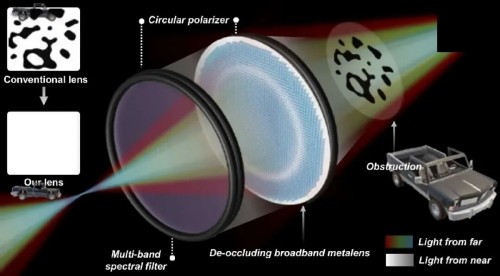
Figure 1: A broadband metalens for unobstructed broadband imaging.
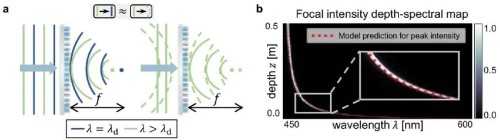
Figure 2: Depth–Wavelength Symmetry
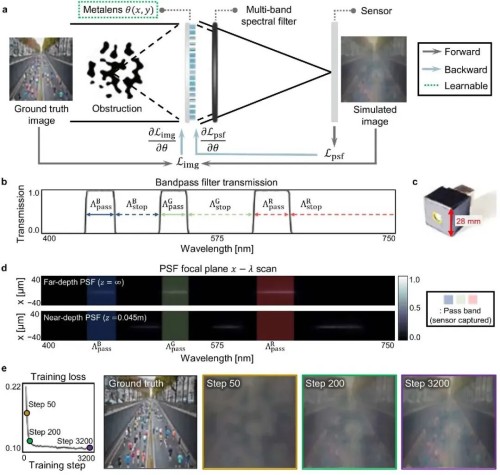
Figure 3: Learning-based design of a broadband metasurface lens for occlusion removal
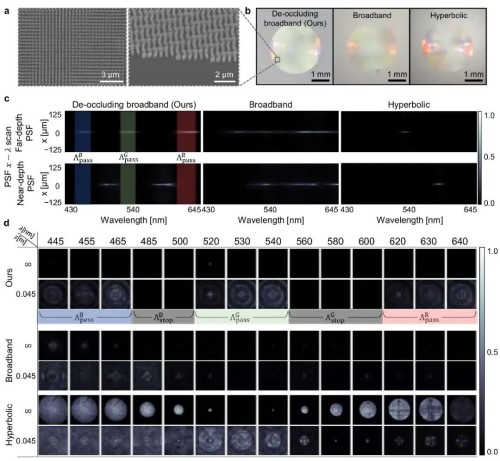
Figure 4: Performance characterization of the broadband metasurface lens for occlusion removal.
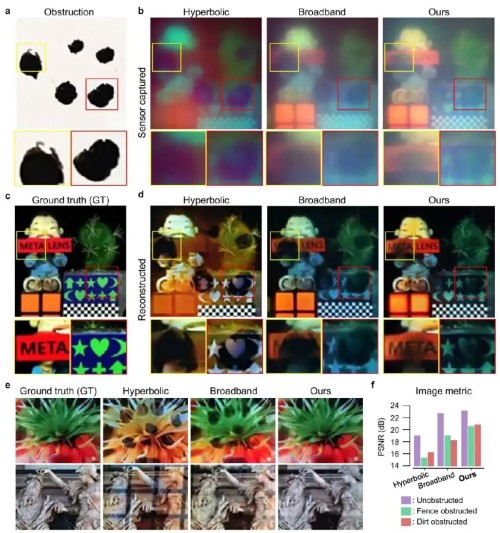
Figure 5: Experimental evaluation of occlusion-removal broadband imaging
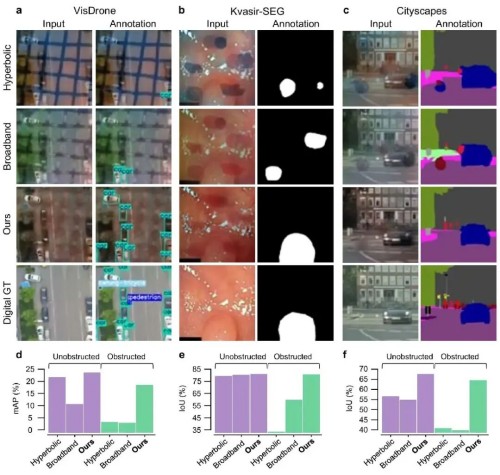
Figure 6: Unobstructed Visual Perception
Source: Optics World
LATEST NEWS
Thank you for visiting the official website of Chongfan Technology. If you have cooperation intentions or suggestions, please contact us through the following methods, and we will reply as soon as possible, thank you!
Address: Room 403, Building 6, Phase III of R&D, No. 36 Xiyong Avenue, High tech Zone, Chongqing, China.
Telephone: +86-13658337211
E-mail: Sales@cfkeji.net
Website: www.cfkeji.net
Mobile Version