
Chongfan Technology
News
19
2026
-
08
Ingestible origami metamaterials for prolonging the oral delivery time of drugs
Author:
A team led by Giovanni Traverso and Robert Langer at the Massachusetts Institute of Technology has developed an origami-inspired oral drug-delivery formulation that can remain in the gastric lumen for extended periods. Through geometric design and shape optimization, the system achieves both ease of administration and prolonged gastric residence, allowing the formulation to be folded and loaded into a standard swallowable capsule. Upon dissolution in the stomach, the formulation rapidly unfolds into its intended configuration. The authors’ formulation and manufacturing approach enable the creation of a long-acting dosage form with a drug-loading capacity of up to 40% by weight of model drugs such as moxifloxacin. The high surface‑to‑volume ratio afforded by the origami‑inspired architecture yields near‑linear release kinetics over the observed time window. Additionally, pH‑sensitive components have been incorporated, which dissolve in the neutral pH environment of the gastrointestinal tract, facilitating dissociation and safe transit through the intestine. In vitro and in vivo studies using porcine models demonstrate that the formulation can persist in the stomach for up to three weeks (with a minimum of one week) while maintaining an approximately constant release rate over three days. Endoscopic and radiological assessments in animal models confirm that this dosage form traverses the gastrointestinal tract safely, without causing obstruction or injury.
The research findings were published in Nature Communications on July 27, 2026, under the title “An ingestible origami-inspired metamaterial for prolonged oral delivery of therapeutics.”
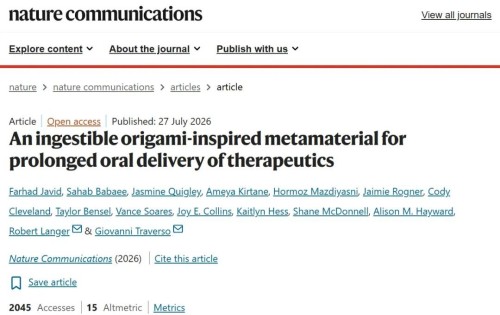
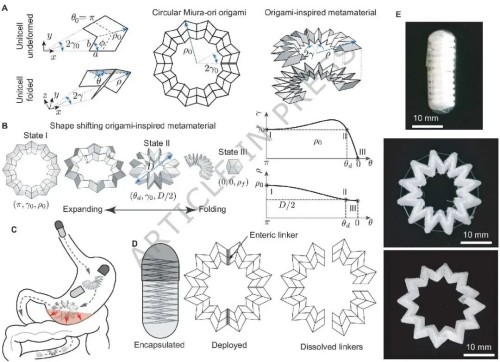
Figure 1: Transformable origami-inspired metamaterials
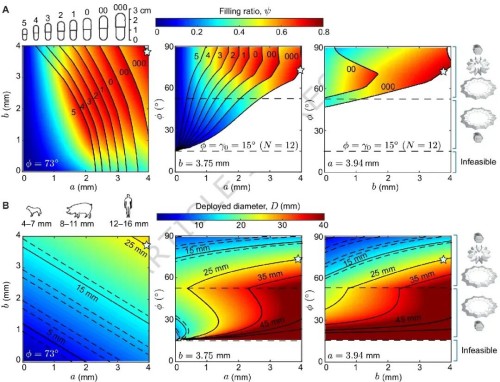
Figure 2: Characterization of shape‑reconfigurable metamaterials for encapsulation and deployment.
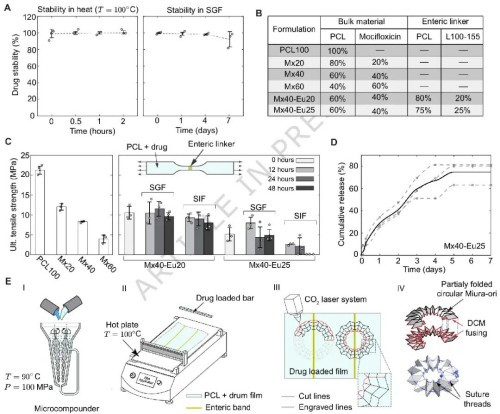
Figure 3: Material Characterization and Preparation
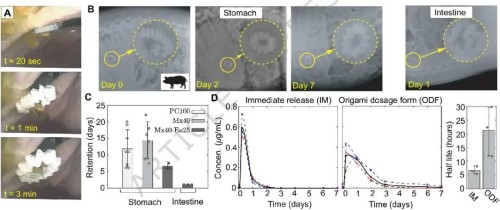
Figure 4: In vivo evaluation of gastric retention and drug release
Source: Optics World
LATEST NEWS
Thank you for visiting the official website of Chongfan Technology. If you have cooperation intentions or suggestions, please contact us through the following methods, and we will reply as soon as possible, thank you!
Address: Room 403, Building 6, Phase III of R&D, No. 36 Xiyong Avenue, High tech Zone, Chongqing, China.
Telephone: +86-13658337211
E-mail: Sales@cfkeji.net
Website: www.cfkeji.net
Mobile Version