
Chongfan Technology
News
11
2026
-
11
Metasurface-Based Structural Light-Field Quantum Number Identifier
Author:
The teams led by Ling-Jun Kong at Beijing Institute of Technology and Furong Zhang at Shandong Petroleum & Chemical College have proposed and experimentally demonstrated an ultra-compact recognizer that identifies the quantum numbers of structured light fields using a single multiplexed holographic metasurface directly bonded to a CMOS imaging sensor. Simulation results show that their method can distinguish 40 orbital angular momentum (OAM) modes, 32 Laguerre–Gaussian (LG) modes, and 32 Gaussian Laguerre (HG) modes, with average recognition visibilities exceeding 0.96, 0.86, and 0.81, respectively. Experimental results confirm that the device successfully resolves 40 OAM modes and 32 LG modes, with average recognition visibilities above 0.87 and 0.81, respectively. The entire recognition system measures only about 0.9 mm × 0.9 mm and requires no external optical components. This work holds potential applications in high-dimensional quantum key distribution, mode division multiplexing, and on-chip photonic information processing.
The research findings were published in Laser & Photonics Reviews on November 3, 2026, under the title “Metasurface-Based Ultracompact Recognizer of Quantum Numbers of Structured Light Fields.”
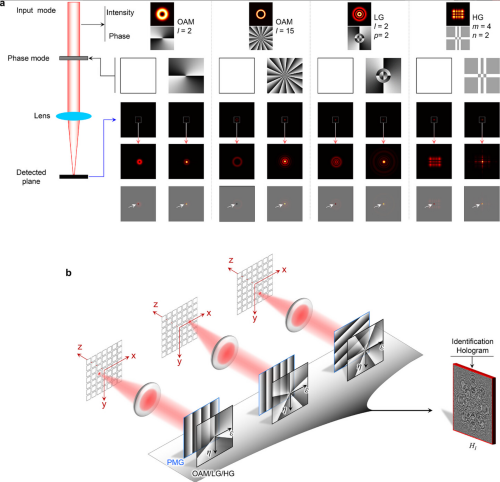
Figure 1: Principle of quantum number identification in structured light fields and design of the identification hologram
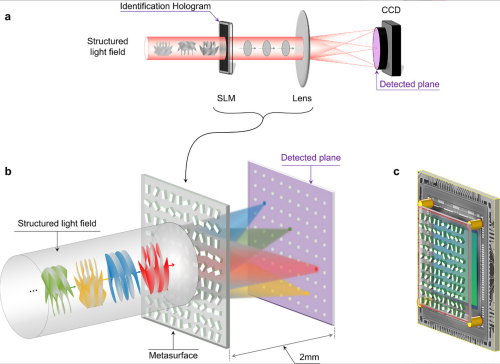
Figure 2: Schematic diagram of an ultra-compact recognition device based on the quantum numbers of structured light fields.
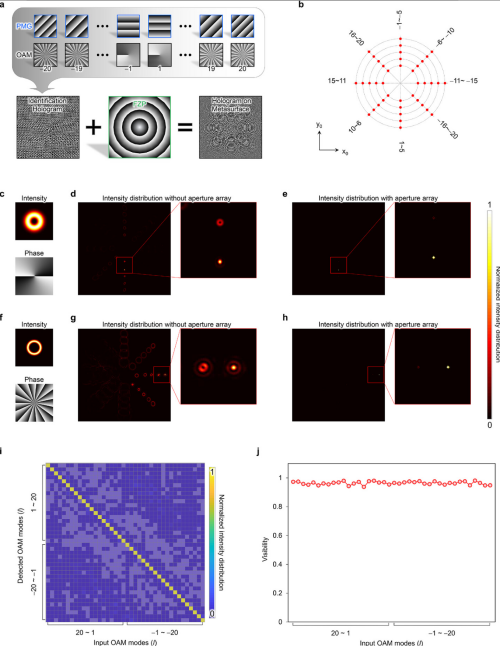
Figure 3: Simulation results for the identification of quantum numbers of 40 OAM modes
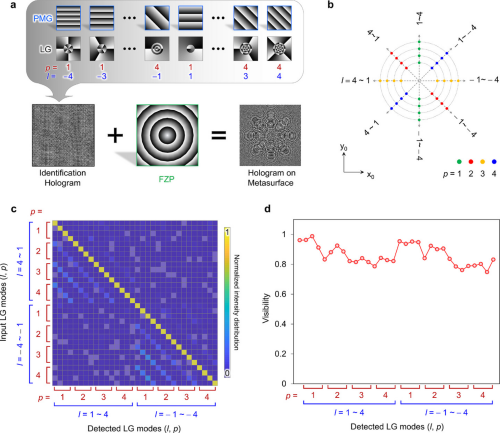
Figure 4: Identification of the quantum numbers (l, p) in the LG mode
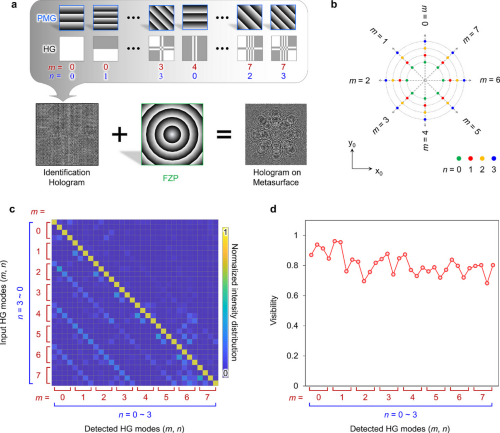
Figure 5: Identification of the quantum numbers (m, n) in the HG mode
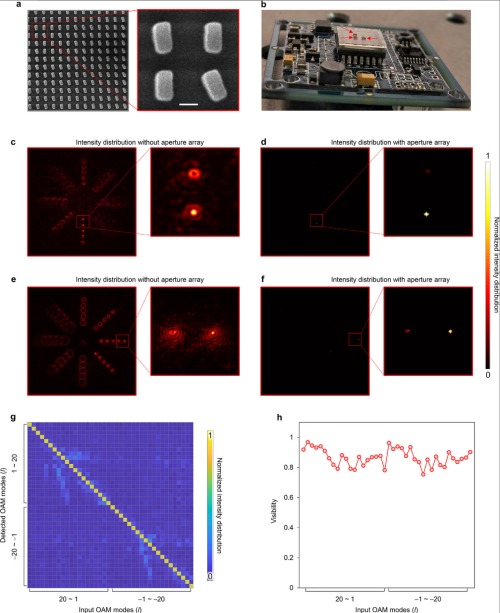
Figure 6: An ultra-compact quantum number identifier for structured light fields based on metasurfaces, along with experimental results in the orbital angular momentum (OAM) regime.
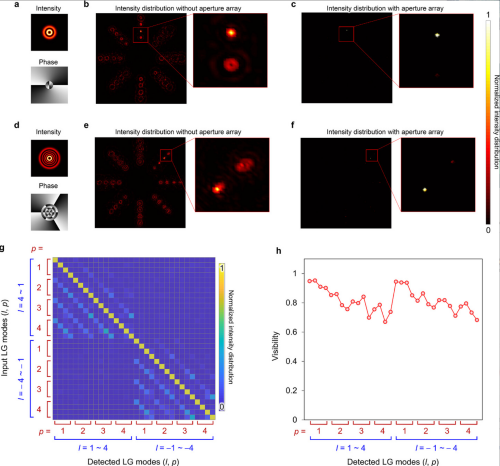
Figure 7: Identification of the quantum numbers for the LG mode
Source: optics World of Optics
Previous
Previous
Thank you for visiting the official website of Chongfan Technology. If you have cooperation intentions or suggestions, please contact us through the following methods, and we will reply as soon as possible, thank you!
Address: Room 403, Building 6, Phase III of R&D, No. 36 Xiyong Avenue, High tech Zone, Chongqing, China.
Telephone: +86-13658337211
E-mail: Sales@cfkeji.net
Website: www.cfkeji.net
Mobile Version
