
Chongfan Technology
News
14
2026
-
08
Peking University: Diamagnetic-Stabilized Magnetic Levitation Magnetometer, Science
Author:
Suspension particle systems represent a rapidly advancing class of precision sensing materials, offering low-loss, highly isolated environments by eliminating mechanical contact and associated noise. Current room-temperature suspension technologies are predominantly sensitive to acceleration, and integrating them with high‑sensitivity magnetic sensing remains a significant challenge.
Recently, Researcher Ji Wei of Peking University and Changhao Xu of the University of Mainz, among others, published a paper in Science reporting an antimagnetic‑stable magnetic‑levitation magnetometer that optically detects the motion of a magnetic object.
The experiment achieved a sensitivity of 32 femtoteslas per square root hertz, sufficient for a wide range of applications in biology, chemistry, and fundamental physics. The device’s performance is comparable to that of superconducting quantum interference devices and atomic magnetometers, while also offering the advantage of operating at room temperature and in the Earth’s magnetic field.
Levitated sensor for magnetometry in ambient environment. A levitated sensor for magnetometric measurements under ambient conditions.
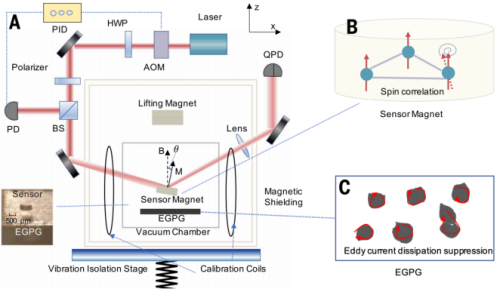
Figure 1: Experimental setup.
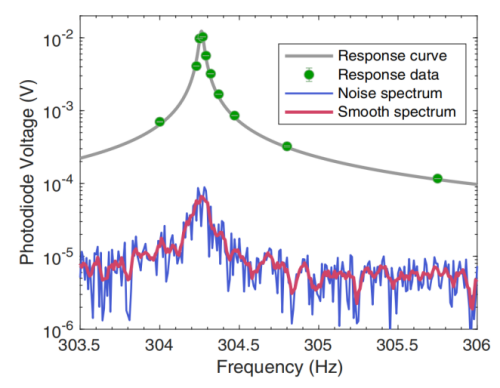
Figure 2: Response and noise RMS spectra near the resonant frequency.
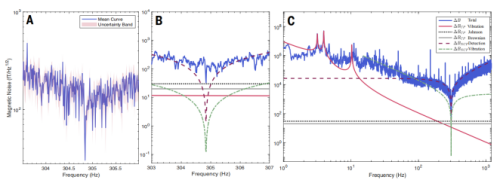
Figure 3: Magnetic sensitivity across different frequency bands.
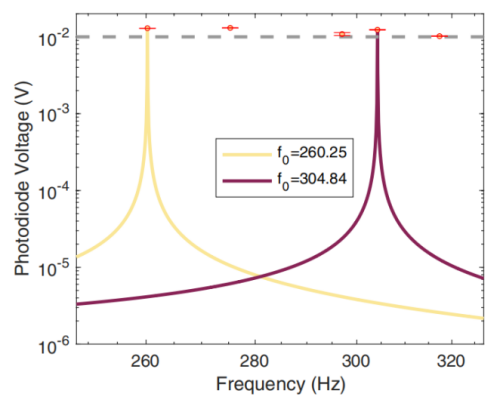
Figure 4: Resonance response at multiple resonant frequencies f0.
In numerous fields, ranging from medicine to particle physics, high‑sensitivity magnetic measurement techniques are of paramount importance. Nanoscale and microscale objects levitated in vacuum can serve as sensors, as they eliminate the need for physical clamping and thus hold promise for minimizing interactions with the environment. However, employing levitated objects as magnetic sensors typically requires cryogenic cooling to suppress thermal noise—requiring systems with low loss and effective isolation from environmental disturbances.
This study introduces a room-temperature diamagnetic‑stabilized levitation magnetometer (LeMaMa). By enhancing the magnetic field gradient of the levitating magnet, a single layer of diamagnetic material achieves stable levitation, while optical reflection is used to monitor the magnet’s dynamics. To suppress multiple noise sources, an advanced approach integrating innovative structural design and materials engineering has been implemented, including precisely engineered diamagnetic layers that mitigate the dominant thermal noise arising from conductive materials.
At the optimal frequency of 305 Hz, using a 0.2-mm‑diameter magnet, the device achieves sensitivity comparable to that of superconducting levitation experiments employing SQUID readout, rivaling state-of-the-art performance. Operating under ambient conditions and offering potential for further sensitivity enhancement, this sensor holds promise for broad applications.
Source: Today’s New Materials
LATEST NEWS
Thank you for visiting the official website of Chongfan Technology. If you have cooperation intentions or suggestions, please contact us through the following methods, and we will reply as soon as possible, thank you!
Address: Room 403, Building 6, Phase III of R&D, No. 36 Xiyong Avenue, High tech Zone, Chongqing, China.
Telephone: +86-13658337211
E-mail: Sales@cfkeji.net
Website: www.cfkeji.net
Mobile Version