
Chongfan Technology
News
28
2026
-
07
Ultrafast Photonic Spin Waves Generated by Photonic Crystal Cavities
Author:
The team of Bo Wang at Shanghai Jiao Tong University has demonstrated photon spin waves—spatiotemporal oscillations of photonic spin angular momentum—arising from the beat note between nondegenerate, orthogonally polarized modes in a photonic crystal cavity. To capture this phenomenon, the authors developed a polarization‑dependent quasinormal mode (QNM) theory that describes the time‑resolved polarization dynamics of pulse excitation in anisotropic nanocavities and predicts ultrafast oscillations of the Stokes parameters. Numerical simulations confirm that even minute structural perturbations can lift degeneracies, giving rise to subpicosecond spin oscillations that can be tuned via the cavity geometry. These oscillating spins couple to the far field, generating propagating photon spin waves in the trailing edge of the transmitted pulse. By investigating photon spin wave generation in square‑lattice photonic crystals, the authors further validate the universality of this mechanism. Their work unveils a compact yet versatile platform for engineering ultrafast spin dynamics of light, with broad prospects for applications in chiral light–matter interactions, ultrafast magnetism mediated by the inverse Faraday effect (IFE), photonic spin angular momentum–based information processing, and ultrafast spin lasers.
The research findings were published on July 23, 2026, in Laser & Photonics Reviews under the title “Ultrafast Photon Spin-Waves Generated From Photonic Crystal Cavities.”
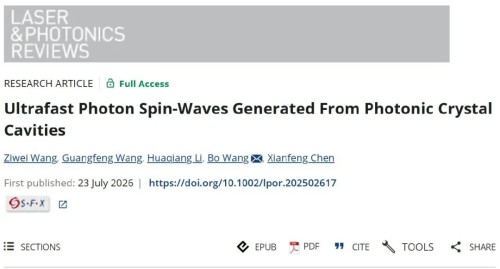
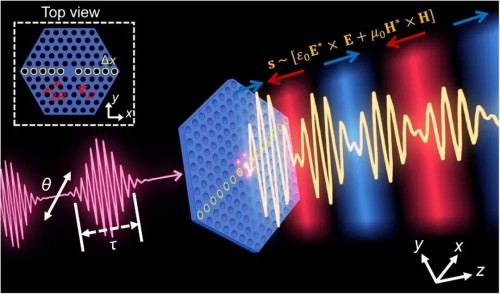
Figure 1: Conceptual diagram of the ultrafast polarization dynamics arising from the interaction between a pulsed laser and a defect cavity in a photonic crystal (PhC).
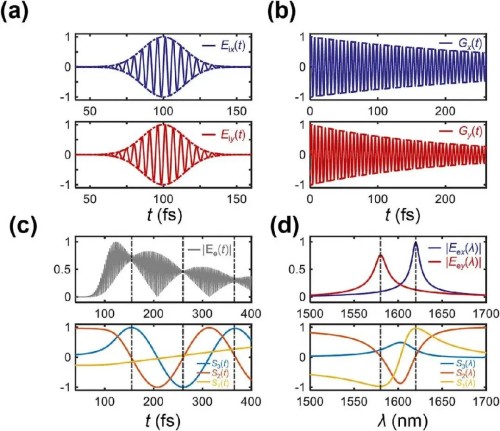
Figure 2: Schematic diagram of the polarization-dependent quasi-normal mode (QNM) theory.
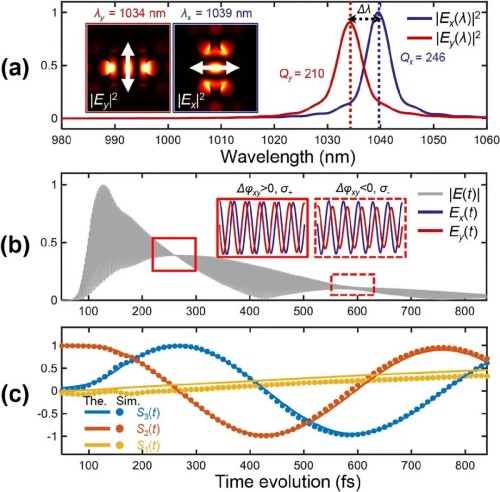
Figure 3: Demonstration of polarization dynamics in a defect cavity of an H1 photonic crystal.
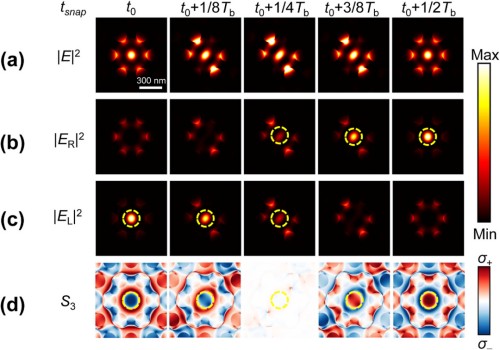
Figure 4: Dynamic evolution of the near-field mode in the distorted H1 cavity over half a beat-period.
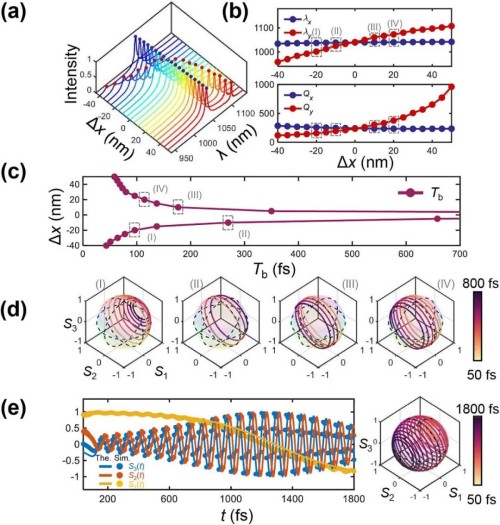
Figure 5: Modulation of photonic spin oscillation characteristics via parameter engineering in the H1 cavity.
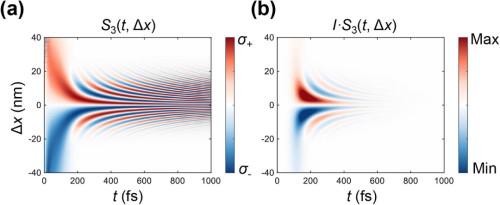
Figure 6: Evolution of S(t) as a function of Δx
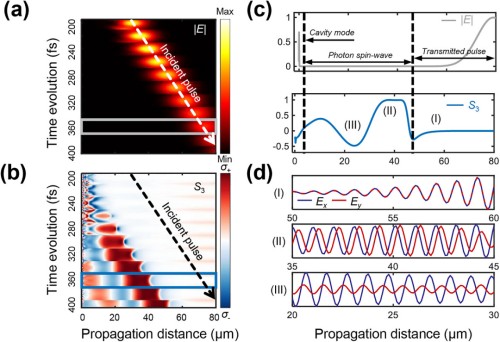
Figure 7: Photon spin waves are generated at the tail of the pulse emitted from the distorted H1 cavity.
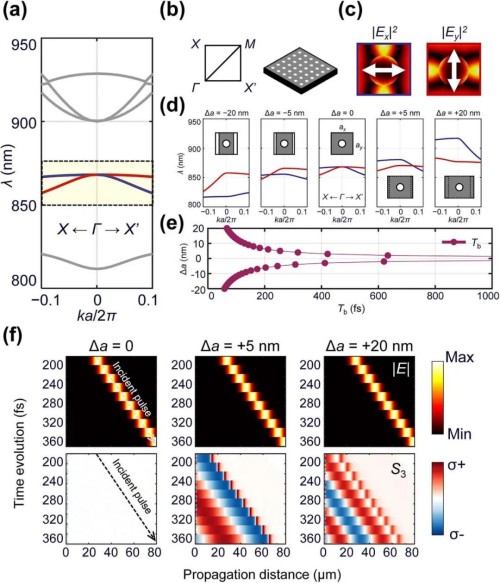
Figure 8: Demonstrating the universality of photonic spin-wave generation and modulation using q‑BIC modes in a square-lattice photonic crystal.
Source: Optics World
LATEST NEWS
Thank you for visiting the official website of Chongfan Technology. If you have cooperation intentions or suggestions, please contact us through the following methods, and we will reply as soon as possible, thank you!
Address: Room 403, Building 6, Phase III of R&D, No. 36 Xiyong Avenue, High tech Zone, Chongqing, China.
Telephone: +86-13658337211
E-mail: Sales@cfkeji.net
Website: www.cfkeji.net
Mobile Version