
Chongfan Technology
News
28
2026
-
07
Dispersion-based metadevices for extended-depth three-dimensional imaging
Author:
The team of Jian Liu and Xumin Ding at Harbin Institute of Technology has developed a dispersion‑based double‑helix (DH) metalens with a 400 µm diameter and a numerical aperture (NA) of 0.5. This metalens employs a dual‑encoding strategy: wavelength provides coarse axial positioning, while the rotational orientation of the DH point spread function (PSF) lobes enables fine‑grained localization. Imaging through a 5 µm pinhole demonstrates that the device offers a continuous axial detection range of 650 µm across the 480–680 nm spectral band—5.7 times broader than its monochromatic counterpart at 550 nm—while maintaining high precision. Further validation using the USAF 1951 target within this extended depth range confirms its practical imaging capabilities beyond basic tracking. By integrating depth‑dependent functionalities into a single planar metasurface, this work achieves extended‑depth three‑dimensional imaging in a compact architecture, opening new avenues for miniaturized optical systems.
The research findings were published on July 24, 2026, in Laser & Photonics Reviews, under the title “Chromatic Meta-Device for Extended-Depth Three-Dimensional Imaging.”
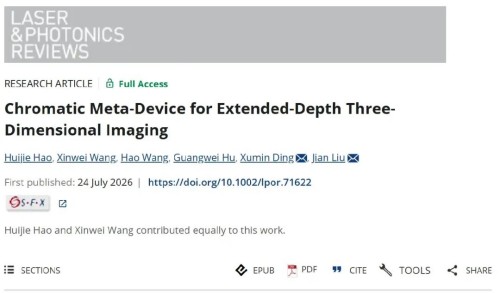
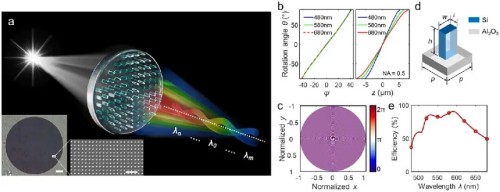
Figure 1: Principle and Design of Dispersion-Engineering Metadevices
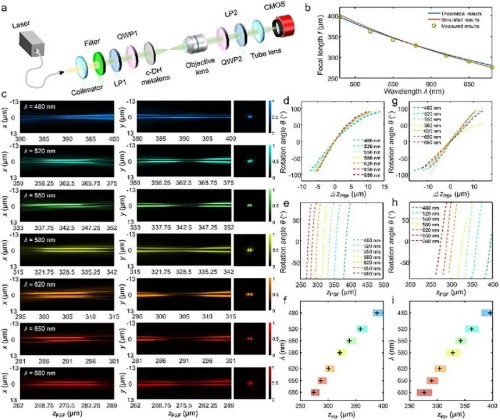
Figure 2: PSF characterization of the dispersive DH metalens and verification of its axial encoding principle.
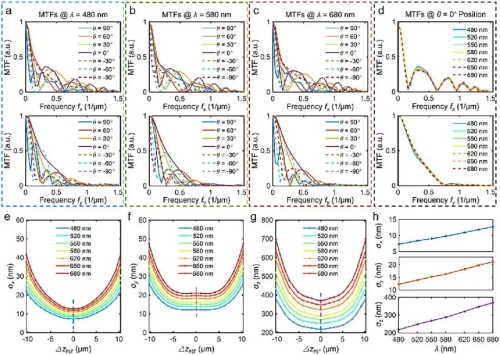
Figure 3: Analysis of the resolution and imaging quality of a dispersive DH metalens (NA = 0.5)
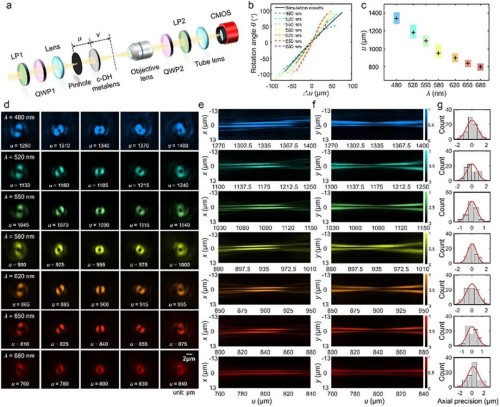
Figure 4: Calibration results for the axial detection range of the chromatic aberration metasurface device.
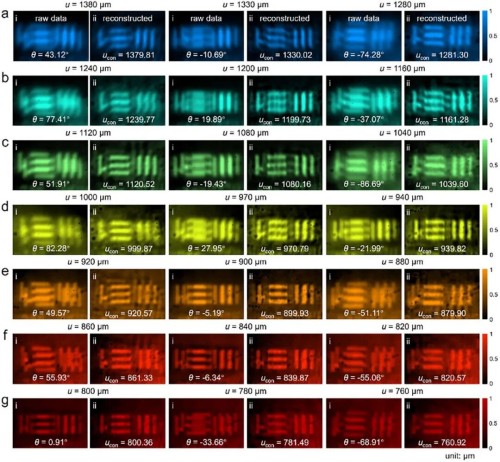
Figure 5: Extended-depth imaging of the U.S. Air Force’s 1951 resolution target
Source: Optics World
LATEST NEWS
Thank you for visiting the official website of Chongfan Technology. If you have cooperation intentions or suggestions, please contact us through the following methods, and we will reply as soon as possible, thank you!
Address: Room 403, Building 6, Phase III of R&D, No. 36 Xiyong Avenue, High tech Zone, Chongqing, China.
Telephone: +86-13658337211
E-mail: Sales@cfkeji.net
Website: www.cfkeji.net
Mobile Version