
Chongfan Technology
News
25
2026
-
05
Edible Micro-Lasers: Scientists Embed Secure Cryptographic Codes in Food
Author:
Summary
In recent years, biological and biomaterial-based microcavities and microlasers have attracted considerable attention for their potential in tracking, labeling, biosensing, cellular barcoding, information security, and anti-counterfeiting. However, to date, no studies have focused on fabricating lasers using edible materials. Recently, from Slovenia Matja? Humar The professor’s team is in Advanced Optical Materials They published their findings, developing a micro‑laser system entirely made of edible materials and successfully embedding barcodes and sensors directly within food, thereby pioneering a new technological approach to food safety monitoring. This research significantly enhances the traceability, safety, and freshness monitoring of food, pharmaceuticals, and non‑food products, while offering a novel technological solution for environmental monitoring, the pharmaceutical sector, and biomedical applications.
How is an edible micro‑laser fabricated?
Lasers primarily consist of three components: a pump source, a gain medium, and an optical resonator. The gain medium is a fluorescent dye that provides optical amplification via stimulated emission. The study presents two types of microcavities: whispering-gallery-mode (WGM) and Fabry–Perot (FP) cavities. The microlaser is pumped by an external light source, such as a pulsed laser. When the optical gain within the cavity exceeds the optical losses, the system reaches the lasing threshold and emits laser light. In this research, edible substances are employed as both the gain medium and the cavity material; these substances are commonly found in food and pharmaceuticals and are used in appropriate quantities and forms. The materials utilized have not undergone any chemical modification, so the product’s visual appearance, taste, and nutritional value remain largely unchanged, while its environmental sustainability is preserved.
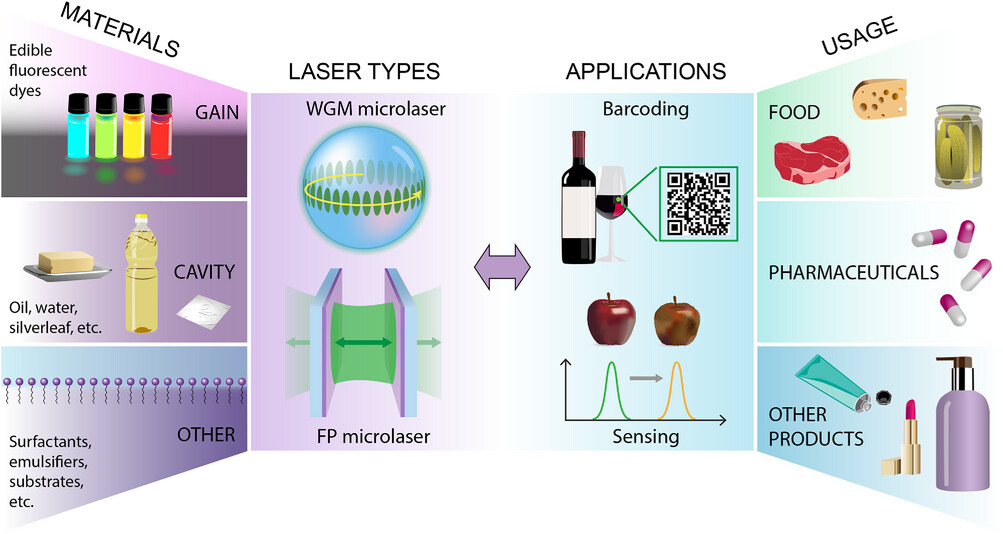
Figure 1: Material selection, laser types, and application scenarios of edible micro‑lasers
The research team systematically screened approved food additives and ultimately identified several key laser gain materials:
Chlorophyll Family Research has found that chlorophyll-a exhibits a quantum yield of 0.3 in sunflower oil, sufficient to sustain laser emission. Moreover, the naturally occurring chlorophyll concentration in olive oil alone is enough to achieve a laser effect, eliminating the need for any additional additives.
Vitamin B2 (riboflavin) : With a quantum yield of 0.27, it exhibits excellent performance in aqueous solutions, making it an ideal laser medium for water-based applications.
Carmine red This traditional food-grade pigment exhibits excellent laser performance in oily environments, thereby broadening its range of applications.
Innovative laser cavity architecture design
The choice of resonator materials depends on the micro‑laser’s configuration and functionality. Typically, these materials should be transparent; in certain configurations, they must also possess a high refractive index or exhibit reflectivity when used as mirrors. Consequently, various oils, waxes, agar, gelatin, chitosan, and thin silver foils can be employed to fabricate the resonator. In terms of laser cavity design, the research team has demonstrated two innovative architectures:
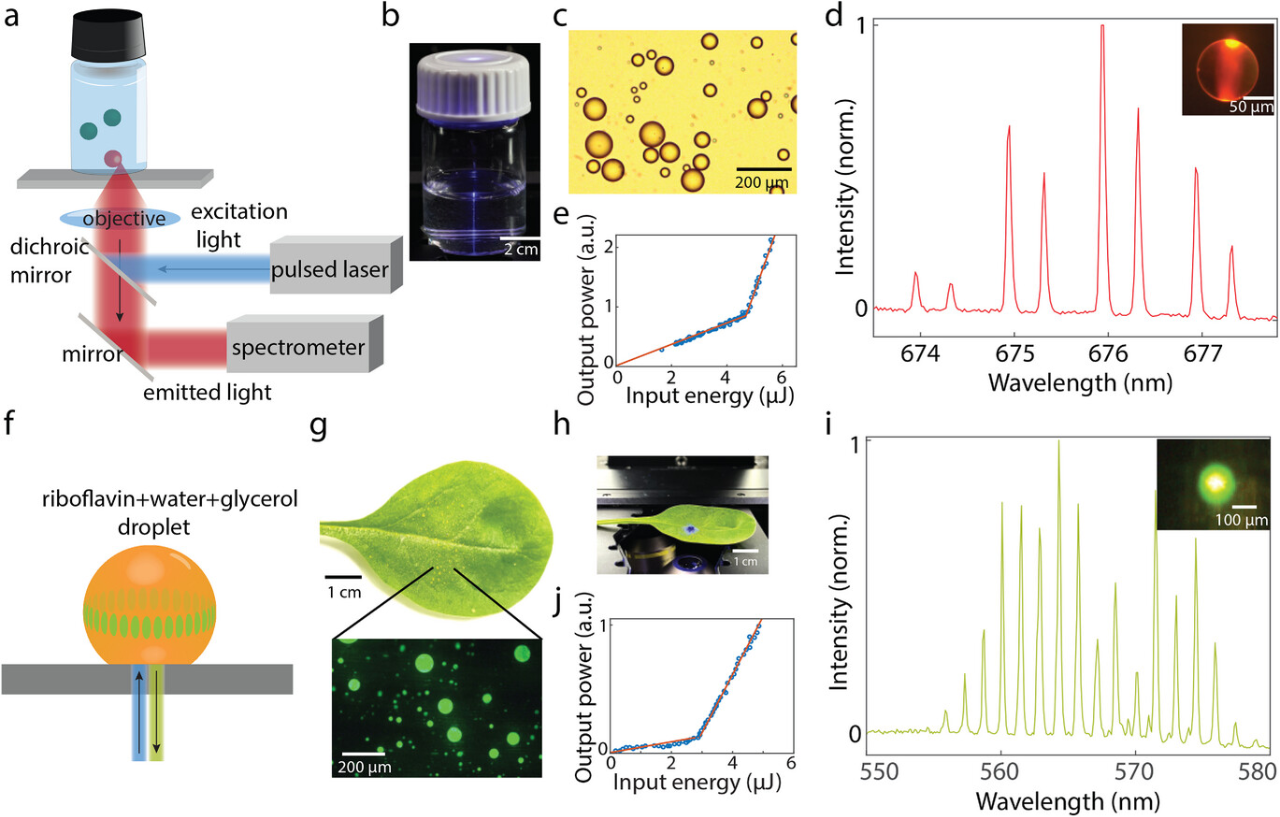
Figure 2. Fabrication process and laser emission characteristics of the edible WGM laser.
Whispering-gallery-mode (WGM) : Leveraging the optical total internal reflection effect in oil droplets or solid microspheres, whispering-gallery-mode (WGM) resonators typically exhibit extremely high Q factors. The research team achieved laser emission by using 2 mM chlorophyll‑A dissolved in sunflower oil or 4 mM carmine red. For chlorophyll‑doped droplets, the measured Q factor exceeded 9,000, with an average laser threshold of 4.5 μJ and a standard deviation of 0.2 μJ. The minimum droplet size required for lasing was approximately 35 μm. In addition to pure chlorophyll‑A, non‑purified chlorophyll extracts from spinach and even pure olive oil could also sustain laser emission from oil droplets suspended in water; however, the laser thresholds were roughly three times higher. Olive oil naturally contains sufficient chlorophyll to serve as a droplet‑based laser without the need for any additional additives. When excited with a continuous-wave (CW) laser or a light‑emitting diode (LED), WGM peaks were also observed in the spectral region below the laser threshold.
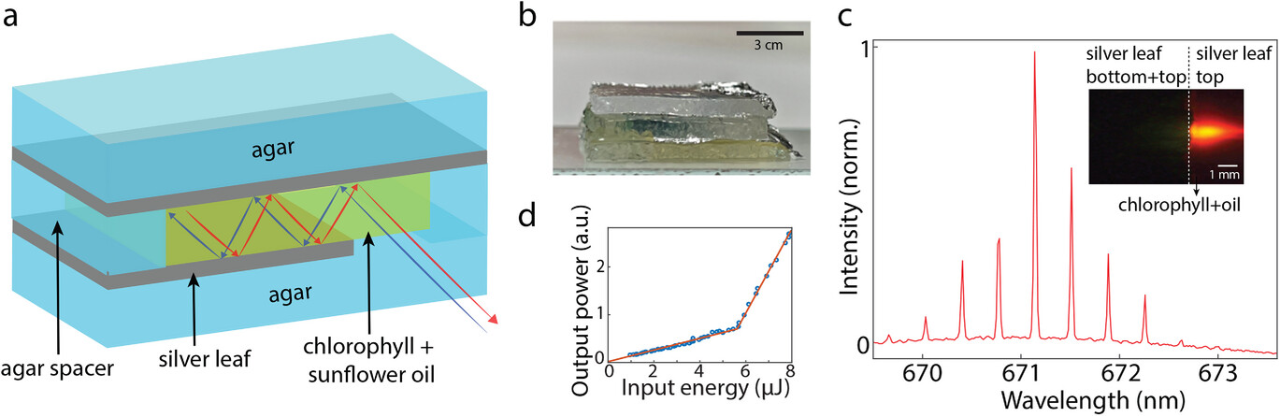
Figure 3 Schematic diagram of an edible FP-cavity laser and its lasing characteristics.
Fabry–Pérot (FP) : A linear cavity composed of two mirrors with a gain medium positioned between them. In the proposed FP edible laser, edible silver leaf is used as the mirror, while agar or gelatin serves as the structural support; the space between the mirrors is filled with either 2 mM chlorophyll dissolved in sunflower oil or 5 mM sodium riboflavin phosphate in an aqueous solution. When the cavity filled with chlorophyll‑doped sunflower oil is pumped by a pulsed laser, sharp, equally spaced peaks appear in the emission spectrum above a laser threshold energy of 6 μJ, indicating lasing within the FP cavity. The average laser threshold is 5.9 μJ, with a standard deviation of 0.2 μJ. Lasing was also achieved using a cavity filled with an aqueous solution of sodium riboflavin phosphate.
Non-clonable precision barcodes
This study demonstrates the precise information‑encoding capabilities of edible micro‑lasers. Monodisperse droplets prepared via microfluidic techniques exhibit a coefficient of variation in size of only 0.2%–0.4%, enabling nanoscale dimensional control accuracy. The size of each droplet can be determined with laser spectroscopy to within an error of just 1.2 nm. The research team has developed a 14‑bit binary coding system that, in theory, can generate 16,384 unique identification codes—sufficient to encode critical information such as manufacturer details, production date, expiration date, and country of origin. Due to the physical constraints of the fabrication process, this encoding scheme exhibits physical unclonability, providing ultimate anti‑counterfeiting protection for high‑value products.
In a practical demonstration, the research team successfully encoded “International Day of Action Against Food Waste, April 26, 2017” into a can of peaches. The entire encoding process required only 5 μL of sunflower oil, with an energy contribution to a 500 mL product that is negligible—just 0.008 kcal per 100 mL. After one year of storage, the encoded information remained perfectly readable.
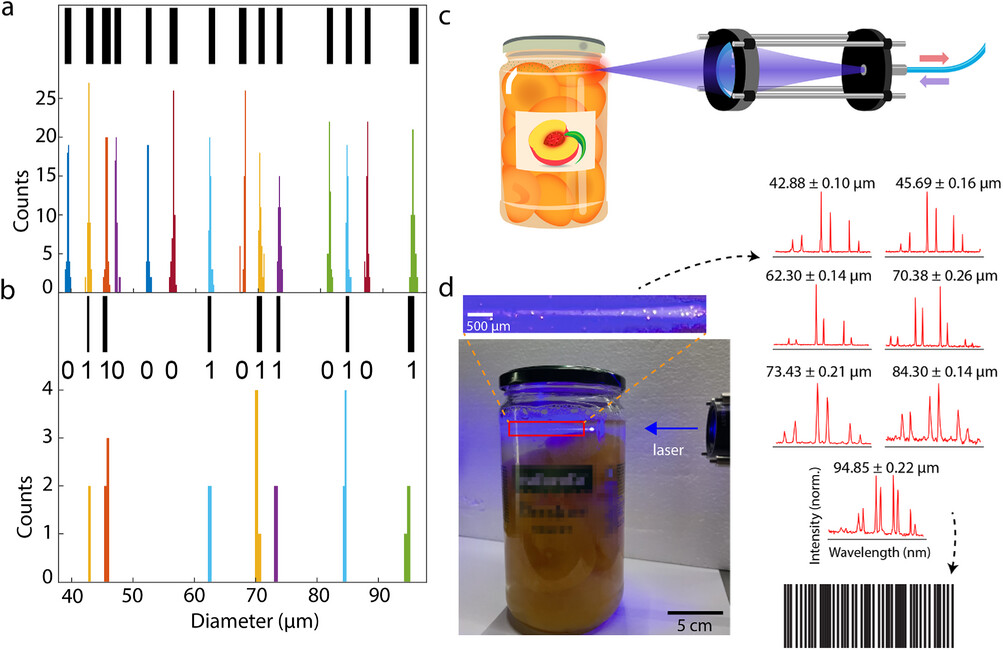
Figure 4: Generation, Embedding, and Retrieval Processes of a 14-bit Binary Coding System
Multifunctional Sensing and Monitoring for Food Safety
In addition to its anti-counterfeiting capabilities, the system also demonstrates robust sensing performance, providing real-time monitoring for food safety:
Precise measurement of sugar concentration By leveraging the WGM cavity’s sensitivity to the refractive index of the surrounding medium, we achieved sugar‑concentration measurements with 0.2% accuracy, a performance comparable to that of commercial refractometers. This capability is of great significance for quality control in products such as alcoholic beverages and fruit juices.
pH Dynamic Monitoring : By leveraging the pH‑responsive swelling of chitosan films, we achieved pH detection with an accuracy of 0.05 pH units. In milk spoilage experiments, we successfully monitored the continuous pH changes over several days, providing a new tool for predicting the shelf life of dairy products.
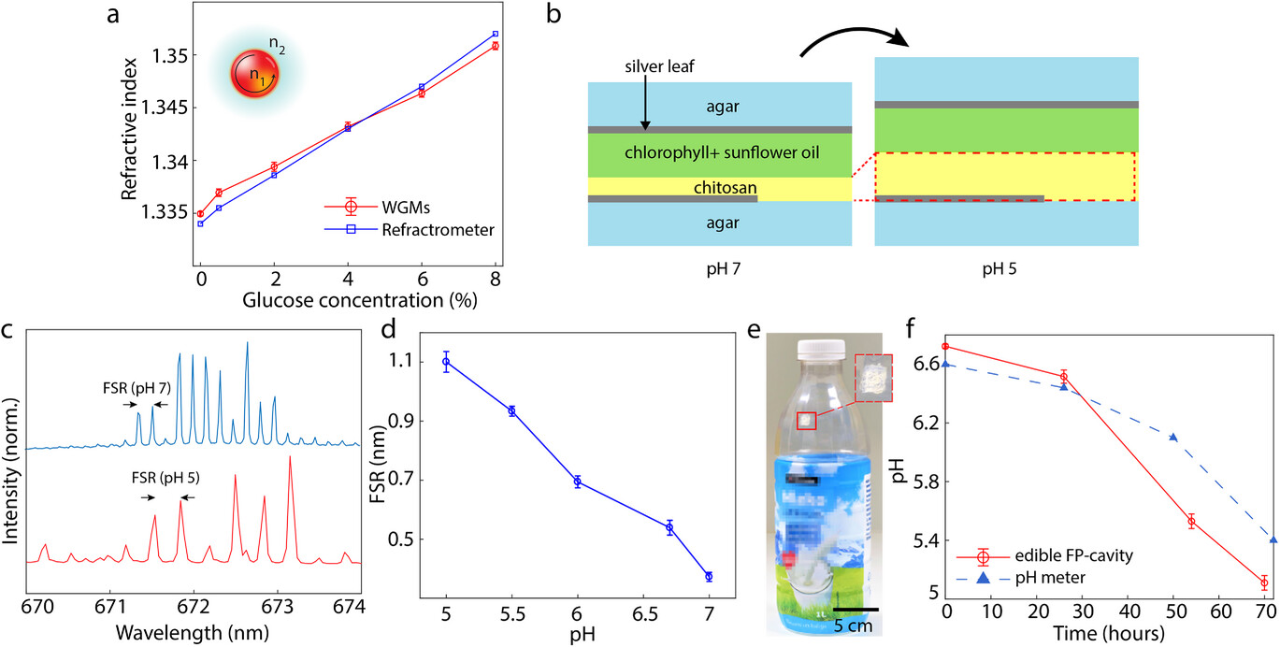
Figure 5 Applications of edible micro‑lasers in sugar content detection and pH monitoring.
Microbial Growth Assay : Innovatively employing nutrient-enriched gelatin as the sensing medium, this approach leverages the degradation of its structure by bacterial gelatinase to extinguish a laser signal, providing a直观 indication of microbial contamination. This “self-destructing” sensor concept opens up new avenues for early warning of food spoilage.
Temperature Exposure Indicator : Temperature‑sensitive components are fabricated using edible fats with distinct melting points; once exposed to temperatures exceeding a set threshold, their structure undergoes irreversible changes, providing an irreversible record for cold‑chain logistics monitoring.
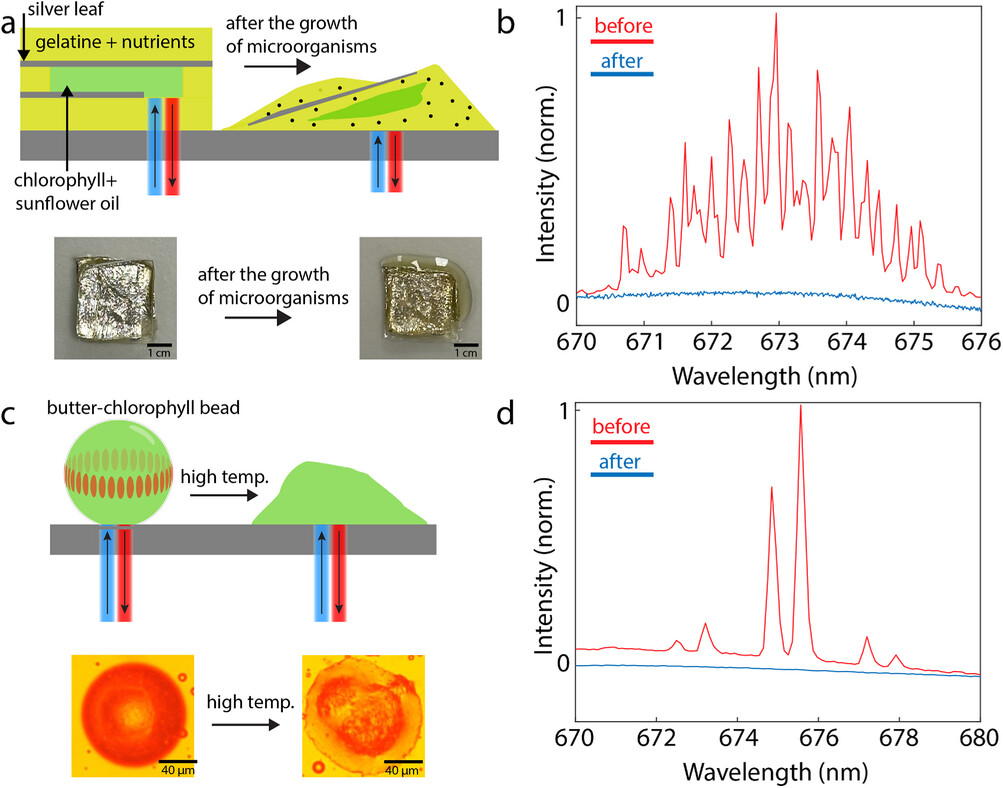
Figure 6. Applications of edible micro‑lasers in microbial detection and temperature indication.
Summary and Outlook
This study presents several types of edible lasers and their applications in enhancing food and pharmaceutical safety. It represents the first systematic investigation of edible laser dyes and microcavities, demonstrating two distinct microcavity architectures—whispering-gallery-mode and Fabry–Perot—and validating the exceptional performance of edible microlasers as sensors and barcodes. The research team notes that, beyond food, this technology can also be applied to quality tracking of consumer products such as cosmetics and agricultural goods, as well as to environmental monitoring. Moreover, the concept can be extended to biomedical domains—including drug capsules and medical implants—offering new tools for personalized medicine.
Laser technology holds tremendous potential in the field of food safety, offering innovative solutions to address global food‑safety challenges. As the technology continues to mature, a new era of “smart foods” is dawning—each product will be equipped with its own tamper‑proof, optically enabled “identity card,” capable of providing real‑time health monitoring.
Science Editor | Chen Guohao
References:
A. R. Anwar, M. Mur, G. Michailidou, D. N. Bikiaris, M. Humar, Microlasers Made Entirely from Edible Substances. Adv. Optical Mater. 2025, 2500497. https://doi.org/10.1002/adom.202500497
Original article link: https://mp.weixin.qq.com/s/FLGresP8PgwasK2Xthu_yw
LATEST NEWS
Thank you for visiting the official website of Chongfan Technology. If you have cooperation intentions or suggestions, please contact us through the following methods, and we will reply as soon as possible, thank you!
Address: Room 403, Building 6, Phase III of R&D, No. 36 Xiyong Avenue, High tech Zone, Chongqing, China.
Telephone: +86-13658337211
E-mail: Sales@cfkeji.net
Website: www.cfkeji.net
Mobile Version