
Chongfan Technology
News
25
2026
-
05
Laser Spectroscopy: The “Secret Key” to Unlocking the Material World
Author:
All things in the world, whether they are sparkling gemstones or soft, cotton-like clouds, each harbors its own unique “secret of light.” And laser spectroscopy is a magical key that helps us unlock these secrets.
1. “Material Secret” Reader
Every substance has its own unique spectrum, just as each of us has a one-of-a-kind fingerprint. Laser spectroscopy is like a pair of exceptionally sharp eyes, capable of detecting even the tiniest, imperceptible changes in light that the naked eye cannot see. With this power, it can reveal the precise chemical composition of any object. Imagine, for instance, being in a pitch‑black room where a super‑bright laser beam suddenly appears—this beam not only illuminates the space but also reads out the “identity information” of everything inside. Thus, whether it’s locating precious minerals deep underground or helping doctors identify subtle health issues within the body, laser spectroscopy proves to be an invaluable tool.
II. The Major “Skills” of Laser Spectroscopy Techniques
Since its introduction to China in the late 1970s, laser spectroscopy has steadily evolved into a powerful array of analytical tools. Like a detective skilled in multiple techniques, it can employ absorption spectroscopy, laser-induced breakdown spectroscopy, fluorescence spectroscopy, Raman spectroscopy, high-resolution spectroscopy, and more to precisely determine the composition and structure of materials. These methods have not only proven indispensable in fundamental research across physics, chemistry, biology, medicine, and astronomy but have also found practical applications in engineering settings—ranging from engine combustion diagnostics and supersonic wind‑tunnel measurements to three‑dimensional atmospheric monitoring and smart agricultural management—thus serving as key enablers behind many scientific and technological breakthroughs.
(1) Laser Absorption Spectroscopy Technology
In the past, determining the composition of a gas was like groping through a vast labyrinth in the dark—slow and prone to error. Today, with laser absorption spectroscopy, it’s as if we have an exceptionally powerful “guide.” For instance, this technique can now be used to measure heavy metal ion concentrations in water, enabling rapid and accurate assessment of whether mercury ion levels exceed regulatory limits and thereby evaluating the degree of water contamination. Moreover, in the quantitative analysis and stability studies of pharmaceuticals, laser absorption spectroscopy can detect changes in the molecular structure of certain oxidation‑prone drugs, providing critical data for establishing their shelf life and appropriate storage conditions.
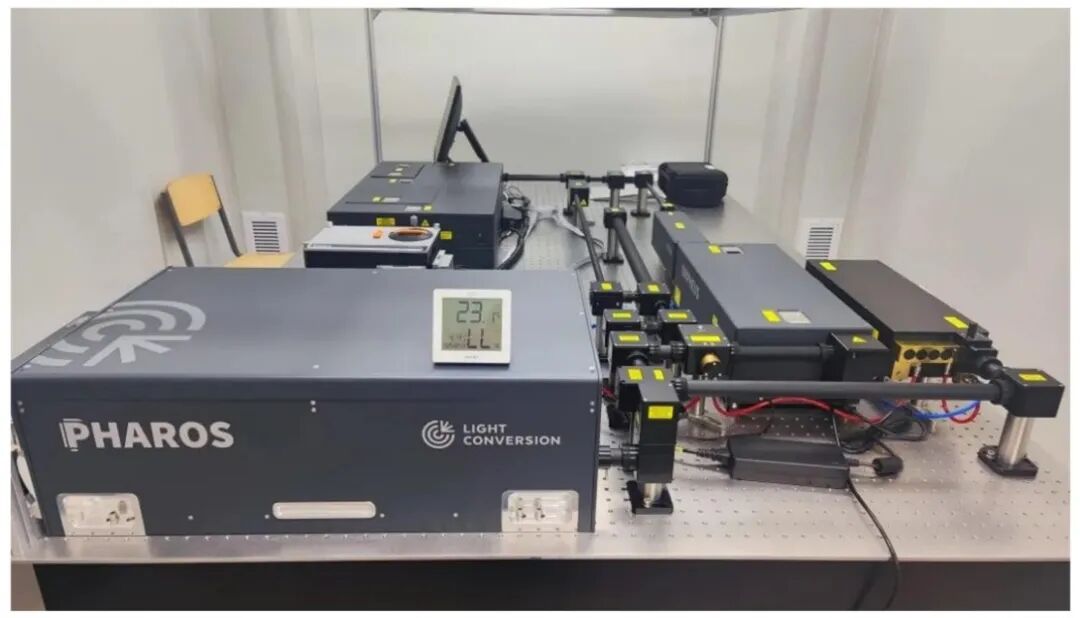
Figure 1: Laser Absorption Spectroscopy Test System
(II) Laser-Induced Breakdown Spectroscopy
Laser-induced breakdown spectroscopy is like a superhero, wielding a high‑energy laser sword to carve ultra‑small yet brilliantly bright plasma “sparks” on an object’s surface. As these sparks cool, they emit distinctive light; by analyzing this light, we can determine the elemental composition of the material. Because the technique requires no complicated sample preparation and can directly reveal elemental concentrations and compositional distributions with a single laser pulse, it has become a star in many fields—ranging from detecting soil and water contamination and analyzing material compositions to assisting physicians in examining biological tissues, and even safeguarding ancient cultural relics.
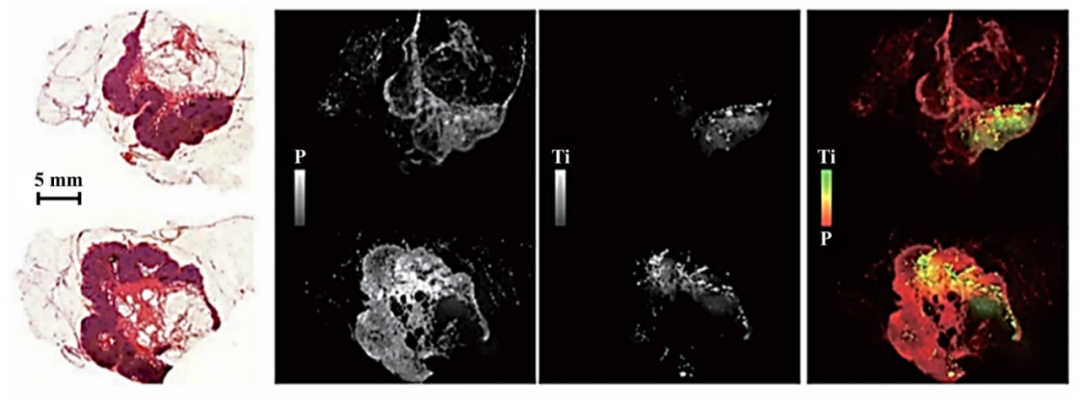
Figure 2. Elemental distribution maps in lymphatic tissue obtained by laser-induced breakdown spectroscopy.
(3) Laser-Induced Fluorescence Spectroscopy
Laser-induced fluorescence spectroscopy is like a magical wizard: by illuminating a sample with a laser of a specific wavelength, it “awakens” the atoms, molecules, or ions within, causing them to emit colorful fluorescence. This fluorescence serves as a kind of “emotional fingerprint,” revealing the sample’s composition and state. Not only is this technique highly accurate, but it also provides exquisite resolution, enabling it to play a transformative role across numerous fields. In biomedicine, it can be used to label and detect biomolecules such as cells, proteins, and nucleic acids; for example, fluorescently labeled antibodies bind to their antigens, and subsequent laser excitation generates fluorescence, allowing the detection of specific proteins or pathogens in living organisms, as well as the monitoring of intracellular calcium ion concentration changes to study cellular physiological processes. In materials analysis, it is employed to characterize a material’s composition, structure, and properties—such as detecting trace impurities in semiconductor materials or investigating the luminescence mechanisms of phosphorescent materials.
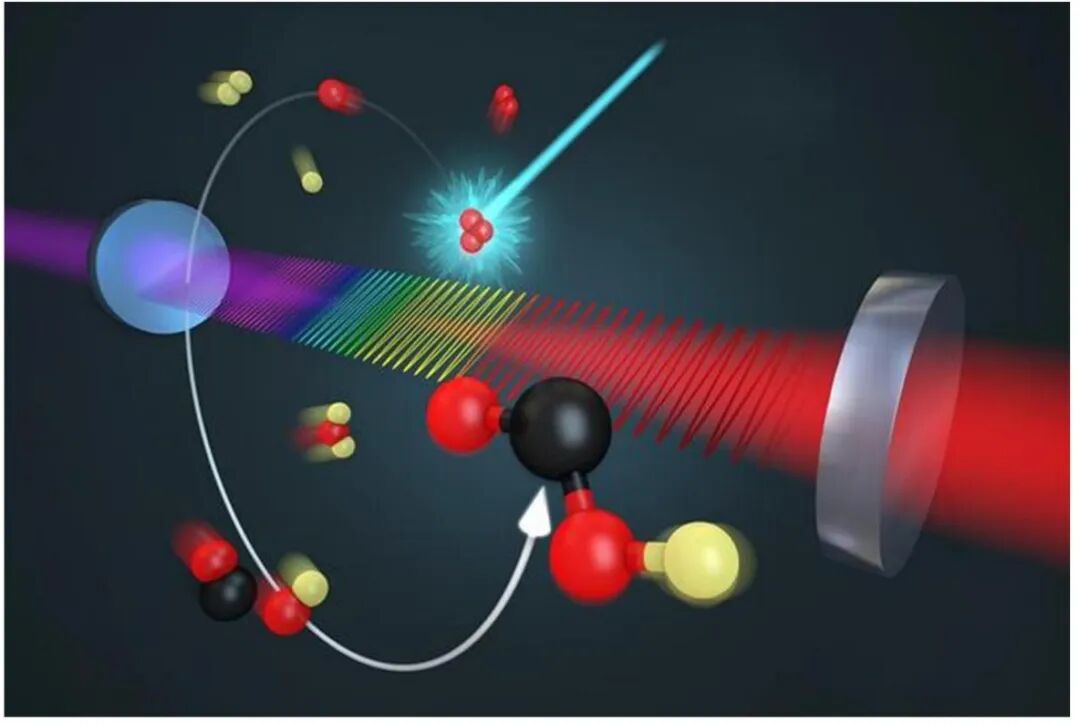
Figure 3 Schematic diagram of the principle of laser-induced fluorescence spectroscopy
(4) Raman Spectroscopy Technology
Raman spectroscopy is an analytical technique based on the frequency shifts of scattered light resulting from the interaction between light and matter. When a laser beam illuminates a sample, most of the light undergoes elastic scattering, with the scattered light retaining the same frequency as the incident light—this is known as Rayleigh scattering. However, a small fraction of the light experiences inelastic scattering, leading to a change in the frequency of the scattered light; this phenomenon is called Raman scattering. Raman spectroscopy is a method that detects this frequency‑shifted Raman‑scattered light to obtain information about the vibrational and rotational modes of molecular species.
Raman spectroscopy has broad applications across numerous fields. In chemical research, it can be used to analyze molecular structures, identify compounds, and monitor chemical reaction processes. For example, in the biomedical field, Raman spectroscopy enables the detection of biomolecules and cellular imaging, providing an essential tool for disease diagnosis and biomedical research. In food safety, it allows for the rapid detection of additives, pesticide residues, and harmful substances in food. In archaeology, during the excavation of the Sanxingdui site, portable Raman spectrometers facilitated non‑contact analysis, enabling the compositional characterization of precious artifacts without causing any damage.
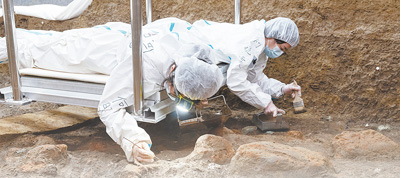
Figure 4: On-site exploration of the Sanxingdui artifact excavation
(5) High-Resolution Spectroscopy Techniques
The core of high-resolution spectroscopy lies in its ability to resolve spectra with exceptional precision, decomposing them into extremely fine intervals. This is akin to unfolding a richly colored painting to its utmost extent, enabling us to discern the subtle variations and transitions of each hue. Such capability makes it particularly effective in the spectral analysis of complex systems, allowing it to distinguish closely spaced spectral lines and identify distinct components within a sample, even when their spectral signatures are remarkably similar. High-resolution spectroscopy finds critical applications across numerous fields: in chemical research, it helps scientists precisely characterize molecular structures and compositions, shedding light on the mechanisms of chemical reactions; in astronomy, it is used to analyze the light emitted by stars and galaxies, revealing the composition and evolutionary processes of the universe.
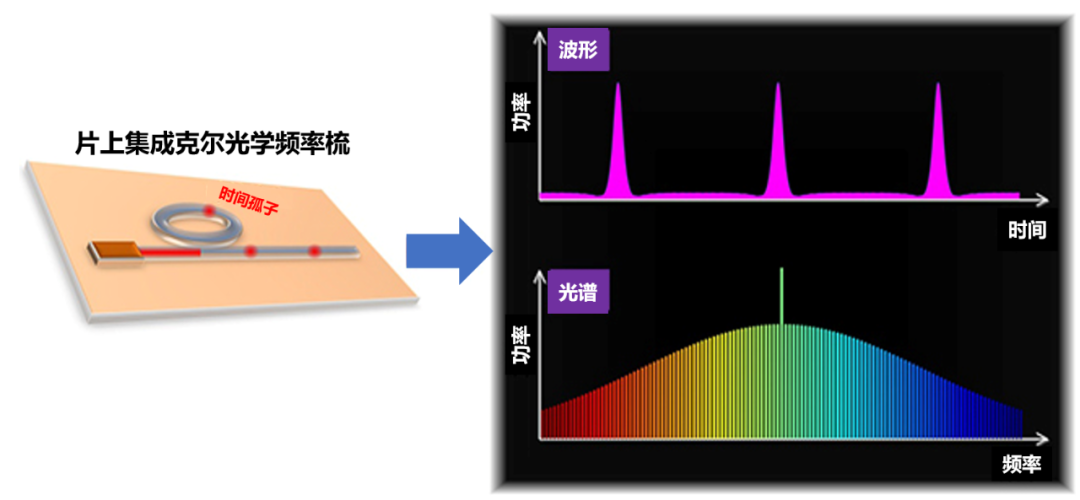
Figure 5: Optical frequency comb for precision metrology and spectroscopy
Original article link:
LATEST NEWS
Thank you for visiting the official website of Chongfan Technology. If you have cooperation intentions or suggestions, please contact us through the following methods, and we will reply as soon as possible, thank you!
Address: Room 403, Building 6, Phase III of R&D, No. 36 Xiyong Avenue, High tech Zone, Chongqing, China.
Telephone: +86-13658337211
E-mail: Sales@cfkeji.net
Website: www.cfkeji.net
Mobile Version