
Chongfan Technology
News
12
2026
-
06
Five-Modal Multiphoton Microscopy System
Author:
Multimodal multiphoton microscopy can simultaneously acquire information on tissue architecture, cellular metabolism, and chemical composition, making it highly valuable in fields such as life sciences, neuroscience, and label-free pathological diagnosis. Conventional multiphoton microscopy obtains images of tissue morphology, endogenous fluorescence, collagen structure, and refractive-index interfaces through techniques like two-photon excitation fluorescence (2PEF), three-photon excitation fluorescence (3PEF), second-harmonic generation (SHG), and third-harmonic generation (THG); however, it typically lacks the ability to directly identify specific chemical constituents. Coherent anti-Stokes Raman scattering (CARS) microscopy, which leverages molecular vibrational “fingerprints” to provide label-free, chemically selective contrast, serves as an important complement to multiphoton imaging. Nevertheless, high‑performance CARS imaging requires two tightly synchronized ultrashort pulses—one as the pump and the other as the Stokes light—and demands that the light source exhibit a high repetition rate, a broad wavelength tuning range, and stable output characteristics. Traditional solid-state lasers or supercontinuum sources often result in bulky systems with complex alignment, thereby limiting their compact integration and practical deployment.
To address this challenge, the L07 group at the Institute of Physics, Chinese Academy of Sciences, and the Beijing National Laboratory for Condensed Matter Physics has developed a tunable dual-wavelength fiber‑based CARS source based on self‑phase modulation spectral selection (SESS) technology. This source delivers pump pulses with wavelengths tunable over the 775–950 nm range, while simultaneously generating Stokes pulses centered at 1.035 μm, at a repetition rate of 37 MHz. The pump pulse energy exceeds 2 nJ, enabling coverage of a Raman shift range from 800 to 3500 cm⁻¹. The relevant results have been published in Biomedical Optics Express and were selected as an Editor’s Pick.
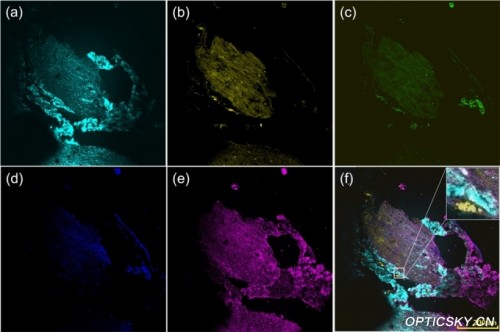
Figure 1. Specific CARS imaging of unsaturated fatty acids in the arcuate nucleus (ARC) region of mouse brain slices, along with five-modal fusion.
By tuning the pump‑light wavelength, this light source can span multiple key molecular vibrational bands. For example, pump wavelengths of 775 nm, 788 nm, 800 nm, 880 nm, and 937 nm correspond respectively to the O–H stretching vibration of water molecules, the =C–H stretching vibration of unsaturated fatty acids, the C–H stretching vibration of lipids, the amide I band of proteins, and the O–P–O stretching vibration in DNA. After validating the CARS source and its imaging performance, the research team integrated this dual‑wavelength CARS source into a multimodal multiphoton microscopy system, thereby establishing a five‑modal imaging platform that encompasses CARS, two‑photon excitation fluorescence (2PEF), three‑photon excitation fluorescence (3PEF), second‑harmonic generation (SHG), and third‑harmonic generation (THG). Figure 1 shows the multimodal imaging results obtained from the hypothalamic arcuate nucleus region of a mouse brain using this platform. The CARS channel, centered on the =C–H stretching vibration at 3015 cm⁻¹, enables selective imaging of unsaturated lipids. Meanwhile, the 2PEF, 3PEF, SHG, and THG channels provide complementary information on metabolic processes, collagen architecture, and refractive index interfaces, highlighting the platform’s potential for multidimensional label‑free imaging of biological tissues. Looking ahead, the research team plans to further develop a single‑source‑driven five‑modal architecture, advancing the application of compact multimodal imaging platforms in tissue pathology analysis and clinical translational research.
Source: Institute of Physics, Chinese Academy of Sciences
LATEST NEWS
Thank you for visiting the official website of Chongfan Technology. If you have cooperation intentions or suggestions, please contact us through the following methods, and we will reply as soon as possible, thank you!
Address: Room 403, Building 6, Phase III of R&D, No. 36 Xiyong Avenue, High tech Zone, Chongqing, China.
Telephone: +86-13658337211
E-mail: Sales@cfkeji.net
Website: www.cfkeji.net
Mobile Version