
Chongfan Technology
News
08
2026
-
07
Google AI Quantum – Localization Without Disorder | Science
Author:
In quantum many-body systems, phenomena arising from disorder pose challenges to both analytical and numerical methods across relevant time and length scales.
Recently, Google’s Quantum AI team published a paper in Science in which they investigated the initial state to reduce the cost of disordered sampling, proposing a quantum circuit that generates a tunable superposition of all disordered configurations. In lattice gauge theory, this superposition can be interpreted as a coherent combination of different gauge sectors.
On experimentally accessible timescales, in both one- and two-dimensional systems, we observe localization in the absence of disorder: despite an evolution and initial state that are entirely free of disorder, perturbations fail to spread. Nevertheless, entropy measurements reveal an essential difference between states prepared via superposition and those obtained by direct sampling from a disordered ensemble.
Based on this superposition scheme, an algorithm has also been proposed that achieves polynomial‑time acceleration in sampling disordered configurations—a long-standing challenge in the study of many-body localization.

Observation of disorder-free localization using a (2+1)D lattice gauge theory on a quantum processor. Observation of disorder-free localization in a (2+1)-dimensional lattice gauge theory on a quantum processor.
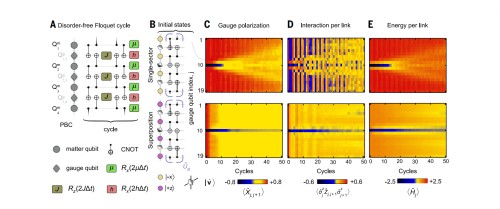
Figure 1: One-dimensional ring lattice setup and spatiotemporal evolution of a local perturbation.
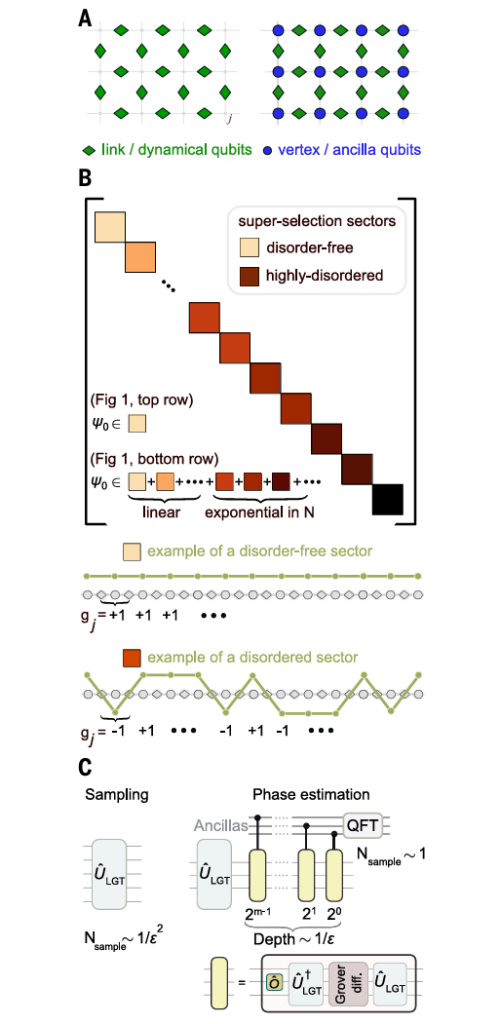
Figure 2: Schematic diagram of the experimental principle and the superposition sampling scheme.
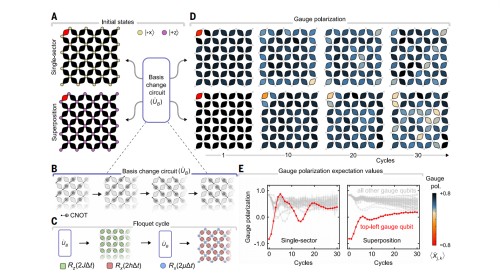
Figure 3: Two-dimensional lattice setup and spatiotemporal evolution of two-dimensional local perturbations.
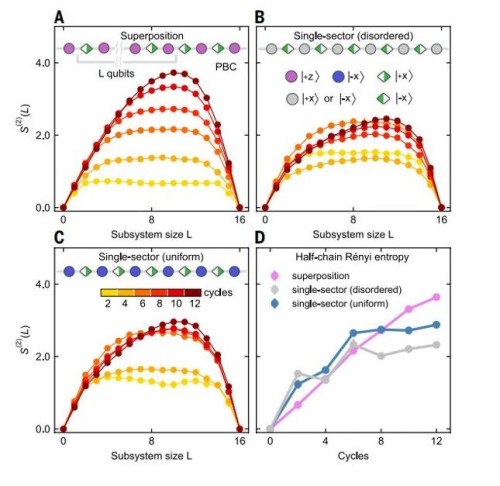
Figure 4: Plot of second-order Rényi entropy measurement results
Source: Today’s New Materials
LATEST NEWS
Thank you for visiting the official website of Chongfan Technology. If you have cooperation intentions or suggestions, please contact us through the following methods, and we will reply as soon as possible, thank you!
Address: Room 403, Building 6, Phase III of R&D, No. 36 Xiyong Avenue, High tech Zone, Chongqing, China.
Telephone: +86-13658337211
E-mail: Sales@cfkeji.net
Website: www.cfkeji.net
Mobile Version