
Chongfan Technology
News
08
2026
-
07
Ultrafast Attosecond Electron Microscopy | Nature Photonics
Author:
The dynamics of wavefunctions often exert nontrivial effects on spatial distributions, as seen, for example, in electron tunneling or chemical bond formation. However, to uncover such spatiotemporal coupling, ultrafast imaging at the scale of the intrinsic electronic wavefunction—so‑called the spatiotemporal limit—is required.
Recently, a team led by S. Maier, J. Repp, and R. Huber at the University of Regensburg in Germany published an article in Nature Photonics, demonstrating for the first time—using an atomic-scale, attosecond‑resolution light‑driven scanning tunneling microscope—that it is possible to track the intrinsic quantum motion of a single electron in real time, at the spatiotemporal limits, during the process of electron tunneling through an energy barrier.
By employing two time-delayed near-infrared pulses to construct a phase‑controllable single‑cycle waveform, we modulated the electronic tunneling transient barrier and resolved isolated electron tunneling transients with durations shorter than 1 attosecond. Full quantum simulations further confirm that the measured spatial extent depends on the interplay between multiphoton processes and field‑driven dynamics. Experimentally, we localized an attosecond‑scale tunneling wave packet to an angstrom‑level spatial resolution and, on the Ag(100) single crystal surface, achieved imaging of a single copper adsorbate atom.
This technology integrates attosecond science with atomic-scale scanning tunneling microscopy, enabling the study of wavefunction dynamics within atoms, molecules, and solids.
Tracking electrons at the space-time limit. Electron tracking at the spacetime limit
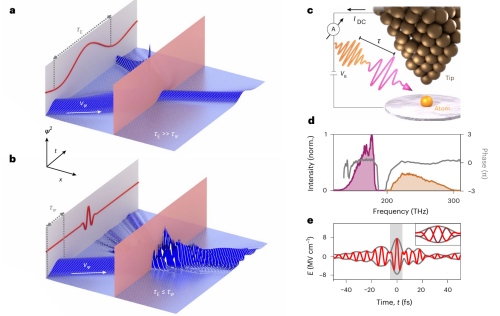
Figure 1 | Attosecond lightwave scanning tunneling microscope (Attosecond lightwave, STM)
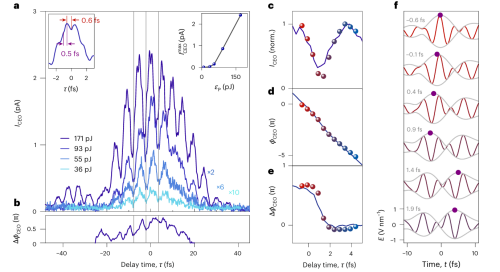
Figure 2 | Evolution of the light‑wave‑driven tunneling current as a function of delay time.
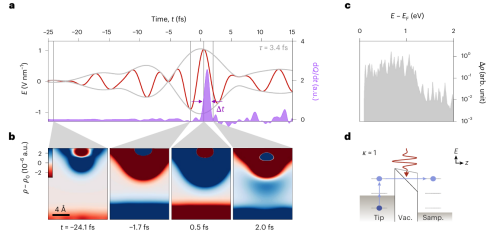
Figure 3 | Time-domain density functional theory (TD-DFT) simulation of sub-cycle currents
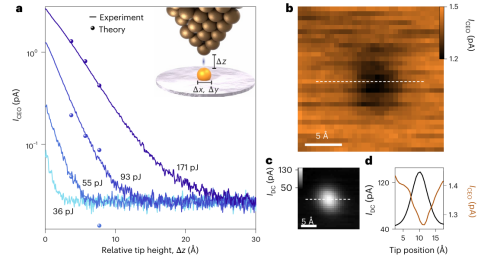
Figure 4 | Sub-cycle current with atomic-scale resolution
Source: Today’s New Materials
LATEST NEWS
Thank you for visiting the official website of Chongfan Technology. If you have cooperation intentions or suggestions, please contact us through the following methods, and we will reply as soon as possible, thank you!
Address: Room 403, Building 6, Phase III of R&D, No. 36 Xiyong Avenue, High tech Zone, Chongqing, China.
Telephone: +86-13658337211
E-mail: Sales@cfkeji.net
Website: www.cfkeji.net
Mobile Version