
Chongfan Technology
News
11
2026
-
06
City University of Hong Kong’s Xiangcheng Zeng team: AI research resolves the debate over whether water is a single‑ or dual‑component system | Nature Physics
Author:
Water is the cradle of life and one of the most “anomalous” substances in the universe: it reaches its maximum density at 4 °C, and its viscosity decreases under pressure—phenomena that have puzzled scientists for over a century. To account for these anomalies, the phenomenological “two‑component water model” was proposed, positing that water consists of a mixture of two distinct local structures—high‑density‑like component A and low‑density‑like component B. Yet, under ambient pressure, is water truly “two‑component”? Skeptics argue that this is merely an ad hoc, phenomenological classification, and the scientific community remains deeply divided on the issue.
How can we break free from the path dependence of “human‑crafted experience” and establish objective criteria for evaluation? To address this critical challenge, Professor Zeng Xiaocheng of City University of Hong Kong and Professor Zhong Jie’s team at China University of Petroleum (East China) have proposed a novel research framework based on “unsupervised deep learning.” This system relies on no human‑imposed threshold values, instead allowing the AI to autonomously uncover patterns within vast datasets. The results are striking: the AI not only confirmed that ordinary‑pressure water likewise harbors two hidden “dark” components, but also traced the “cyclic” reaction pathway through which A‑ and B‑type water molecules interconvert. These findings have been published in Nature Physics, one of the top journals in physics.
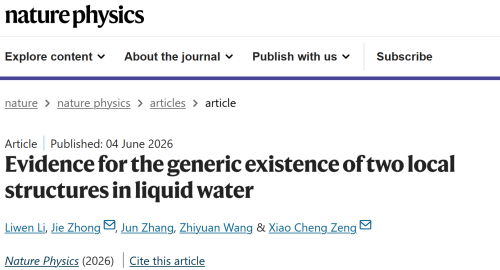
First author: Liwen Li; Corresponding authors: Xiao Cheng Zeng and Jie Zhong; Affiliations: City University of Hong Kong, China University of Petroleum (East China)
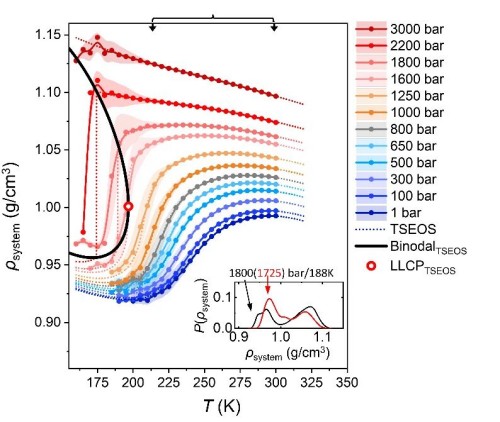
Figure 1. Phase diagram of the water model
From “Human-Driven Empirical Intervention” to Unsupervised Learning: How AI Is Unraveling the Mystery of Water Molecules
At the heart of this study lies the rejection of artificial, subjective interventions. Conventional approaches have sought to impose a “single‑distribution” classification on water molecules by relying on a single physical metric, such as local density, but these methods often fail to yield consensus. In contrast, the researchers have developed a deep‑learning algorithm based on autoencoders (Fig. 2a). By learning the local structural features of more than 74 million water systems, the model autonomously identifies latent physical descriptors (PCi).
AI reveals a counterintuitive fact: traditional local density is not the primary feature that distinguishes the two hidden “dark” components, A and B, in water (Figure 2b remains unimodal). What truly brings these two “dark components” into view are the latent physical quantities PCI and PCII uncovered by AI. When we shift our perspective to these three dimensions identified by AI, whether in the extreme conditions of deep supercooling or in ordinary ambient‑pressure water we drink every day, a clear bimodal signature emerges (Figure 4d).
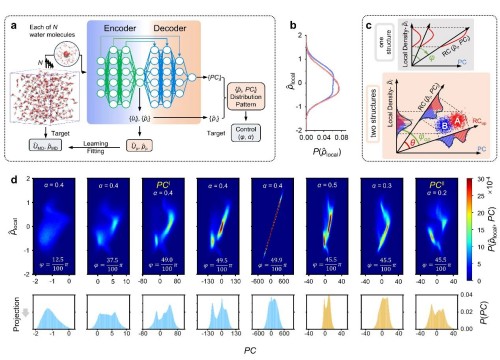
Figure 2. Unsupervised AI demonstrates the existence of a bimodal feature (two-component structure) without human intervention by identifying latent physical characteristics.
Discovery of a “cyclic” reaction pathway: How A/B water molecules “intelligently” switch states
Having confirmed the existence of hidden bicomponent structures, AI further revealed how A‑ and B‑type water molecules undergo “transformation.” By combining local density with PCI and PCII, the research team constructed a three-dimensional probability density map (Fig. 3c). Remarkably, the interconversion between A‑ and B‑component water does not proceed as a simple back-and-forth process; instead, it forms a “ring‑shaped” molecular traffic interchange featuring three saddle points (SP‑1, SP‑2, and SP‑3). When water is in the high‑density liquid (HDL) state, its molecules favor traversing the “upper ring” (high‑density reaction pathway, HDP) for rapid switching; in the low‑density liquid (LDL) state, they prefer the “lower ring” (low‑density reaction pathway, LDP). This exquisite microscopic dynamic is exceedingly difficult to observe using conventional physicochemical theoretical approaches.
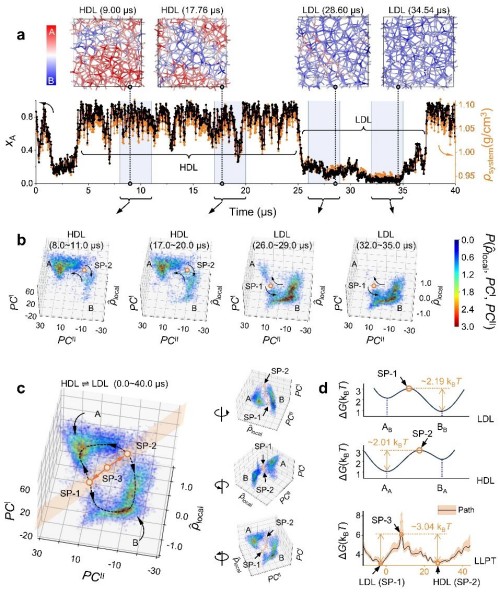
Figure 3. The “ring-like” reaction pathway near the liquid–liquid coexistence line of supercooled water, along with the evolution of the microscopic structural configurations of the two-component water system (A/B) at different densities.
Physical validation: AI’s findings are consistent with macroscopic laws.
Are the patterns identified by AI reliable? The research team conducted cross‑validation using rigorous physical laws. If water truly consists of two “dark” components, A and B, then the system’s total volume must exhibit a strict linear relationship with the fraction of component A (xA). The experimental results (Figure 4) show that the xA values derived from the AI algorithm display perfect linear correlation with the system volume, and their probability distributions are highly consistent. In contrast, previously proposed descriptors based on human intuition all fail to capture this crucial property. Furthermore, the liquid–liquid coexistence line for supercooled water predicted by the AI model aligns perfectly with the predictions of classical thermodynamic equations.
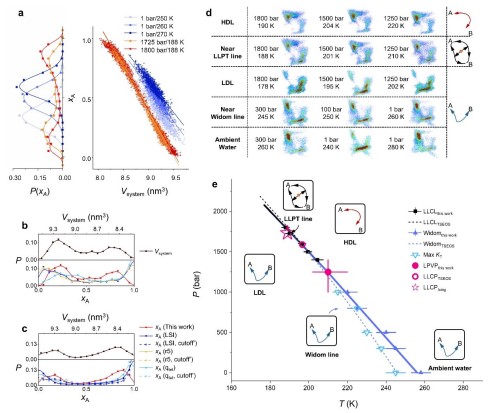
Figure 4. From the perspective of macroscopic physical equations, the accuracy and reliability of the two “dark” water‑related components extracted by AI have been validated.
Conclusion and Outlook
This study not only brings to a close the decades-long debate in water science over “single‑ versus dual‑component” models, but more importantly, it introduces an entirely new research paradigm: one driven by unsupervised AI, capable of uncovering physical laws beyond the reach of human intuition. Within this framework, the exploration of microscopic structures no longer relies on fleeting insights or trial-and-error experimentation. Looking ahead, this approach holds promise for broader application to the study of complex fluids and phase‑change materials. Scientific inquiry is shifting from “human‑led deduction” to “AI‑driven discovery,” heralding the dawn of a new “data‑insight era.”
Source: Today’s New Materials
LATEST NEWS
Thank you for visiting the official website of Chongfan Technology. If you have cooperation intentions or suggestions, please contact us through the following methods, and we will reply as soon as possible, thank you!
Address: Room 403, Building 6, Phase III of R&D, No. 36 Xiyong Avenue, High tech Zone, Chongqing, China.
Telephone: +86-13658337211
E-mail: Sales@cfkeji.net
Website: www.cfkeji.net
Mobile Version