
Chongfan Technology
News
11
2026
-
06
Magnon–Soft X-ray Imaging | Nature Physics
Author:
Magnons are the quantized collective excitations of long-range ordered spins. At the nanoscale wavelength, exchange interactions increasingly dominate magnon dynamics, giving rise to previously unexplored frontiers in the coupling between magnons and other quasiparticles; however, this short-wavelength spin-wave detection technique remains one of the key experimental challenges.
Recently, Steffen Wittrock, Bastian Pfau, Daniel Schick, and colleagues at the Max Born Institute in Germany published in Nature Physics a magnetic‑phonon momentum‑resolved microscopy technique—quasi‑elastic resonant magnetic soft X-ray scattering—that enables direct, full‑field imaging of yttrium iron garnet (YIG) and its magnetic‑phonon distribution in two‑dimensional momentum space.
Thanks to its exceptional sensitivity, this imaging technique can detect nonlinear magnon–magnon interactions over a broad range of the dispersion plane. When applied to the prototypical magnon material yttrium iron garnet, it reveals a rich and diverse array of previously unobserved nonlinear magnon–magnon interactions, including four-magnon parametric scattering.
This imaging technique enables the detection of weak spin‑wave signals under microwave excitation as low as −34 dBm, with a minimum detectable magnon wavelength of 67 nm. Owing to its element specificity, bulk sensitivity, and the ability to directly extract nanoscale wavelength information without frequency constraints, it establishes a powerful and versatile platform for exploring short‑wavelength and nonlinear magnonics.
Soft-X-ray momentum microscopy of nonlinear magnon interactions. Soft X-ray momentum microscopy of nonlinear magnon interactions.
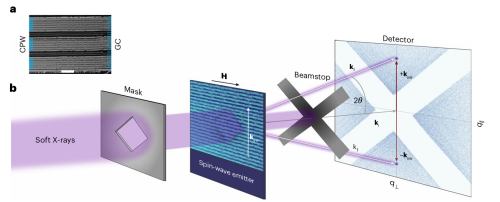
Figure 1: Soft X-ray Magnetic Momentum Microscope (MMM)
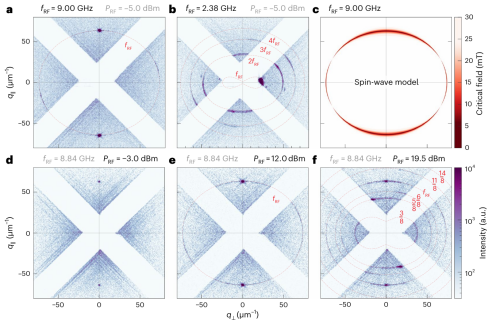
Figure 2: Imaging of nonlinear magnon processes in momentum space.
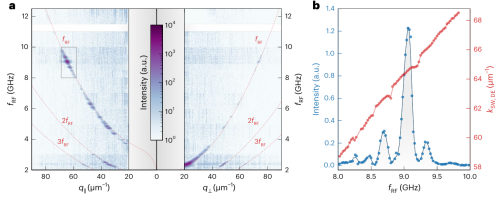
Figure 3: Magnon dispersion relation
Spin waves and their quasiparticles—magnons—are the fundamental information carriers in spintronic and magnonic computing. Nonlinear magnonics holds the promise of realizing computational paradigms that exploit the intrinsic nonlinearity of magnon–magnon interactions. As the wavelength of magnons decreases, short-range exchange interactions begin to dominate. In the prototypical magnon‑bearing material yttrium iron garnet (YIG), this transition typically occurs when the wavelength falls below 100 nm. The primary challenge today lies in reliably exciting and detecting such short‑wavelength modes.
In recent years, by leveraging spin‑torque structures and spin textures as spin‑wave emitters, the excitation of magnons in the sub‑100 nm regime has been successfully demonstrated. Moreover, direct electrical microwave excitation of spin waves has enabled magnon grating couplers and ferromagnetic coplanar waveguides to operate at sub‑100 nm wavelengths. However, detecting magnons with such high frequencies or large wave vectors remains a significant challenge.
The experiment employed a 100-nm-thick yttrium iron garnet (YIG) thin film, grown by liquid-phase epitaxy on a gadolinium gallium garnet substrate. YIG is a model material in magnonics, exhibiting extremely low magnetic damping (α ≈ 10⁻⁶) and excellent spin-wave propagation properties. On the sample surface, 20-nm-thick permalloy (Ni₈₀Fe₂₀) stripes were patterned via electron-beam lithography, forming a grating coupler with a 400-nm period, and a Ti/Cu coplanar waveguide was deposited to excite spin waves.
Source: Today’s New Materials
LATEST NEWS
Thank you for visiting the official website of Chongfan Technology. If you have cooperation intentions or suggestions, please contact us through the following methods, and we will reply as soon as possible, thank you!
Address: Room 403, Building 6, Phase III of R&D, No. 36 Xiyong Avenue, High tech Zone, Chongqing, China.
Telephone: +86-13658337211
E-mail: Sales@cfkeji.net
Website: www.cfkeji.net
Mobile Version