
Chongfan Technology
News

28
2026
-
05
AI Visual Algorithm Model Customization Service
Author:
I. Project Background
Customer : A leading automotive parts supplier
Scene : Full-inspection station for automotive bearing appearance
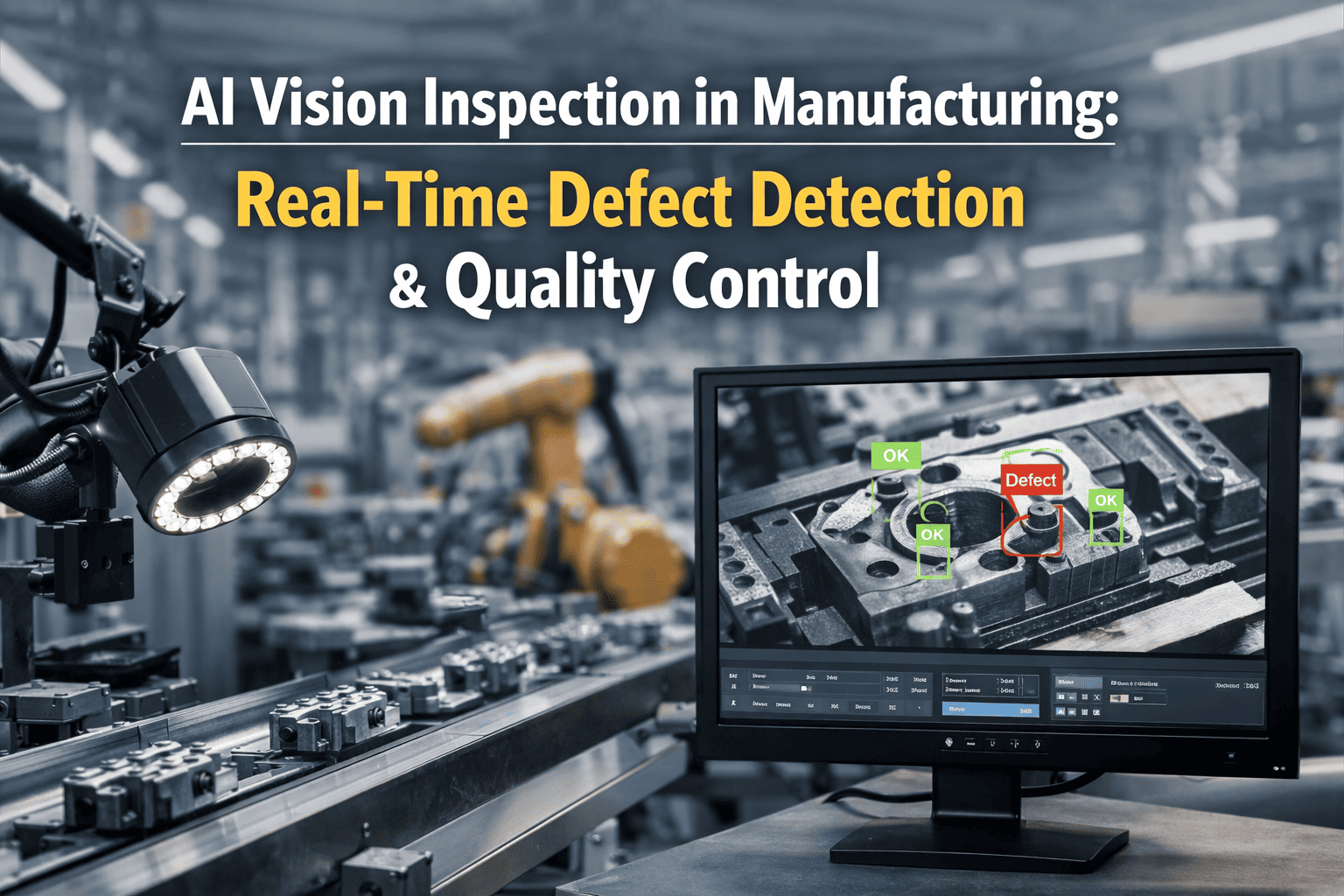
Demand : Replacing manual visual inspection, it enables automated detection of 23 types of defects on bearing outer rings, end faces, and inner walls, while supporting mixed‑model production across more than 20 bearing types.
II. Core Pain Points
Table
| Pain point | Current status of manual operations | Customization Requirements |
|---|---|---|
| The defect is minor. | Edge curling, slight rust—easy to overlook with the naked eye due to visual fatigue. | Pixel-level segmentation, with a detection rate of ≥99.5% |
| Many models available | More than 20 models have significant size variations, requiring retraining when switching between them. | A rapid adaptation of an algorithm library, with no need to switch programs. |
| Speed bottleneck | Manual full inspection: 600 pcs/h, unable to keep up with the production line’s takt time. | Detection speed ≥1200 pcs/h |
| Data scarcity | With a small number of defective samples, traditional deep learning requires tens of thousands of labeled images. | Small Sample + Transfer Learning: Cold Start with Hundreds of Samples |
III. Customized Solution (Four-Phase Delivery)
Phase 1: Customization of Optics and Data Acquisition
To address the interference caused by metallic reflections from bearings and the presence of anti-rust oil on their surfaces, a design was developed. Standing rotational photography + dual-axis drive The solution eliminates flat‑field pixel distortion and secondary contamination, while simultaneously acquiring both normal and defective samples to build a structured dataset.
Phase 2: Customized Training of Algorithmic Models
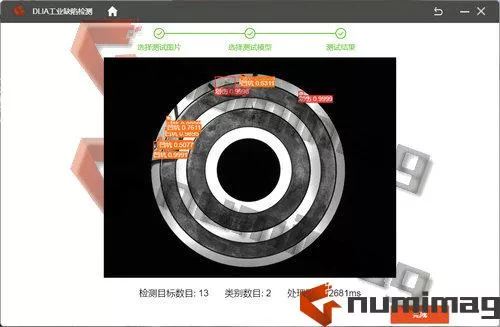
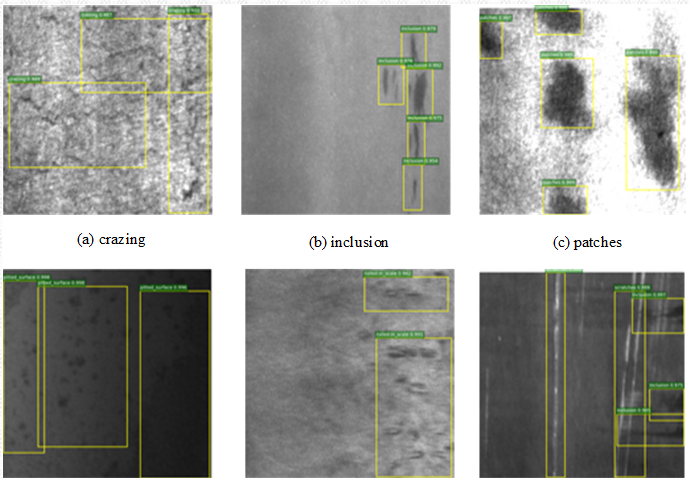
Based on a self-developed training framework, it integrates OCR + Object Detection + Semantic Segmentation Multitask model:
-
Split branch : High-resolution preservation, precise extraction of crack and crush‑induced edge boundaries;
-
Detection branch : YOLO cascade, for rapid detection of dirt and dents;
-
Transfer learning : A general-purpose pre-trained model for metal surfaces; the new version requires only 50–100 additional samples for fine-tuning.
Phase 3: Edge Deployment and System Integration
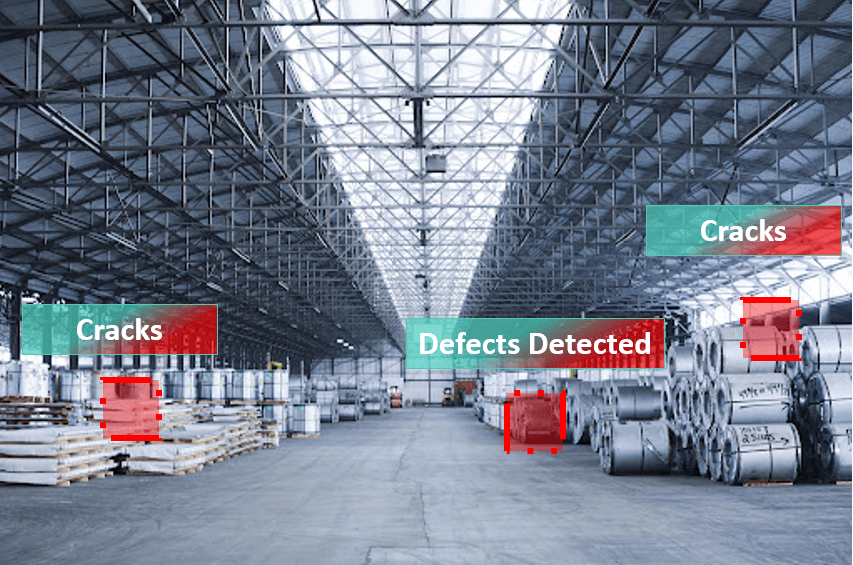
After model quantization, the model is deployed on industrial PCs or edge computing boxes on the production line, achieving inference for a single frame in under 0.2 seconds. OK/NG results and defect coordinates are reported back via the MES interface, enabling data traceability.
Phase 4: Continuous Optimization and Iteration
After going live, the model undergoes incremental learning based on feedback from false positives and missed detections, enabling version updates without any downtime.
IV. Key Technical Indicators
Table
| Indicator | Delivery Result |
|---|---|
| Detection speed | 1200 pcs/h (single station) |
| Defect Detection Rate | ≥ 99.59% |
| Inspection pass rate | ≤ 5% |
| Single-frame processing time | < 0.2 s |
| Changeover adaptation time | < 30 min (same material) |
| Labor substitution | The number of full-inspection positions has been reduced by approximately 80%. |
Next
Next
LATEST NEWS
Thank you for visiting the official website of Chongfan Technology. If you have cooperation intentions or suggestions, please contact us through the following methods, and we will reply as soon as possible, thank you!
Address: Room 403, Building 6, Phase III of R&D, No. 36 Xiyong Avenue, High tech Zone, Chongqing, China.
Telephone: +86-13658337211
E-mail: Sales@cfkeji.net
Website: www.cfkeji.net
Mobile Version
