
Chongfan Technology
News
28
2026
-
05
Rare-Earth Luminescent Materials—Lanthanide-Doped Nanocrystals | Nature Chemistry
Author:
In fields such as optoelectronics, photochemistry, and photomedicine, organic triplet excitons hold significant application potential. However, constrained by spin selection rules, direct excitation from the singlet ground state (S₀) to the triplet state (T₁) is spin‑forbidden, and the radiative recombination (phosphorescence) efficiency of triplet states is extremely low, leading organic triplets to be commonly regarded as “dark states.” Overcoming these spin‑related limitations has long been one of the most persistent challenges.
Recently, Huangtianzhi Zhu (Zhejiang University), Rakesh Arul, Zhongzheng Yu, Akshay Rao, and others from the University of Cambridge published a paper in Nature Chemistry, reporting a versatile approach that achieves spin-exchange coupling between the unpaired electrons of lanthanide ions and organic molecules by tethering chromophores to the surfaces of lanthanide-doped nanocrystals, thereby “activating” organic triplet excitons.
This method enables direct optical excitation of organic triplet states and, under ambient conditions, yields room-temperature phosphorescence with nanosecond timescales that is insensitive to oxygen, both in solution and in thin films. By combining different organic chromophores with lanthanide ions, phosphorescence spanning the visible and near-infrared regions has also been achieved.
Compared with conventional organic phosphorescence, which typically requires crystallization or cryogenic conditions to persist, the triplet-state emission we have achieved does not necessitate crystallization, low temperatures, or an inert atmosphere. This approach holds promise for opening new avenues for the application of room-temperature organic phosphorescence in optoelectronic devices as well as in bioimaging and biomarking.
Lanthanide-doped nanocrystals enable organic room-temperature phosphorescence in solution through direct triplet excitation. Lanthanide-doped nanocrystals, via direct triplet-state excitation, achieve room-temperature phosphorescence of organic compounds in solution.
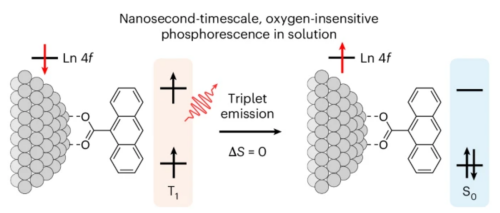
Figure 1 | Schematic comparison of the conventional ISC‑mediated triplet generation and the spin‑exchange‑promoted direct triplet excitation and emission mechanisms.
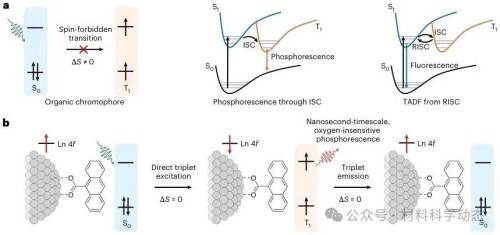
Figure 2 | Experimental verification of direct triplet-state excitation and emission in hybrid organic–inorganic nanocrystals
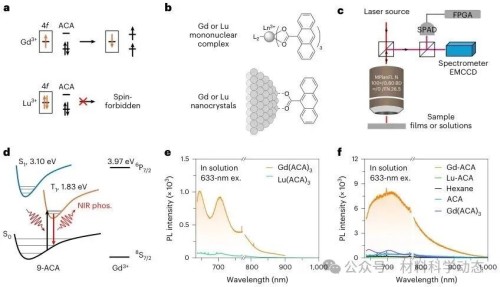
Figure 3 | Systematic study of triplet energy transfer and its dependence on shell thickness
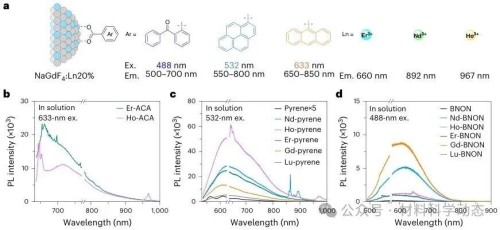
Figure 4 | Validation of the universality of organic chromophores and lanthanide elements
Source: Today’s New Materials
LATEST NEWS
Thank you for visiting the official website of Chongfan Technology. If you have cooperation intentions or suggestions, please contact us through the following methods, and we will reply as soon as possible, thank you!
Address: Room 403, Building 6, Phase III of R&D, No. 36 Xiyong Avenue, High tech Zone, Chongqing, China.
Telephone: +86-13658337211
E-mail: Sales@cfkeji.net
Website: www.cfkeji.net
Mobile Version