
Chongfan Technology
News
03
2026
-
03
Graphene-integrated micro-tube whispering-gallery-mode resonators: Achieving new breakthroughs in polarization-sensitive optical modulation and optoelectronic detection
Author:
Research Background
Photonics devices far outperform electronic circuits in terms of bandwidth, energy efficiency, and operating speed, whereas electronic devices excel at complex information processing. The synergistic integration of these two technologies lies at the heart of future high-bandwidth optical communication and computing systems. However, conventional on-chip integrated optical systems rely on coupling planar waveguides with photodetectors. Although wavelength selection and signal conversion can be achieved using whispering-gallery-mode resonators, such systems are constrained by phase-matching conditions, requiring micro-ring radii on the order of hundreds of micrometers—resulting in bulky device sizes that make high-density integration challenging. While three-dimensional whispering-gallery-mode structures, such as microdisks and microrings, can reduce device dimensions, their complex fabrication processes and suspended architectures pose significant challenges for electrical integration. Therefore, there is an urgent need for an integrated platform that combines small size, high performance, and electrical readout capability. In response to key limitations in current computational spectrometers—such as limited bandwidth and low light throughput—we propose and demonstrate a broadband, high-resolution snapshot spectrometer based on high-refractive-index transition-metal dichalcogenides (TMDCs). This spectrometer exhibits outstanding optical modulation capabilities across the visible to short-wave infrared spectral range, offering a novel solution for real-time, high-precision spectral sensing and imaging.
Introduction to the Achievements
Core Innovation Points
This study proposes a photon-electron synergistic platform based on a graphene-integrated silicon nitride microtubular whispering-gallery-mode resonator, fabricated via a wafer-scale nano-film self-rolling process. The core innovation lies in:
Lobular structures induce quantization of the axial mode: By introducing engineered lobular structures at the ends or midsections of microtubules, the axial optical field distribution is discretized, giving rise to discrete energy levels. This effectively suppresses axial energy dissipation and boosts the quality factor to 3191.21—far exceeding that of conventional microtubule resonators.
Graphene integration enables tunable optoelectronic readout: By embedding a single-layer graphene within the wall of a microtube and controlling the integration length of the graphene (10–40 μm), we achieve a balance between optical resonance (Q = 2008.36) and photoelectric responsivity (2.80 A/W), resulting in a photoconductive gain with an external quantum efficiency exceeding 100%.
The structural asymmetry endows the intrinsic polarization sensitivity: The self-coiling process breaks the in-plane fourfold rotational symmetry of the nanofilm, resulting in different abilities of the microtubes to confine optical fields for transverse electric (TE) and transverse magnetic (TM) modes. This enables polarization-selective resonance and detection, with a polarization ratio reaching 4.25—a result that closely matches theoretical predictions.
Working mechanism
Device fabrication begins with the sequential deposition of a multilayer nanofilm consisting of Ge/Al₂O₃/SiN₃/Cr/Au/graphene/Al₂O₃ onto a sacrificial layer. By selectively etching the Ge layer using XeF₂, residual stress is relieved, causing the nanofilm to spontaneously curl and form microtubes with diameters of approximately 8 μm. The graphene is located on the inner wall of these microtubes; its atomic-scale thickness ensures minimal perturbation of the optical cavity, while its ultra-high carrier mobility enables highly efficient optoelectronic conversion.
In the context of optical resonance, the light field within the microtube wall can be decomposed into axial and circumferential components. The circumferential component satisfies the resonance condition for whispering-gallery-mode resonances, whereas the axial component freely propagates in conventional microtubes, leading to energy loss. After introducing the petal-like structure, the axial light field is confined to a series of discrete energy levels, forming discrete states analogous to those found in quantum wells. This significantly reduces axial dissipation and greatly enhances the quality factor. Experimentally, the splitting of axial energy levels was verified through photoluminescence spectroscopy and transmission spectroscopy, and the measured Q value reached as high as 3191.21.
In the field of optoelectronic detection, graphene absorbs light fields with resonantly enhanced intensity, generating photogenerated charge carriers that, under an applied bias voltage, give rise to a photocurrent. The photoresponse increases with increasing integration length of the graphene (from 0.24 to 4.80 A/W); however, excessively long integration lengths can reduce the quality factor due to the overly strong absorption by graphene. A length of 30 μm represents the optimal integration length. Moreover, the bias voltage can also finely tune the resonant wavelength via the thermo-optic effect of graphene, enabling electro-optic modulation.
In terms of polarization sensitivity, the cylindrical geometry of the microtubes effectively confines the TE mode (with the electric field parallel to the tube axis) within the tube walls, forming a standing wave. By contrast, the TM mode (with the electric field perpendicular to the tube axis) cannot sustain resonance because the wall thickness is much smaller than the wavelength. Combined with the anisotropic in-plane absorption of graphene, the device exhibits a significantly stronger optical response to the TE mode than to the TM mode, achieving a polarization ratio as high as 4.25.
Application validation
The research system characterizes the core performance of the device:
Optical Resonance: The microtubule with a petal-like structure achieves a Q factor of 3191.21. The free spectral range decreases as the radius increases, which is consistent with theoretical predictions. Fiber-cone coupling experiments confirm the efficient coupling between the microtubule and the optical fiber, and the transmission spectrum clearly resolves the axial mode splitting.
Optoelectronic Detection: At a bias voltage of 1 V, the 30-μm graphene-integrated device achieves a responsivity of 2.80 A/W, with a response time of approximately 100 μs (520–1550 nm) and a detectivity of 1.99 × 10¹⁰ Jones. The noise current is as low as 10⁻²² to 10⁻²⁰ A²/Hz, dominated by 1/f noise.
Polarization sensitivity: By rotating the polarization angle of the incident light from 0° to 90°, both the photoluminescence peak intensity and the photocurrent exhibit a cosine-squared dependence. The experimental polarization ratio of 4.25 closely matches the theoretical value of 4.27. This property can be exploited for polarization-division multiplexing communications and encrypted signal transmission—for instance, using the TE mode as the information carrier and the TM mode as the key, thereby enabling interference-resistant decoding.

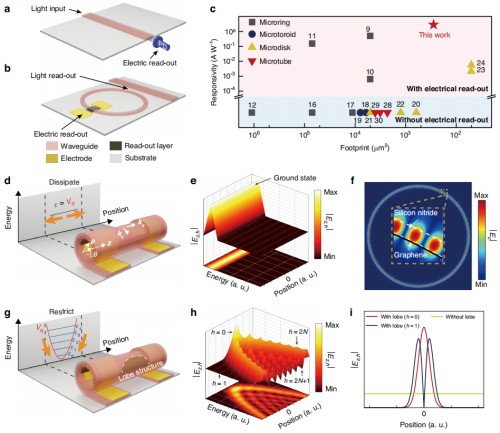
Figure 1. Design methodology for Gr-integrated microstrip resonators
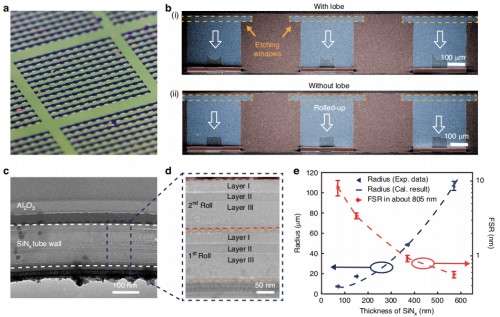
Figure 2. Fabrication and Characterization of Microtubular Resonators
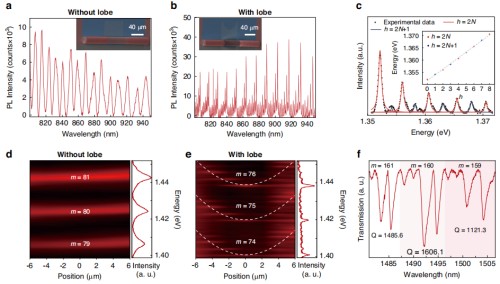
Figure 3. Optical Resonance Modulation Characteristics of the Microtubular Resonator
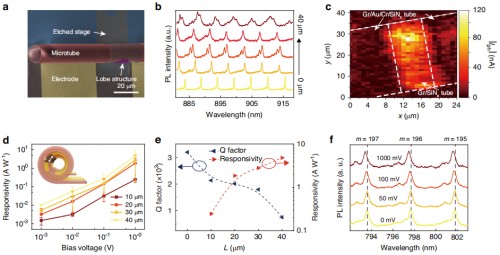
Figure 4. Electrical Readout and Modulation Characteristics of the Gr-Integrated Microcavity Resonator
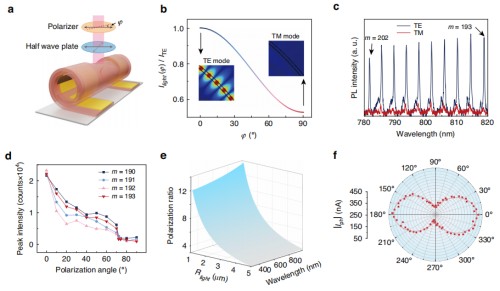
Figure 5. Polarization Characteristics of the Gr-Integrated Microcavity Resonator
Source: Optoelectronic Detection Materials and Devices
LATEST NEWS
Thank you for visiting the official website of Chongfan Technology. If you have cooperation intentions or suggestions, please contact us through the following methods, and we will reply as soon as possible, thank you!
Address: Room 403, Building 6, Phase III of R&D, No. 36 Xiyong Avenue, High tech Zone, Chongqing, China.
Telephone: +86-13658337211
E-mail: Sales@cfkeji.net
Website: www.cfkeji.net
Mobile Version