
Chongfan Technology
News
06
2026
-
02
Germanium-silicon glass, photonic chips—low loss at the fiber-optic level | Nature
Author:
Over the past several decades, significant progress has been made in reducing losses in photonic integrated circuits operating in the telecom band, thereby fostering the development of on-chip applications spanning fields such as low-noise optical and microwave synthesis, LiDAR, and photonic artificial intelligence engines. However, in shorter wavelength ranges (400–1100 nm), material absorption and scattering losses have increased dramatically, presenting several challenges that significantly raise power requirements and limit performance in the visible and near-visible spectral regions.
Recently, Hao-Jing Chen, Kellan Colburn, Kerry Vahala, and others from the California Institute of Technology published an article in Nature, presenting a ultra-low-loss photonic integration platform based on germanium silicate that is fully compatible with CMOS fabrication processes. (Silica SiO₂ and germanium-doped silica—known as germanium silicate—have gained widespread use in short-wavelength fiber optics due to their exceptionally low material absorption characteristics.) These photonic integrated circuits achieve resonance cavity quality factors exceeding 180 million across a spectral range from ultraviolet to telecom wavelengths.
In the telecom band, we have achieved a quality factor that is 10 decibels higher and requires no thermal treatment, enabling heterogeneous integration with active devices. Other notable features include waveguide dispersion that is easy to design, acoustic-mode confinement, and thermal stability provided by a large mode-field area—each of these characteristics has been experimentally verified through demonstrations involving soliton microcombs, stimulated Brillouin laser emission, and self-injection locking for low-frequency noise.
These germanium-silicate photonic integrated circuits will ultimately achieve fiber-optic-level loss on-chip, thereby reducing waveguide loss by another 20 decibels based on today’s highest-performance photonics platforms. At the same time, they hold promise for integrating ultra-low-loss photonic integrated circuit technology with optical clocks, precision navigation systems, and quantum sensors.
Towards fiber-like loss for photonic integration from violet to near-infrared. Toward photonic integration technology with fiber-level low loss, spanning the violet to near-infrared wavelength range.
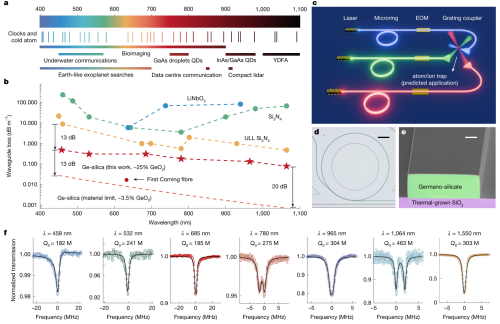
Figure 1: Ultra-high-Q germanosilicate device covering the ultraviolet to near-infrared wavelength range
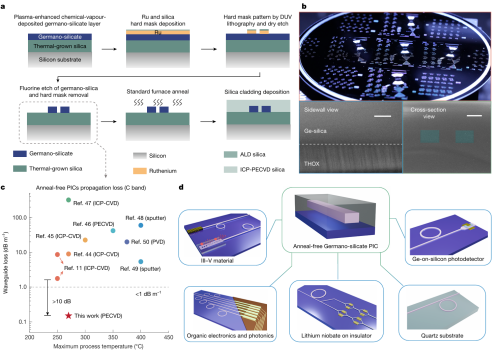
Figure 2: CMOS compatibility and process flow of the ultra-low-loss Ge-Si PIC.
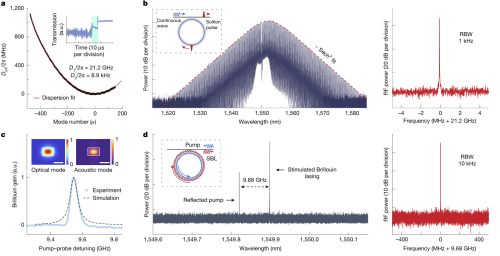
Figure 3: Application Validation Based on the Germanium-Silicate Platform
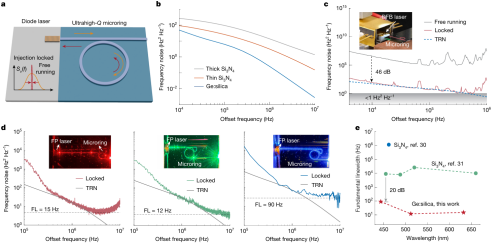
Figure 4: Hybrid integration of semiconductor lasers and germanosilicate devices.
Source: Today's New Materials
LATEST NEWS
Thank you for visiting the official website of Chongfan Technology. If you have cooperation intentions or suggestions, please contact us through the following methods, and we will reply as soon as possible, thank you!
Address: Room 403, Building 6, Phase III of R&D, No. 36 Xiyong Avenue, High tech Zone, Chongqing, China.
Telephone: +86-13658337211
E-mail: Sales@cfkeji.net
Website: www.cfkeji.net
Mobile Version