
Chongfan Technology
News
10
2026
-
10
High-Capacity Metaholography Based on Multi-Order Decoupling
Author:
The team of Zhongyang Li and Shuai Wan at Wuhan University has proposed a decoupling scheme for multiple diffraction orders based on single-unit-cell metasurfaces, thereby breaking the limits of diffraction‑based encoding. By disentangling the phase correlations among different diffraction orders, a typical single‑unit‑cell metasurface can support 23 encoded holographic channels even with a relatively large lattice period—more than four times the wavelength. Furthermore, the authors have demonstrated holographic display with a field of view as wide as 168°, whereas conventional metasurfaces require subwavelength periods to achieve comparable angular coverage. This approach expands the spatial multiplexing capacity of encoded holography by an order of magnitude while reducing fabrication complexity and precision requirements, making it potentially compatible with large‑area manufacturing via lithography. In summary, the authors argue that their multi‑order decoupling scheme transcends the traditional limits of diffraction‑based encoding and offers a promising pathway toward wide‑field optical displays, high‑capacity holographic storage and encryption, and scalable photonic system fabrication.
The research findings were published in ACS Nano on June 23, 2026, under the title “Breaking the Diffraction-Encoding Limit for High-Capacity Meta-Holography via Multiorder Decoupling.”

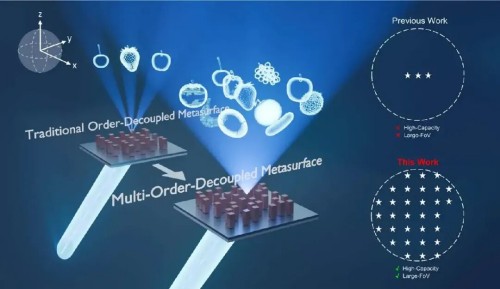
Figure 1: Schematic diagram of the evolution of metaholography based on a multi-diffractive-order decoupling scheme.
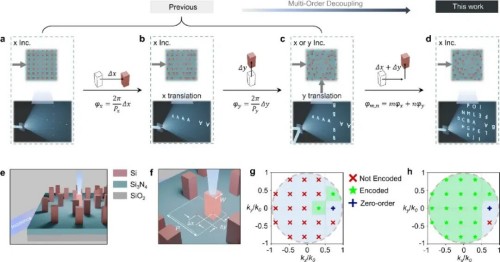
Figure 2: Design Principle of the Multi-Stage Decoupling Scheme
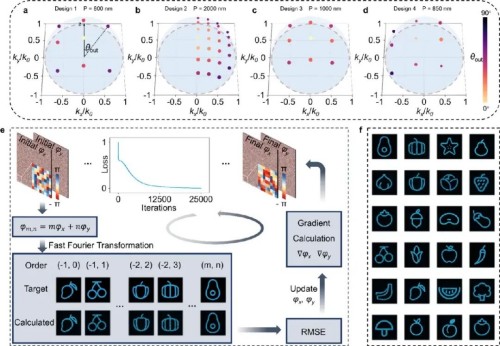
Figure 3: Design and Optimization of Multi-Order Decoupled Metasurfaces
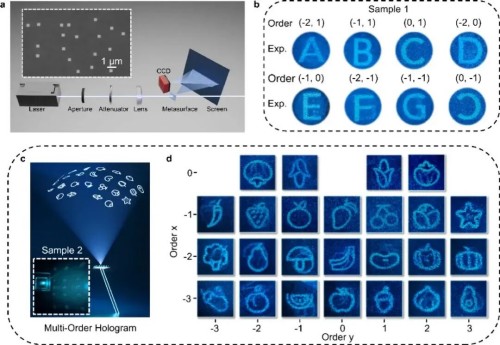
Figure 4: Experimental demonstration of multi-channel order-division multiplexing holography
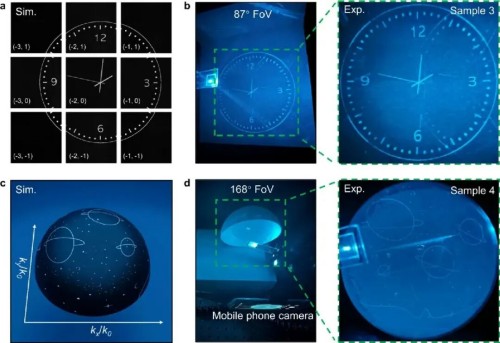
Figure 5: Experimental demonstration of wide-field holographic projection
Source: Optics World
LATEST NEWS
Thank you for visiting the official website of Chongfan Technology. If you have cooperation intentions or suggestions, please contact us through the following methods, and we will reply as soon as possible, thank you!
Address: Room 403, Building 6, Phase III of R&D, No. 36 Xiyong Avenue, High tech Zone, Chongqing, China.
Telephone: +86-13658337211
E-mail: Sales@cfkeji.net
Website: www.cfkeji.net
Mobile Version
