
Chongfan Technology
News
08
2026
-
10
Multidimensional Emission Control of Quantum Dots Based on Plasma BICs
Author:
The teams of Xiaoyu Zhang at Jilin University and Changzhi Gu and Yang Guo at the Institute of Physics, Chinese Academy of Sciences, have coupled red-emitting cesium lead iodide (CsPbI₃) quantum dots (QDs) to a symmetry-protected plasmonic QBIC supported by a one-dimensional gold grating. By jointly tuning the grating parameters and an atomic-layer-deposited Al₂O₃ spacer layer, the authors matched the QIC’s (finite radiation leakage) resonance with the QDs’ ~690 nm emission wavelength, achieving efficient near-field coupling while suppressing metal‑induced direct quenching. Compared with planar QD films, the grating‑coupled architecture delivers more than fourfold enhancement in peak photoluminescence (PL) intensity. The emission response exhibits strong dependence on the symmetry of the plasmonic mode: PL intensity shows pronounced polarization dependence for the incident pump light, with a polarization anisotropy (PA) as high as 85.4%, while the emitted light itself attains a degree of polarization (DOP) of 16.5%. Furthermore, this hybrid structure generates highly directional, well‑collimated red emission with a divergence angle as low as 3°, accompanied by a clear wavelength–angle correlation. These findings demonstrate that the plasmonic QBIC can serve not only as a field‑enhancement resonance but also as a symmetry‑defined optical channel for controlling quantum‑dot emission. This work proposes a compact strategy for integrating quantum dots with metallic metasurfaces, enabling the construction of quantum‑dot light sources with tunable emission direction and divergence, polarization sensitivity, and color selectivity.
The research findings were published in ACS Nano on June 23, 2026, under the title “Multidimensional Emission Control of CsPbI₃ Quantum Dots Using Plasmonic Quasi-Bound States in the Continuum.”

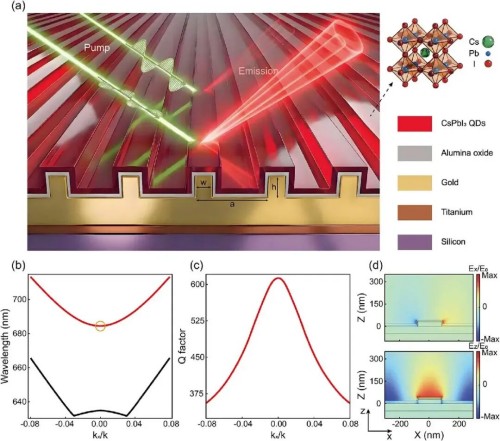
Figure 1: Device Design and Simulation of QBIC Characteristics
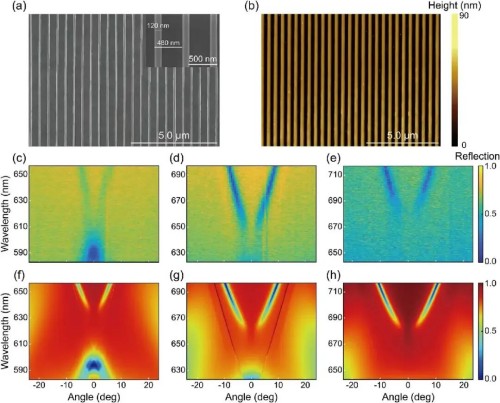
Figure 2: Structural characterization of the sample and angle-resolved reflectance spectra.
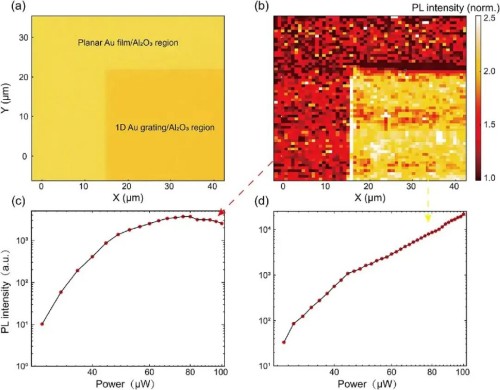
Figure 3: PL enhancement induced by quasi-BICs in CsPbI₃ quantum dots
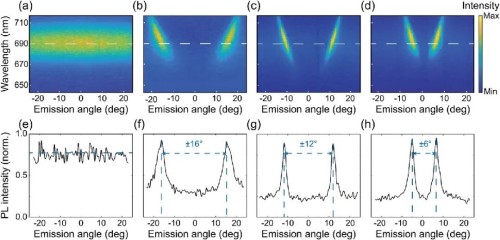
Figure 4: Angle-resolved photoluminescence spectra and directional emission controlled by the grating geometry.
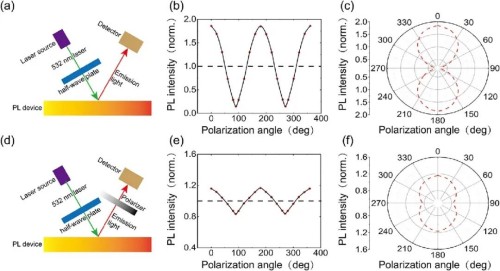
Figure 5: Polarization response of the QBIC device under pump and probe conditions.
Source: Optics World
LATEST NEWS
Thank you for visiting the official website of Chongfan Technology. If you have cooperation intentions or suggestions, please contact us through the following methods, and we will reply as soon as possible, thank you!
Address: Room 403, Building 6, Phase III of R&D, No. 36 Xiyong Avenue, High tech Zone, Chongqing, China.
Telephone: +86-13658337211
E-mail: Sales@cfkeji.net
Website: www.cfkeji.net
Mobile Version
