
Chongfan Technology
News
10
2026
-
09
Hong Xun’s team at the University of Science and Technology of China: Single-atom catalysis, Nature Nanotechnology
Author:
The direct, selective conversion of methane into high-value chemical products has long attracted attention from both industry and academia. Because it requires both C–H activation and C–C coupling, the synthesis of C2 oxygenates is particularly challenging.
Recently, Professor Hong Xun’s team at the University of Science and Technology of China, in collaboration with Academician Li Yadong of Tsinghua University and others, published a paper in Nature Nanotechnology reporting a copper single-atom catalyst (Cu‑SAs/B) supported on boron nanosheets, featuring Cu–B4 sites. Without the addition of carbon monoxide, this catalyst efficiently catalyzes the conversion of methane to acetic acid with 97% selectivity and an activity as high as 221.3 mmol·gCu⁻¹·h⁻¹.
In situ X-ray absorption fine structure analysis reveals that, under methane oxidation conditions, copper single atoms undergo a reversible transformation into Cu4 clusters, thereby enabling efficient C–H activation and C–C coupling. This transformation is triggered by the presence of hydrogen peroxide (H2O2), and, as confirmed by in situ spectroscopic techniques, the coupling reaction proceeds via CH3* and CHO* intermediates formed on both the copper single atoms and the copper clusters.
These research findings provide a proof of concept for designing highly efficient methane-oxidation catalysts based on switchable nanocatalysts.
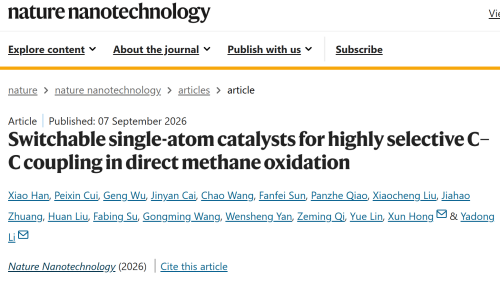
First authors: Xiao Han, Peixin Cui, Geng Wu, Jinyan Cai Corresponding authors: Academician Yadong Li, Professor Xun Hong Affiliations: University of Science and Technology of China, Tsinghua University https://doi.org/10.1038/s41565-026-02271-5 Switchable single-atom catalysts for highly selective C–C coupling in direct methane oxidation.
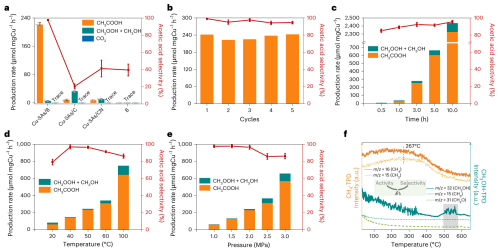
Figure 1. Catalytic performance of direct methane oxidation.
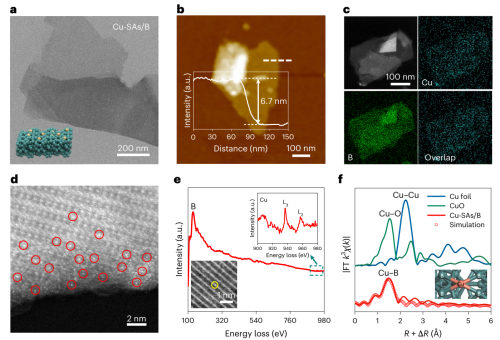
Figure 2. Characterization of Cu-SAs/B.
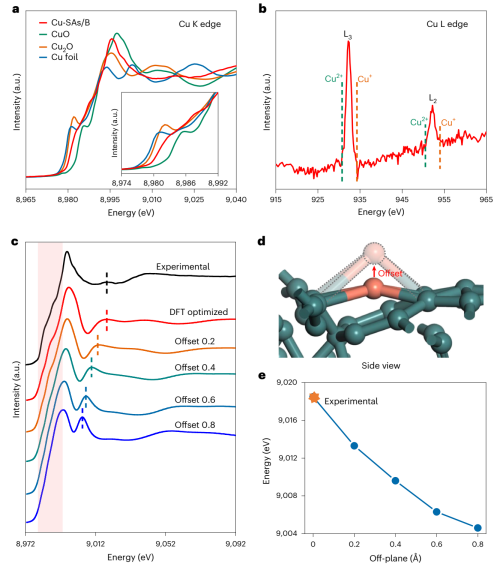
Figure 3. Chemical states and coordination environment of Cu-SAs/B.
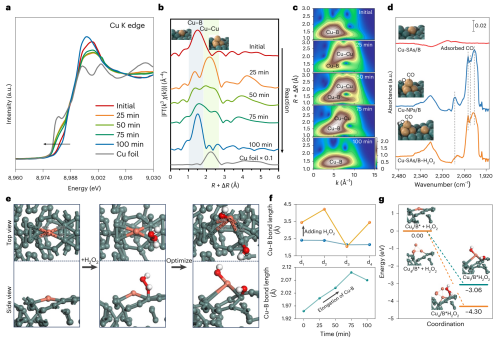
Figure 4. Reversible transformation to copper clusters during methane oxidation.
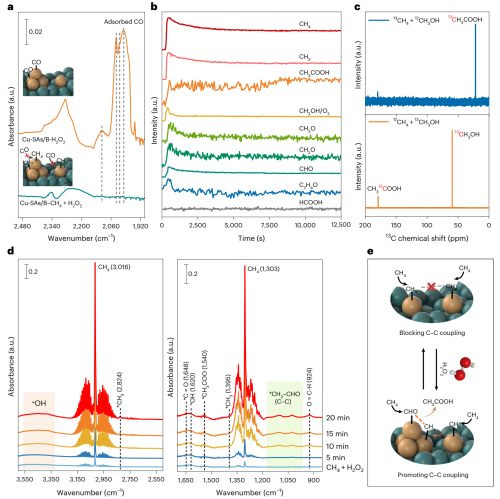
Figure 5. Study of the catalytic mechanism.
Source: Today’s New Materials
LATEST NEWS
Thank you for visiting the official website of Chongfan Technology. If you have cooperation intentions or suggestions, please contact us through the following methods, and we will reply as soon as possible, thank you!
Address: Room 403, Building 6, Phase III of R&D, No. 36 Xiyong Avenue, High tech Zone, Chongqing, China.
Telephone: +86-13658337211
E-mail: Sales@cfkeji.net
Website: www.cfkeji.net
Mobile Version