
Chongfan Technology
News
15
2026
-
07
Forty years of collaborative research, pursuing the dream of building a strong nation through laser fusion—sharing one dream, united by one mission.
Author:
I. Introduction
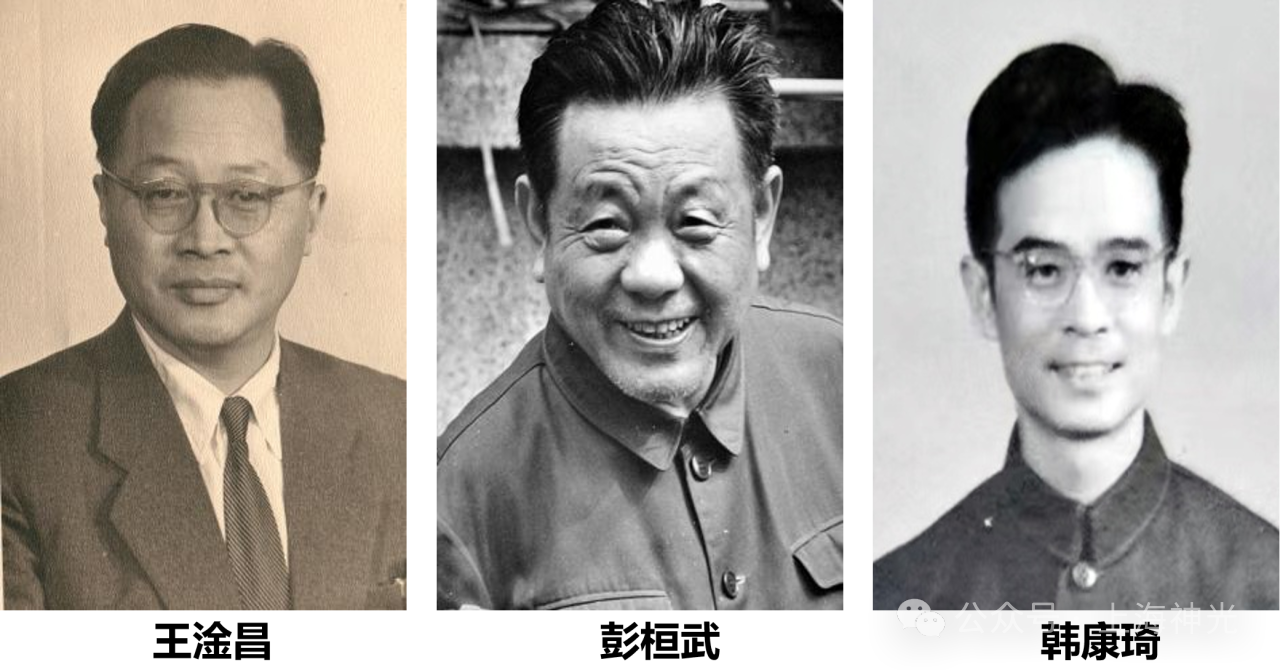
On October 4, 1964, on the eve of the detonation of China’s first atomic bomb, Wang Ganchang, a renowned Chinese nuclear physicist and then deputy director of the Ninth Research Institute of the Second Ministry of Machine Building, closely followed international trends in academic research. Following thorough preliminary investigations and discussions, and with the assistance of Peng Huanwu and Han Kangqi, he completed and submitted to the institute’s leadership a paper titled “Proposal for Producing Neutrons Using High‑Energy, High‑Power Optical Lasers.” In this proposal, Wang Ganchang put forward a groundbreaking and pioneering vision: harnessing lasers to drive thermonuclear reactions, thereby igniting the nascent spark that would eventually fuel China’s research into laser‑driven inertial confinement fusion (hereafter referred to as ICF). On December 7, Zhu Guangya, also serving as deputy director of the Ninth Research Institute of the Second Ministry of Machine Building, issued instructions and made strategic decisions regarding the optical laser research program and its subsequent implementation plan.
From December 7 to 13 of the same year, the Third Specialized Conference on Laser Emission, hosted by the Chinese Academy of Sciences, was held at the Jinjiang Hotel in Shanghai. Zhang Jinfu and Yan Jici, then vice presidents of the Chinese Academy of Sciences, attended and presided over the conference. In his article “A Retrospective on the Birth and Early Development of Laser Technology in China,” Gan Fuxi noted: “At this conference, experts from various fields converged, giving rise to a nascent Chinese laser science and technology community that showcased the vigorous early growth of China’s laser research and also delineated the direction for future studies.”
At that time, the Shanghai Branch of the Institute of Optics and Precision Mechanics of the Chinese Academy of Sciences—hereafter referred to as the Shanghai Institute of Optics and Precision Mechanics—had just been established. It boosted the output of its high‑power neodymium‑glass laser to 108 watts; at the beam’s focal point, the air was ionized, and a series of fireballs appeared along the optical axis. The institute also showcased a range of research achievements, including ruby‑laser drilling machines and laser telephones, sparking keen interest among the attendees in this new laser technology. The conference drew 83 participating institutions, 103 presentations, and nearly 200 attendees. Han Kangqi attended as a representative of the Fifth Bureau of the Second Ministry of Machine Building.
On December 21, the Third National People’s Congress convened in Beijing. Wang Ganchang inquired of Wang Zhijiang, a laser expert at the Shanghai Institute of Optics and Fine Mechanics who was also a member of the Jiangsu delegation, about the current status and progress of laser research, and put forward the concept of achieving inertial confinement fusion by firing high‑power laser beams at a target.
“Just as everyone was eagerly trying to explain this baffling physical phenomenon, Old Man Wang’s proposal came along: ‘Harness high‑power lasers to drive nuclear fusion reactions.’”
Hu Jimin et al., eds., Wang Ganchang and His Scientific Contributions, Beijing: Science Press, 1987, p. 161.
Upon hearing Wang Ganchang’s proposal, Deng Ximing was greatly pleased, believing it to be an important pathway toward realizing laser applications. Shortly thereafter, he received a nearly 20-page manuscript personally penned by Wang Ganchang, titled “Proposal for Producing Neutrons Using High-Energy, High-Power Optical Lasers.” When Deng Ximing reported Wang Ganchang’s initiative to Zhang Jinfu, it immediately won their approval and support. In May 1965, the Chinese Academy of Sciences assigned the Shanghai Institute of Optics and Fine Mechanics the task of conducting research on inertial confinement fusion, designated as Project No. 71. Thus, preliminary research on laser‑driven fusion in China began to gain momentum, with the spark of this endeavor gradually igniting into a widespread blaze.
II. Departure
In the winter of 1965, Deng Ximing, Yu Wenyan, and others traveled specially to Beijing to report on their progress to Mr. Wang. Upon learning that the laser power had already reached 109 watts and that the X-rays emitted by the laser‑plasma could penetrate aluminum foil, exposing photographic film, he was greatly delighted. For several nights in a row, braving wind and snow, Mr. Wang rode his bicycle to the Friendship Hotel to discuss scientific issues.
On February 7–8, 1966, the Department of Technical Sciences of the Chinese Academy of Sciences convened an academic symposium in Beijing on the application of high‑power lasers to thermonuclear fusion. At the meeting, Yu Wenyuan, Liu Shunfu, and Deng Ximing from the Shanghai Institute of Optics and Fine Mechanics; Zheng Changshi from the Shanghai Institute of Nuclear Research; and Chen Chunxian from the Institute of Physics each presented reports on the development of laser devices and preliminary experimental results. The participants also heard numerous valuable comments from experts including Wang Ganchang, Zhu Hongyuan, Li Zhengwu, and He Zuoxiu. The symposium recommended that the Shanghai Institute of Optics and Fine Mechanics and other institutions vigorously organize collaborative efforts to jointly explore the feasibility of achieving controlled thermonuclear fusion with lasers, accelerate progress, and deliver tangible results.
In 1967, Wang Ganchang, who closely followed the experimental progress at the Shanghai Institute of Optics and Fine Mechanics, asked Tang Xiaowei, then head of Room 31 in the Experimental Department of the Ninth Academy, to dispatch personnel to the Shanghai Institute to assist with neutron‑testing work. Subsequently, Tang Xiaowei sent Yang Dexin, Duan Zhiyuan, and two other colleagues, who brought testing equipment to the Shanghai Institute to participate in the experiments and take charge of neutron‑signal measurements. In 1968, prior to his departure, Yang Dexin, with proper authorization, left behind two laser‑targeted neutron‑diagnostic devices at the Shanghai Institute. Unfortunately, the Cultural Revolution slowed the pace of China’s research on laser fusion.
It was not until May 1973 that the Shanghai Institute of Optics and Fine Mechanics completed a five-stage traveling-wave amplification laser system, achieving a pulsed laser power of 6 × 10^10 W. Using this system, they heated lithium deuteride targets, producing high‑temperature, high‑density plasmas with temperatures ranging from 6 to 7 million kelvins. Upon receiving this news, the Ninth Academy once again dispatched Wang Shiji and Yang Dexin from its Second Institute to Shanghai to attend an appraisal and exchange meeting on “Producing Neutrons by Heating Solid Deuterium and Lithium Deuteride with High‑Power Lasers.”
“In experiments aimed at detecting neutrons, researchers at the Shanghai Institute of Optics and Fine Mechanics encountered a challenging problem in distinguishing neutron signals. The signals recorded by the neutron detector were consistently plagued by interference, with several small spurious spikes superimposed on the background of a prominent “large‑signal” waveform. Initially, the researchers assumed that the “large signal” represented the neutron signal and the “small spikes” were noise; however, they were unable to identify the source of the interference.”
“Forty Years of Independent Exploration: The Journey of Laser Inertial Confinement Fusion at the Shanghai Institute of Optics and Fine Mechanics, Chinese Academy of Sciences,” Physics, Vol. 39, No. 7, p. 498.
Experts including Wang Shiji, after listening to a research report presented by Yu Wenyuan of the Shanghai Institute of Optics and Fine Mechanics, observing live demonstrations of high‑power laser irradiation of deuterated lithium targets and deuterium ice targets, as well as supplementary experiments, and touring the experimental facilities, concluded that “large signals” are indeed the interfering signals, whereas “small glitches” actually exhibit characteristics typical of neutron signals. Former deputy director of the joint laboratory, Yang Yi, recalled the occasion when Wang Shiji was invited to visit the Minhang Motor Factory in Shanghai:

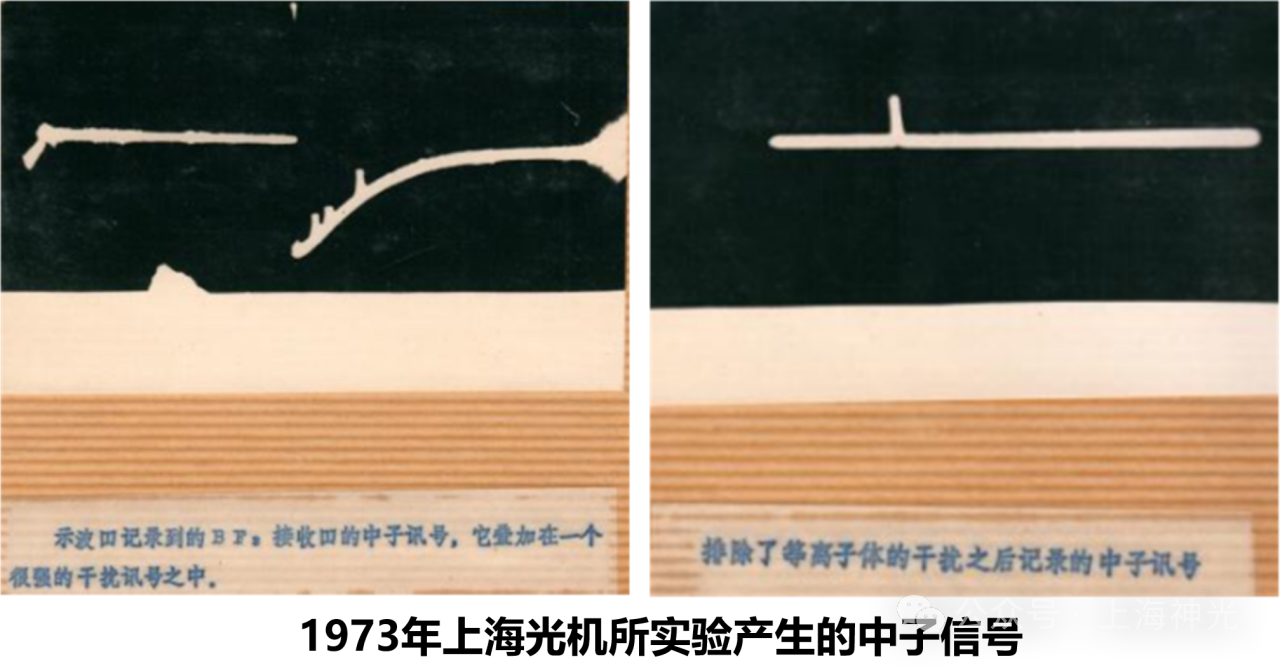
Subsequently, researchers at the Shanghai Institute of Optics and Fine Mechanics, through repeated experiments, determined that the metal target holder was the source of the strong interfering signal. By using insulating materials such as plastic and fiberglass to clamp the target, they successfully eliminated the interference and obtained a clear neutron signal. In November, the Shanghai Institute of Optics and Fine Mechanics achieved, for the first time in China, neutron output by irradiating a deuterated polyethylene target with a laser.
III. Joint
In November 1971, R. Hirsch of the U.S. Atomic Energy Commission’s Research Division first disclosed that lasers could be used to induce centripetal implosion in fusion fuel pellets. In May 1972, at the International Conference on Quantum Electronics held in Montreal, J. Nuckolls and others from the Lawrence Livermore National Laboratory (LLNL) presented the concept of achieving fusion through laser-driven implosion.
In the mid-1970s, under the leadership of Wang Ganchang and Yu Min, the scientists and engineers at Institute 9 began organizing research teams to explore, from both theoretical and experimental perspectives, the feasibility of using the high‑temperature, high‑pressure conditions generated by laser inertial confinement fusion to investigate physical processes under extreme conditions. At the same time, Wang Ganchang not only came to a clearer understanding of the importance of this field but also expressed dissatisfaction with the domestic situation. At that time, the Shanghai Institute of Optics and Fine Mechanics boasted the highest level of expertise in high‑power laser research in China, while Institute 9 had accumulated substantial experience in theory and experimentation. However, laser engineers and physicists had rarely collaborated, remaining largely unaware of each other’s work. With researchers scattered across disparate groups, research objectives overly fragmented, and funding severely inadequate, progress was slow and results minimal. If this trend persisted, the field would suffer significant setbacks; thus, assembling a lean, highly specialized research team became an urgent priority.
3 Du Xiangwan, ed., Collected Works in Memory of Nuclear Physicist Wang Ganchang, Beijing: China Science and Technology Press, 2010, p. 422.
From December 1 to 16, 1977, Wang Ganchang led a delegation of 20 scientists—including Fang Zhengzhi, Hu Renyu, Yu Min, Wang Shiji, and Jiang Wenmian—from the Ninth Academy to the Shanghai Institute of Optics and Fine Mechanics for an exchange visit and to discuss matters related to collaborative ICF research between the two institutions. During this visit, they toured the institute’s high‑power laser laboratory, the xenon‑lamp fabrication facility, and the neodymium‑glass melting and processing workshop, and attended academic presentations on high‑power lasers. Yu Min delivered a lecture on ICF. Following these discussions, participants recognized that ICF is a large‑scale, complex, highly precise, and capital‑intensive scientific engineering endeavor, requiring coordinated progress and close collaboration across multiple disciplines, including driver development, theoretical studies, target fabrication, and experimental diagnostics. They concluded that, with concerted efforts and mutual complementarity, significant advances could be achieved. Throughout the exchange, Wang Ganchang repeatedly underscored the importance of cooperation, famously stating, “Unity yields success; division leads to failure.”
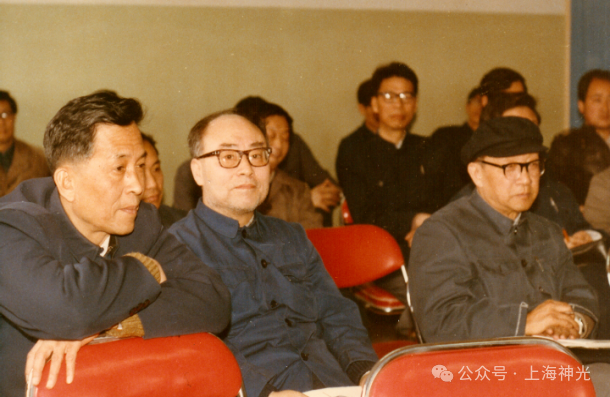
1985 National Conference of Controlled Professional Groups (from left to right: Deng Ximing, Yu Min, Wang Daheng)
On July 11, 1978, Wang Ganchang wrote to Deng Ximing, stating: “Recently, upon receiving orders from my superiors, I have left the Ninth Academy and taken up a position at the Institute of Atomic Energy. It remains unclear whether I will still be able to continue working alongside you two and other colleagues on laser‑fusion research. Nevertheless, I feel deeply grateful and fondly nostalgic for the period just past—especially for the time last November and December when I had the privilege of learning about lasers from you at your institute and jointly discussing plans for fusion. I hereby extend my sincere thanks to you. As for the relevant departments within the Ninth Academy and our colleagues at Institutes One, Two, and Nine, they will undoubtedly continue to advance with you toward this grand objective.”
In August 1981, the Ninth Research Institute of the Second Ministry of Machine Building and the Shanghai Institute of Optics and Fine Mechanics of the Chinese Academy of Sciences finally agreed on Laser No. 12. #Acceptance Criteria for the Overall Parameter Specifications of the Experimental Apparatus , jointly signed the “Cooperative Development of Laser 12” #Experimental Apparatus Protocol 》, submitted for approval to the Ministry of Nuclear Industry and the Chinese Academy of Sciences.
In June 1985, after two years of technical feasibility studies and preliminary research, and three and a half years of engineering construction and commissioning, Laser-12… #The experimental apparatus was completed as scheduled. . On July 3, upon learning that Laser 12 #After the news that the experimental apparatus had been successfully constructed Wang Ganchang and Wang Daheng personally led eight leaders from the Chinese Academy of Sciences and the Ministry of Nuclear Industry to the institute to offer their condolences and congratulations.

July 3, 1985, Laser 12 #Group photo to commemorate the completion of the installation
On March 15, 1986, a working conference on the establishment of the “High-Power Laser Physics Research Laboratory” was held in Beijing. The meeting discussed and agreed upon a series of matters related to the laboratory’s founding and its administrative regulations. On March 17, the first meeting of the Management Committee of the High-Power Laser Physics Research Laboratory convened in Beijing. At the meeting, it was proposed that Deng Ximing serve as the laboratory director and Wang Shiji as the deputy director, with their appointments to be submitted to the Chinese Academy of Sciences and the Ministry of Nuclear Industry for approval. On April 14, the Chinese Academy of Sciences, the Ministry of Nuclear Industry, and other entities jointly issued the “Notice on the Establishment of the High-Power Laser Physics Research Laboratory,” stating that, following deliberation, the laboratory would be established at the Shanghai Institute of Optics and Fine Mechanics. The laboratory would have a Management Committee composed of nine members: Ni Tingyu, Chen Changyi, Zhang Yungang, Zhang Hong, Ge Yuekuan, Wang Zhijiang, Tao Zucong, Deng Ximing, and Wang Shiji. Wang Ganchang and Wang Daheng were appointed as advisors. Deng Ximing was appointed director of the laboratory, and Wang Shiji was appointed deputy director.
On July 8, 1986, the second meeting of the Management Committee of the High-Power Laser Physics Research Laboratory was held in Shanghai. At this meeting, it was decided to approve the official establishment of the High-Power Laser Physics Research Laboratory effective July 9, 1986.
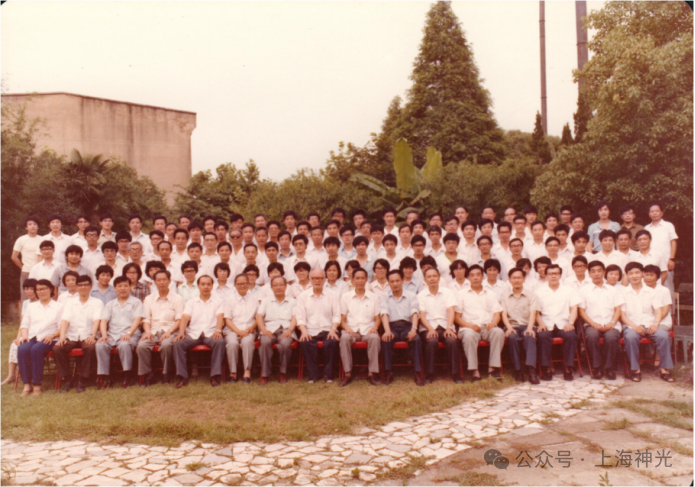
Group photo from the second session of the first term of the Joint Laboratory Steering Committee, July 9, 1986.
On April 22, 1988, at the fifth meeting of the Management Committee of the High-Power Laser Physics Research Laboratory, it was decided that the laboratory would be officially named the Joint Laboratory for High-Power Laser Physics of the Chinese Academy of Sciences and the China Academy of Engineering Physics (hereinafter referred to as the “Joint Laboratory”).
Afterword
As the Joint Laboratory marks its 40th anniversary, over the past four decades it has steadfastly adhered to a development strategy of “strong‑to‑strong collaboration, complementary strengths, united teamwork, and joint problem‑solving.” It has successfully completed the construction of a series of major facilities, including Shenguang I and Shenguang II, mastered a number of core, cutting‑edge technologies in the field of high‑power lasers, and nurtured generations of young researchers who are both professionally grounded and bold in innovation and perseverance. It is precisely through the dedicated, pioneering efforts of successive generations of scientists that China’s laser fusion research has advanced steadily. With keen insight and rigorous fieldwork, they have remained down-to-earth and worked tirelessly, jointly forging an independent path for China’s laser fusion program.
On the occasion of the centenary of Mr. Yu Min’s birth, we dedicate this essay to commemorate the 40th anniversary of the establishment of the Joint Laboratory for High-Power Laser Physics, honoring the tenacious and indomitable pioneers who have advanced together along the long road of laser fusion. Today, our motherland is prosperous and thriving, and the journey of scientific research shines with bright promise!
Source: Shanghai Shenguang
Original article link: https://mp.weixin.qq.com/s/3z2OBlrQJl33tBCUR3lDwg
LATEST NEWS
Thank you for visiting the official website of Chongfan Technology. If you have cooperation intentions or suggestions, please contact us through the following methods, and we will reply as soon as possible, thank you!
Address: Room 403, Building 6, Phase III of R&D, No. 36 Xiyong Avenue, High tech Zone, Chongqing, China.
Telephone: +86-13658337211
E-mail: Sales@cfkeji.net
Website: www.cfkeji.net
Mobile Version