
Chongfan Technology
News
22
2026
-
06
Optical Multistability in Photonic Crystal Microcavities
Author:
The teams of Chao Peng and Feifan Wang at Peking University achieved multi‑stability by designing a pair of spectrally close, ultra‑high‑Q resonances within a photonic crystal microcavity. By deliberately introducing structural perturbations that induce non-Hermitian coupling through shared radiation channels, the authors drove the resonances into an exceptional point characterized by nearly degenerate wavelengths and nearly identical quality factors approaching 10. This configuration enables pronounced tristability via thermo‑optic nonlinearities within a circular footprint of 20 μm in diameter, as evidenced by hysteresis loops recorded at an input power of 240 μW. Building on this concept, the authors further demonstrated an optical random-access memory (RAM) that operates through controlled switching among multiple stable states.
The research findings were published in Nature Nanotechnology on June 16, 2026, under the title “Optical multistability in a compact microcavity enabled by near-exceptional coupling.”
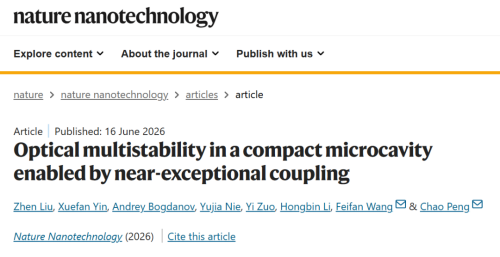
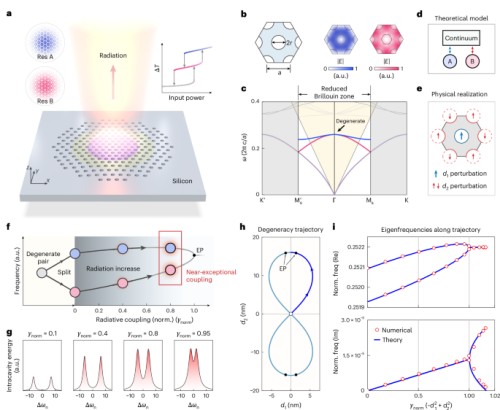
Figure 1: Photonic crystal microcavity with a high-Q resonance at the NEC.
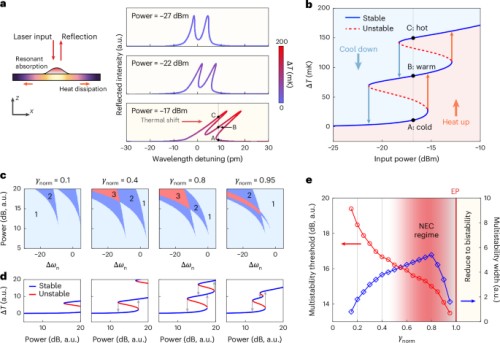
Figure 2: Emergence of thermo-optic multistability at the NEC.
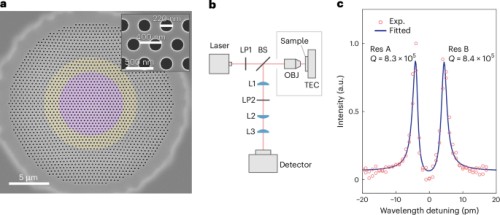
Figure 3: Implementation and characterization of the optical cavity
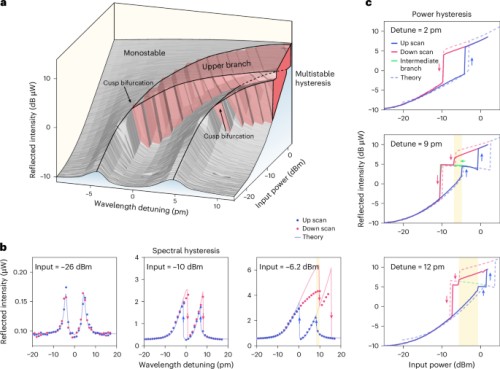
Figure 4: Experimental observation of optical multistability
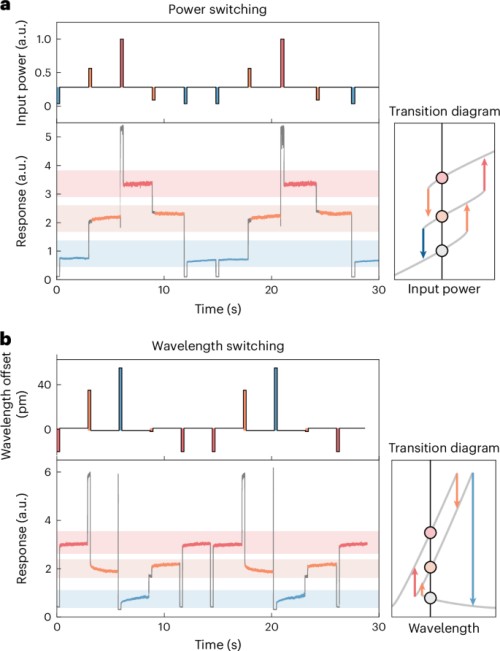
Figure 5: Dynamic Operation of the Tri-state Optical Memory
Source: Optics World
LATEST NEWS
Thank you for visiting the official website of Chongfan Technology. If you have cooperation intentions or suggestions, please contact us through the following methods, and we will reply as soon as possible, thank you!
Address: Room 403, Building 6, Phase III of R&D, No. 36 Xiyong Avenue, High tech Zone, Chongqing, China.
Telephone: +86-13658337211
E-mail: Sales@cfkeji.net
Website: www.cfkeji.net
Mobile Version