
Chongfan Technology
News
22
2026
-
06
Incoherent Super-Resolution Based on Diffraction in Hermite–Gaussian Imaging
Author:
The Liangcai Cao team at Tsinghua University has proposed a diffraction-based Hermite–Gaussian imaging (D‑HGI) method that enables Gaussian imaging of time‑incoherent light sources. D‑HGI employs a single pure phase element to perform mode projection without a local oscillator and estimates mode intensities by integrating the ±1 diffraction orders, made possible through a mask design that accounts for the point spread function. Experimental demonstrations using point‑source localization validate the performance of this mode‑projection approach. For Gaussian imaging of full two‑dimensional objects, the authors replace the previous neural network with a calibration‑driven reconstruction algorithm, thereby enhancing robustness and interpretability. Experiments show that D‑HGI achieves an optical resolution of 0.31λ/NA in incoherent imaging systems, demonstrating passive superresolution beyond the Rayleigh limit. This method offers a practical pathway toward passive incoherent superresolution in microscopy and astronomy.
The research findings were published in Optica on May 5, 2026, under the title “Incoherent superresolution via diffraction-based Hermite–Gaussian imaging.”

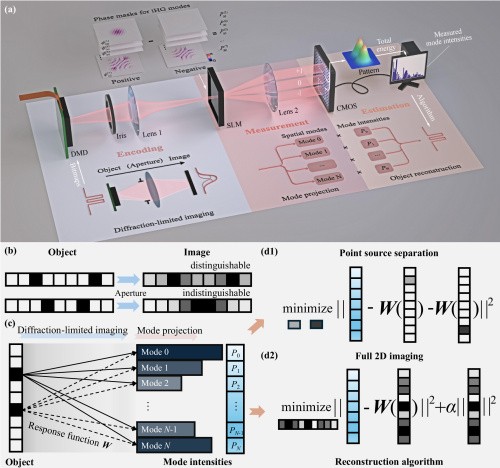
Figure 1: Principle and Workflow of D-HGI
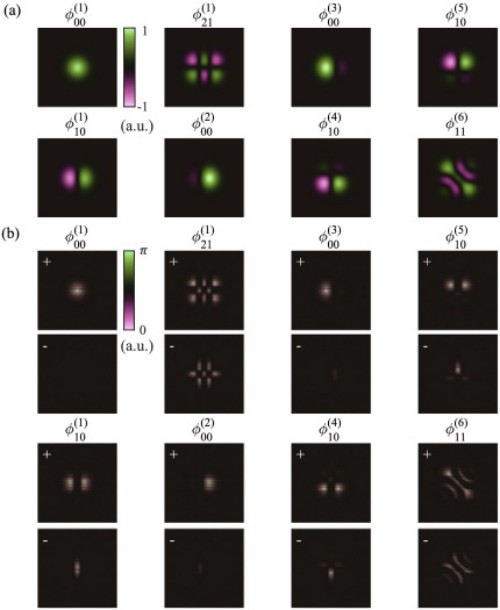
Figure 2: (a) A subset of the selected iHG modes used in the experiment.
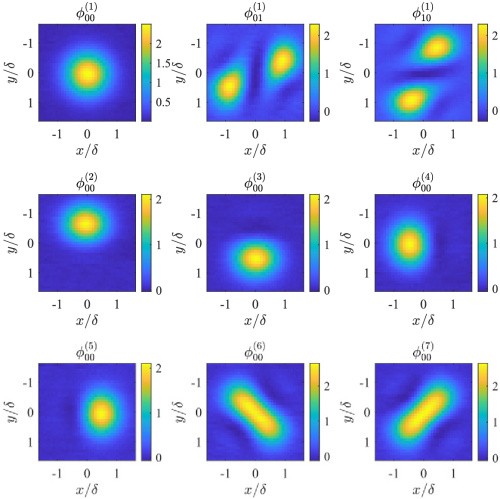
Figure 3: Experimentally calibrated response matrices for several representative spatial patterns.
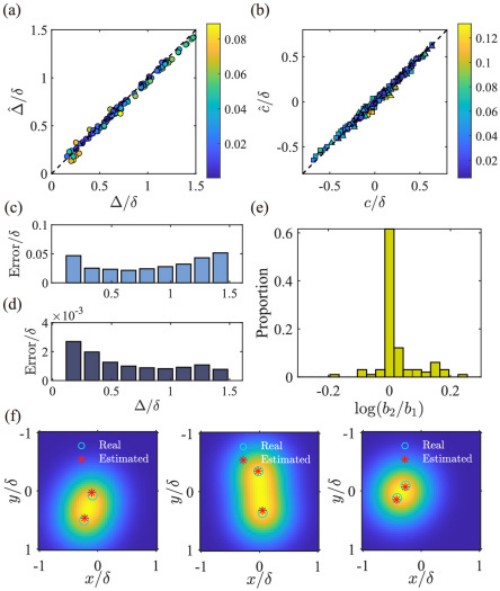
Figure 4: Localization of a sub-diffraction-limited point source using a diffraction-based pattern measurement method.
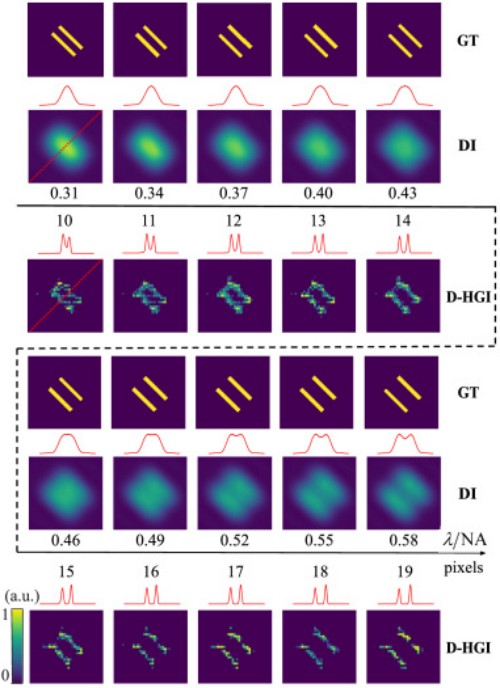
Figure 5: Ground truth (GT), DI, and D-HGI results for 2D line pairs on the object.
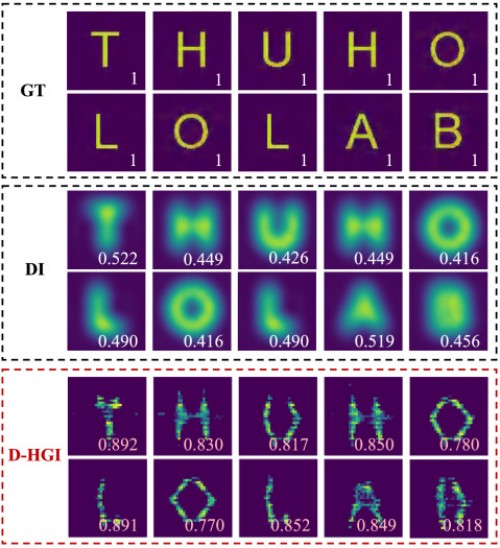
Figure 6: Two-dimensional imaging of English letters—GT, DI, and D-HGI results
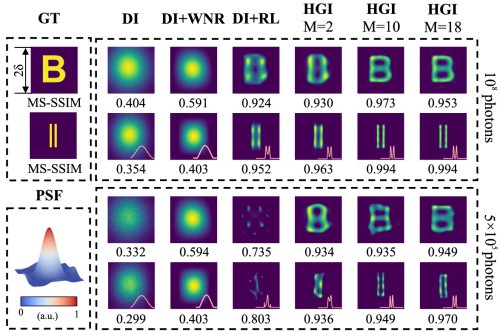
Figure 7: Resolution Comparison of DI, DI+WNR, DI+RL, and HGI
Source: Optics World
LATEST NEWS
Thank you for visiting the official website of Chongfan Technology. If you have cooperation intentions or suggestions, please contact us through the following methods, and we will reply as soon as possible, thank you!
Address: Room 403, Building 6, Phase III of R&D, No. 36 Xiyong Avenue, High tech Zone, Chongqing, China.
Telephone: +86-13658337211
E-mail: Sales@cfkeji.net
Website: www.cfkeji.net
Mobile Version