
Chongfan Technology
News
09
2026
-
06
Multiscale Biological Quantum Effects in Photosynthesis
Author:
As the resolution of biomolecular structure determination has reached the atomic level, the exploration of life‑science principles has shifted from the descriptive, cell‑level analyses of the past to the investigation of quantum‑mechanical laws grounded in precise macromolecular structural information. Photosynthesis converts solar energy into chemical energy with nearly lossless efficiency. Theoretical studies indicate that such high quantum efficiency must be underpinned by quantum mechanisms, such as energy transfer mediated by quantum coherence. The central question is: in a warm, humid biological environment rife with thermal noise, how can fragile quantum effects persist and function? How do quantum effects govern the execution of biological functions? And can microscopic quantum phenomena operate on larger spatial scales—what is known as macroscopic quantum effects in biology?
Centering on this series of questions, the team led by Yu-Xiang Weng at the Laboratory of Soft Matter Physics, Institute of Physics, Chinese Academy of Sciences / Beijing National Research Center for Condensed Matter Physics has been dedicated to studying quantum effects in photosynthesis and has recently carried out a number of related research efforts.
Three representative studies span roughly 6 Å (the quantum switch for non-photochemical quenching in the major light-harvesting antenna of higher plants), ~21 Å (quantum coherent energy transfer in algal photosynthetic antennas), and ~50–80 nm (optimization of photosynthetic membrane vesicles regulated by delocalized states in light-harvesting antennas), covering two orders of magnitude in spatial scale. All three are unified by a single underlying principle: quantum effects in photosynthesis are not passive “survivors,” but rather functional cores actively safeguarded by the dynamic architecture of proteins. This protection is far from random; it follows the universal mechanism of quantum phase synchronization. More importantly, quantum design principles can propagate from the molecular scale to larger spatial scales, manifesting as observable biological function optimization at the macroscopic level. From quantum coherence and molecular switches to nanoscale vesicle optimization, photosynthesis reveals that quantum phenomena have never been detached from macroscopic life. This insight not only refines the theoretical framework of quantum biology but also offers fresh perspectives for designing decoherence‑resilient quantum devices operating at room temperature and for genetically improving crop efficiency in harnessing solar energy. Specifically, their research has elucidated coherent energy transfer mechanisms in cyanobacterial phycobiliproteins APC and phycoerythrin PE545 using two-dimensional electronic spectroscopy (Nature Communications, 15, 1, 2024; The Journal of Chemical Physics, 162, 20, 2025), as well as incoherent energy transfer processes in structurally similar phycocyanin PC??? (The Journal of Chemical Physics, 161, 8, 2024). They further investigated the quantum switching dynamics in the major light-harvesting protein LHCII of higher plants through time-resolved spectroscopy and cryo‑EM structural analysis (Science China Chemistry, 63, 8, 2020; Nature Plants, 9, 9, 2023). Additionally, they discovered that purple photosynthetic bacteria employ an inward‑invagination strategy to form vesicles, thereby expanding their light-harvesting surface area, with evolution favoring an optimal vesicle size of 50–80 nm (Biophysical Journal, 124, 14, 2025). Most recently, they synthesized these findings into a tightly interconnected Featured Article, presenting a surprising conclusion: quantum effects are not fragile accidents, but rather core design principles actively protected, precisely regulated by proteins, and propagated across increasingly larger spatial scales.
This work was recently published in The Journal of Physical Chemistry B under the title “Exploring Biological Quantum Effects in Photosynthesis across Varied Spatial Scales,” with Dr. Meixia Ruan, a postdoctoral researcher at the Institute of Physics, Chinese Academy of Sciences, as the first author and Researcher Yuxiang Weng of the same institute as the corresponding author.
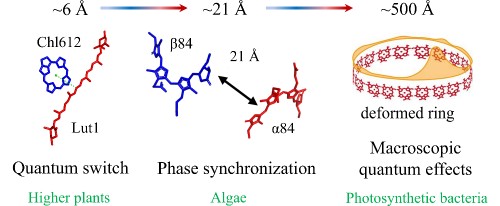
Figure. Multiscale biological quantum effects across species
Source: Institute of Physics
LATEST NEWS
Thank you for visiting the official website of Chongfan Technology. If you have cooperation intentions or suggestions, please contact us through the following methods, and we will reply as soon as possible, thank you!
Address: Room 403, Building 6, Phase III of R&D, No. 36 Xiyong Avenue, High tech Zone, Chongqing, China.
Telephone: +86-13658337211
E-mail: Sales@cfkeji.net
Website: www.cfkeji.net
Mobile Version