
Chongfan Technology
News
30
2026
-
06
The Shanghai Institute of Optics and Fine Mechanics has made progress in research on the metrology of grating parameters using interpretable machine learning.
Author:
Recently, the research team led by Researcher Liu Shijie from the High-Power Laser Components Technology and Engineering Department of the Shanghai Institute of Optics and Fine Mechanics, Chinese Academy of Sciences, in collaboration with the team of Professor Zhu Rihong from Nanjing University of Science and Technology, has made significant progress in the non-contact, high-precision measurement of grating microstructural parameters. The related findings, titled “AMICM: A high-precision grating metrology framework via interpretable machine learning and scatterometry,” have been published in Optics and Lasers in Engineering.
Gratings are critical optical components in spectroscopic analysis, optical communications, and high‑power laser systems; their microstructural parameters—such as duty cycle and groove depth—directly influence diffraction efficiency and device performance. Conventional direct measurement techniques like AFM and SEM suffer from being offline, low‑throughput, and posing risks of sample damage, while standard scattering‑based inverse methods are constrained by modeling complexity and computational cost, making it difficult to meet the demands for rapid, non‑contact measurements.
To address the aforementioned issues, the research team proposed AMICM, an attention-enhanced, multi‑feature, interpretable CatBoost model. This approach leverages spectral data at a diffraction efficiency of −1, integrates time‑domain and frequency‑domain features alongside spectral efficiency curves, and incorporates an attention mechanism together with SHAP‑based interpretability analysis to achieve dynamic weighting of key features and provide interpretable predictions. Experimental results demonstrate that, under conditions of a 1400 lines/mm rectangular grating and 20–40 dB noise, the method achieves a mean absolute error (MAE) of 0.0174 and an R² of 0.9841 for duty‑cycle prediction, and an MAE of 0.017 and an R² of 0.9791 for groove depth prediction. With millisecond‑level inference speed, this approach offers a novel solution for rapid metrology of grating parameters in industrial settings.
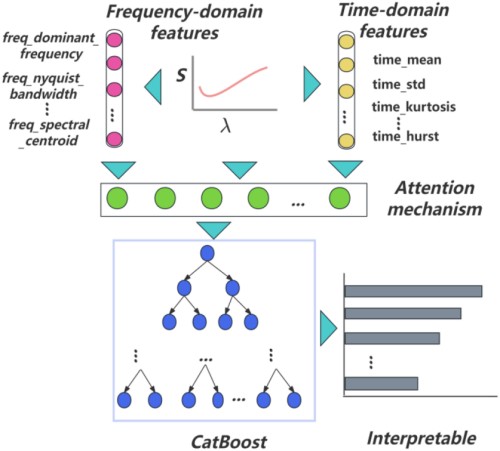
Figure 1: Diagram of the AMICM Explainable Machine Learning Grating Metrology Framework
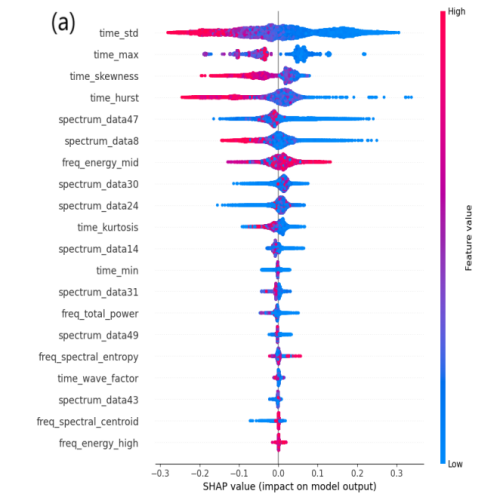
Figure 2 (a) Feature importance analysis of duty cycle during the training of the AMICM model; (b) Feature importance analysis of slot depth during the training of the AMICM model.
Source: Shanghai Institute of Optics and Fine Mechanics
LATEST NEWS
Thank you for visiting the official website of Chongfan Technology. If you have cooperation intentions or suggestions, please contact us through the following methods, and we will reply as soon as possible, thank you!
Address: Room 403, Building 6, Phase III of R&D, No. 36 Xiyong Avenue, High tech Zone, Chongqing, China.
Telephone: +86-13658337211
E-mail: Sales@cfkeji.net
Website: www.cfkeji.net
Mobile Version