
Chongfan Technology
News
30
2026
-
06
Peking University has made significant progress in the study of multistability in optical microcavities.
Author:
Multistability refers to the existence of multiple stable states in a system under the same external conditions. It is one of the core characteristics of complex nonlinear systems and a crucial prerequisite for realizing multi-valued optical storage. However, owing to the relatively weak optical nonlinear effects, achieving optical multistability at the micro- and nanoscale has long been a major challenge in this field.
Recently, the team led by Peng Chao at Peking University’s School of Electronics, in collaboration with researchers from Harbin Engineering University and ITMO University in Russia, engineered a pair of nearly degenerate ultra-high‑quality‑factor (Q) resonant modes within a photonic crystal microcavity. This enabled the realization of near‑exceptional coupling (NEC) in a non-Hermitian system and successfully demonstrated low‑threshold optical tristability on a compact silicon‑based chip. The findings were published under the title “Optical multistability in a compact microcavity enabled by near-exceptional coupling” in the latest issue of Nature Nanotechnology.
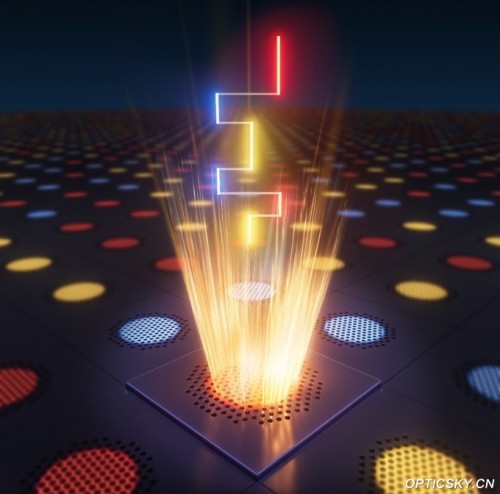
Figure 1. Optical multistability in a compact photonic crystal microcavity
Starting from the symmetry of photonic‑crystal microcavities, the research team ingeniously leveraged Brillouin‑zone folding to engineer degenerate modes and, through structural perturbations, introduced non-Hermitian coupling with a shared radiative channel. As the system approaches a singularity, the two eigenmodes couple and hybridize, giving rise to a mixed mode with nearly identical wavelength and linewidth. In this regime—known as “near‑singularity coupling (NEC)” —the microcavity can efficiently exchange energy with the radiation channel while sustaining stable intermode interactions, thereby laying the groundwork for the emergence of optical multistability.
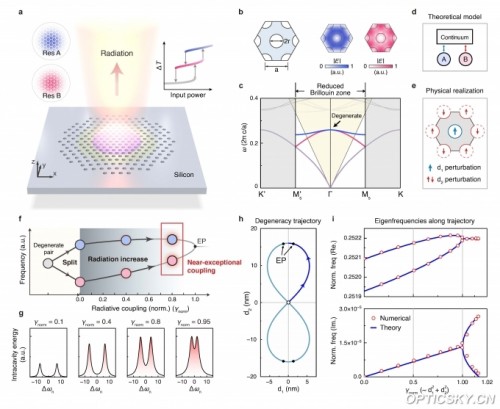
Figure 2. Principle of Near-Eccentric Coupling (NEC) and Microcavity Design
In the experiment, the team achieved resonant modes with a quality factor as high as 10^6 within a silicon‑based photonic crystal microcavity only 20 μm in diameter. This was enabled by an exceptionally high Q factor and dual‑mode intracavity field enhancement arising from the NEC mechanism, allowing the system to exhibit pronounced three‑state bistability driven by thermo‑optic nonlinearity. The hysteresis loops observed experimentally reveal that, at an extremely low input power of just 240 μW, the system can switch among three stable states.
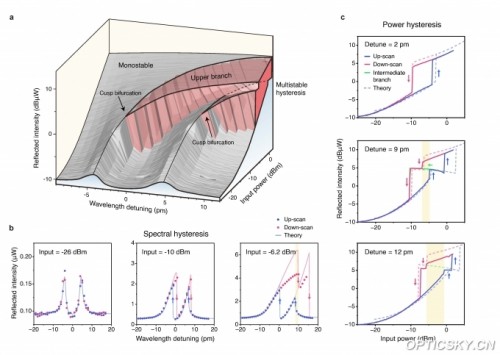
Figure 3. Tri-stable behavior triggered by thermo-optic nonlinearity
Building on this discovery, the research team further demonstrated a prototype device for multi-valued optical memory. By modulating either the input optical power or wavelength, the system can switch rapidly and reliably among three stable intensity states. This achievement not only validates the feasibility of harnessing non-Hermitian physics to control optical nonlinearities, but also provides a novel fundamental building block for developing scalable, reconfigurable optical neural networks and neuromorphic computing processors.
This study unveils a general strategy for achieving robust multistability in compact photonic systems by controlling mode‑to‑radiation coupling. Zhen Liu, a Ph.D. student at the School of Electronics, Peking University, is the first author, while Dr. Feifei Wang and Chao Peng, both from the School of Electronics and the National Key Laboratory of Photonics Transmission and Communication at Peking University, serve as co‑corresponding authors. This work was supported by projects under the National Key R&D Program and the National Natural Science Foundation of China, among others.
Source: Peking University
LATEST NEWS
Thank you for visiting the official website of Chongfan Technology. If you have cooperation intentions or suggestions, please contact us through the following methods, and we will reply as soon as possible, thank you!
Address: Room 403, Building 6, Phase III of R&D, No. 36 Xiyong Avenue, High tech Zone, Chongqing, China.
Telephone: +86-13658337211
E-mail: Sales@cfkeji.net
Website: www.cfkeji.net
Mobile Version