
Chongfan Technology
News
24
2026
-
04
South China University of Technology: Femtosecond Laser-Assisted Stable Nucleation of Hopf Bifurcation | Nature Physics
Author:
In the fields of condensed matter physics and spintronics, topological magnetic solitons have attracted considerable attention due to their unique stability and controllability. Representative examples include the extensively studied two-dimensional skyrmion and the cutting-edge three-dimensional Hopfion. Owing to their closed-loop topology and localization in three-dimensional space, Hopfions hold promise as next-generation high-density, low-power information-functional devices. Previous studies have demonstrated that Hopfions can stably coexist with skyrmions to form ring-like structures; however, experimental observation of isolated, stable Hopfions remains a significant challenge.
Recently, a research team led by Zheng Fengshan at South China University of Technology, in collaboration with Nankai University and South China Normal University, together with theoretical groups from the Jülich Research Centre in Germany, Uppsala University in Sweden, and other institutions, published a research paper in Nature Physics demonstrating the stable nucleation of isolated Hopf points in the chiral magnet FeGe using femtosecond laser pulses.
The study finds that femtosecond pulses from ultrafast lasers can effectively drive transitions among various metastable states, thereby significantly enhancing the nucleation probability of isolated Hopf points. Combined with theoretical calculations, it is further shown that the nucleation of Hopf points arises from a topological transition in which skyrmion–antiskyrmion pairs transform into Hopf points. This work also demonstrates that femtosecond lasers can efficiently “write” topological states, providing another powerful technical tool for subsequent fundamental research on topological magnetism and the development of topological spintronic devices.

First author: Xiaowen Chen; Corresponding authors: Filipp N. Rybakov, Nikolai S. Kiselev, Xuewen Fu, and Fengshan Zheng; Affiliations: South China University of Technology, Nankai University, South China Normal University, Forschungszentrum Jülich in Germany, and Uppsala University in Sweden.
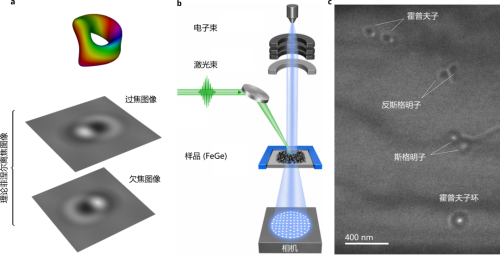
Fig. a, Schematic illustration of the magnetic configuration of an isolated Hopfion and its theoretical Fresnel defocus electron microscopy image; b, Schematic diagram of in situ ultrafast laser Lorentz transmission electron microscopy; c, Nucleation of various topological magnetic solitons induced by ultrafast laser pulses.
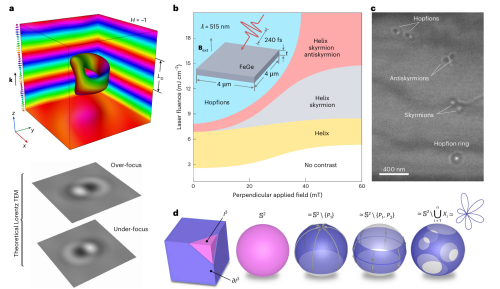
Figure 1: Hopf bifurcation nucleation induced by ultrashort laser pulses in a spiral-shaped background.
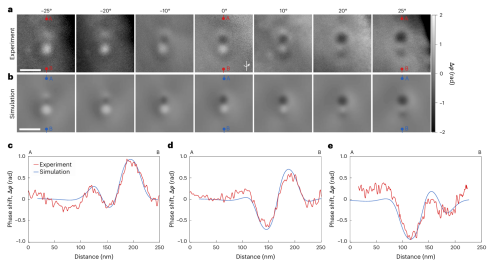
Figure 2: Tilted sequence for Hopf bifurcation-induced phase shift quantification.
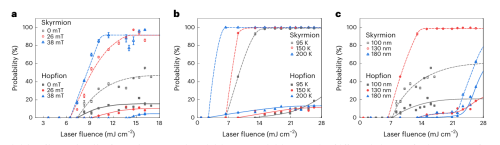
Figure 3: Probability of laser-induced Hopf bifurcation nucleation.
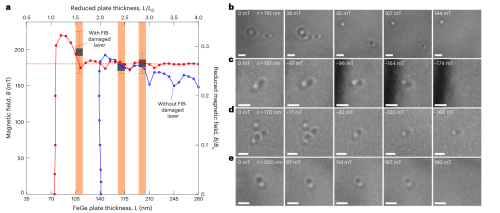
Figure 4: Stability of the H = −1 Hopf bifurcation in a thin plate.
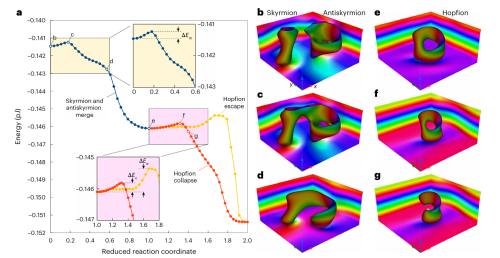
Figure 5: The minimum-energy pathway for Hopf bifurcation nucleation and annihilation.
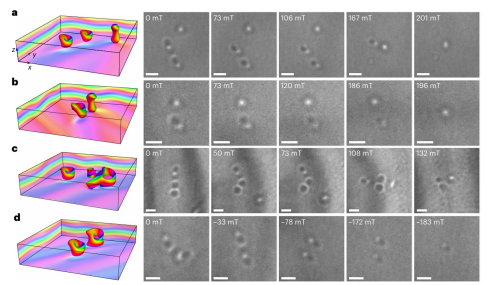
Figure 6: Evolution of the Hopf point in a perpendicular external magnetic field.
Source: South China University of Technology
LATEST NEWS
Thank you for visiting the official website of Chongfan Technology. If you have cooperation intentions or suggestions, please contact us through the following methods, and we will reply as soon as possible, thank you!
Address: Room 403, Building 6, Phase III of R&D, No. 36 Xiyong Avenue, High tech Zone, Chongqing, China.
Telephone: +86-13658337211
E-mail: Sales@cfkeji.net
Website: www.cfkeji.net
Mobile Version