
Chongfan Technology
News
20
2026
-
04
Single-Element Semiconductor Laser | Nature
Author:
In lasers, spectral emission control is determined by the physical dimensions of the optical resonator, which confines the emission to a discrete set of cavity modes at specific frequencies. Without modifying the optical cavity, this results in significant gaps in the available laser emission spectrum and imposes a fixed repetition rate, thereby limiting the degree of tunability in either the spectral or temporal domain.
Recently, Urban Senica, Giacomo Scalari, and colleagues at the Swiss Federal Institute of Technology in Zurich published a paper in Nature reporting a monolithic semiconductor laser that employs microwave-driven signals to induce spatiotemporal gain modulation throughout the entire laser cavity. This approach generates intracavity mode-locked pulses with continuously tunable group velocity, thereby overcoming this fundamental limit. At the output, the system produces a frequency comb with continuously adjustable mode spacing in the frequency domain and a coherent pulse train with continuously tunable repetition rate in the time domain.
The research findings contribute to the development of fully tunable chip-scale lasers and frequency combs, which will benefit applications ranging from fundamental research to high-resolution spectroscopy and dual-comb spectroscopy.
Continuously tunable coherent pulse generation in a semiconductor laser. Continuous, tunable coherent pulse generation in a semiconductor laser.
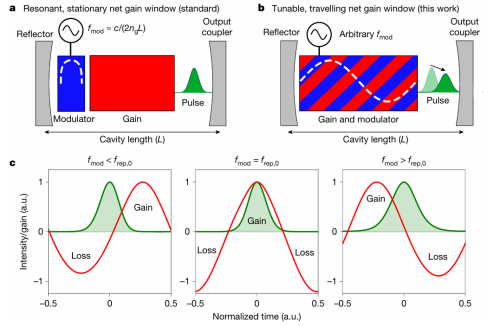
Figure 1: Operating Principle.
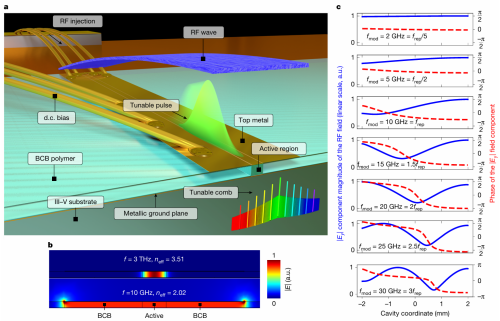
Figure 2: Device Geometry and Basic Characteristics.
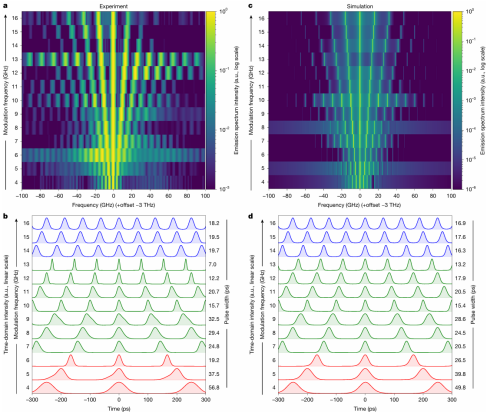
Figure 3: Spectral and time-domain measurements and numerical simulation results.
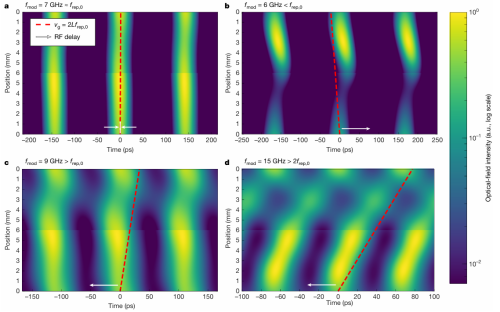
Figure 4: Waveform dynamics simulation within the optical cavity.
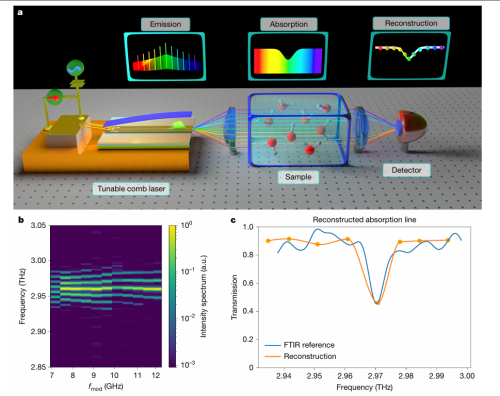
Figure 5: Absorption spectrum.
A planar waveguide structure is employed, in which a GaAs/AlGaAs quantum-cascade active layer is embedded within a low-loss BCB polymer, while a sandwiched metallic structure simultaneously provides vertical confinement for both the optical and microwave fields. By optimizing the waveguide width (40 μm) and the top metallization width (300 μm), low-loss co-propagation of microwave and terahertz waves is achieved. This breakthrough overcomes the traditional laser’s reliance on cavity geometry and demonstrates that, within a monolithic structure, the group velocity of light can be continuously tuned over a wide range through external-field control, thereby establishing a new paradigm for semiconductor laser material design: output characteristics can be tailored by modulating microwave–optical field coupling rather than by altering cavity dimensions.
Source: Today's New Materials
LATEST NEWS
Thank you for visiting the official website of Chongfan Technology. If you have cooperation intentions or suggestions, please contact us through the following methods, and we will reply as soon as possible, thank you!
Address: Room 403, Building 6, Phase III of R&D, No. 36 Xiyong Avenue, High tech Zone, Chongqing, China.
Telephone: +86-13658337211
E-mail: Sales@cfkeji.net
Website: www.cfkeji.net
Mobile Version