
Chongfan Technology
News
01
2026
-
04
Scientists Use AI to Decipher the Chemical Code of the Moon’s Far Side
Author:
Analyzing the global distribution of chemical elements on the lunar surface is a central approach to unraveling the Moon’s internal crust–mantle structure, magmatic evolution, and geological history, and it holds significant scientific importance for understanding the formation and evolution of the Earth–Moon system. Previously, remote-sensing inversion and mapping studies of elemental abundances on the lunar surface have relied primarily on calibration using in-situ measurements from sample-return missions targeting the near side of the Moon, leaving the far side—which accounts for nearly half of the Moon’s total surface area—in a prolonged “observational blind spot.” Due to the lack of ground-truth constraints from field sampling, existing remote-sensing inversion models exhibit substantial biases when dealing with the far side’s complex topography and distinctive mineralogical assemblages. This is particularly true for the South Pole–Aitken Basin, the region richest in lunar geological features, where key scientific questions regarding its deep-material composition and crustal evolutionary processes have long lacked precise quantitative data support.
Recently, a research team led by the Shanghai Institute of Technical Physics of the Chinese Academy of Sciences, among others, leveraged the first in-situ sample data from the far side of the Moon obtained during the Chang’e-6 mission, combined with high-resolution visible–near-infrared multi-band spectral imaging data from lunar orbit, to develop an intelligent inversion framework for lunar chemical composition based on residual convolutional neural networks. This framework was used to construct the world’s first high-precision global map of major oxide abundances on the Moon, integrating ground-truth measurements from the far side. This study has overcome the long-standing challenge of insufficient in-situ data constraints in the inversion of chemical composition on the far side, revealing the exposure characteristics of deep materials within the South Pole–Aitken Basin and the compositional patterns of the far-side lunar crust. These findings provide high-precision quantitative scientific support for a deeper understanding of the Moon’s geological evolution and for guiding the selection of landing sites in future lunar exploration missions.
Through multidisciplinary collaboration, the research team integrated the in-situ “ground truth” measurements from Chang’e-6 on the far side of the Moon with high-resolution visible–near-infrared multi-band spectral imaging data from lunar orbit, and embedded these data into a residual convolutional neural network inversion model. Leveraging a model fine-tuning strategy, the team was able to accurately capture the highly nonlinear relationships between spectral data and elemental concentrations even under limited sample conditions, thereby effectively addressing the common issues of overfitting and insufficient robustness in traditional models and substantially improving the accuracy of oxide inversion at the global scale. Building on this “AI + remote sensing” approach, the team further precisely reconstructed the global distributions of six major oxide minerals—iron, titanium, aluminum, magnesium, calcium, and silicon—as well as the magnesium index, clearly delineating the elemental distribution patterns across the Moon’s three major geochemical regions: the maria, the highlands, and the South Pole–Aitken Basin.
This achievement is the first to quantitatively demonstrate that the exposure ratios of magnesian anorthositic rocks and magnesian lithologies on the lunar far side are significantly higher than those on the near side, thereby providing new empirical evidence for the hypothesis of hemispheric asymmetry in magmatic differentiation on the Moon. Furthermore, it precisely delineates the boundary between the magnesian pyroxene ring and the iron-rich anomaly zone within the South Pole–Aitken Basin, confirming that the impact event associated with the South Pole–Aitken Basin excavated and exposed a broader extent of deep-seated magnesian materials.
This study is the first to integrate in-situ measurement data from the far side of the Moon into global chemical mapping, thereby filling a critical data gap in the geological research of the lunar farside. It has deepened our understanding of key scientific questions, including the structure of the lunar crust and mantle, the evolutionary differentiation between the lunar hemispheres, and the formation and evolution of the South Pole–Aitken Basin. Moreover, it provides high-precision quantitative chemical constraints for the selection of future lunar landing sites, the exploration of lunar resources, and the planning of deep-space exploration missions, thus laying a solid scientific foundation for the continued advancement of China’s lunar exploration program.
The relevant research findings were published in Nature Sensors. This research was supported by the National Natural Science Foundation of China and the Chinese Academy of Sciences.
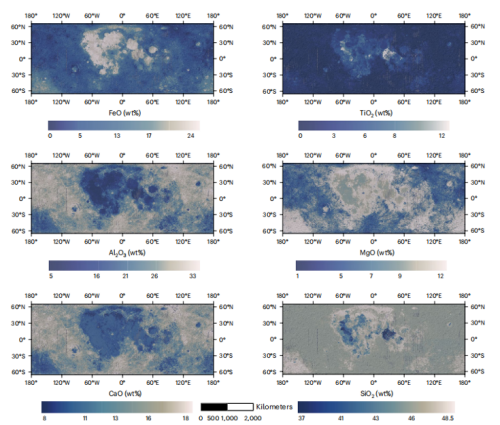
Mapping the Distribution of Major Oxide Abundances on the Lunar Surface for the New Generation
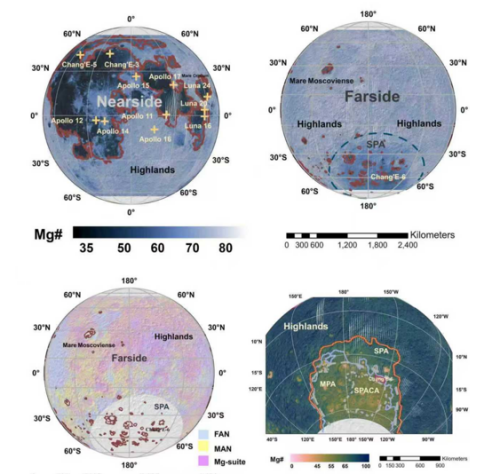
Distribution of Magnesium Indices on the Lunar Near and Far Sides Reveals Their Asymmetry
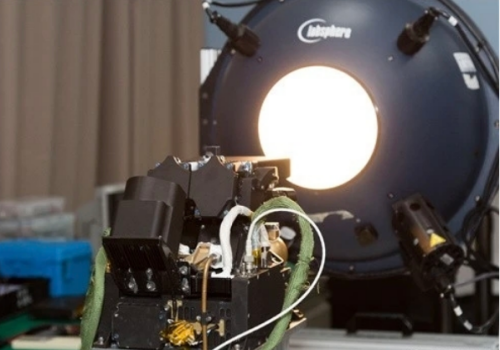
Chang’e-6 Spectrometer Simulation Experiment
Source: Shanghai Institute of Technical Physics
LATEST NEWS
Thank you for visiting the official website of Chongfan Technology. If you have cooperation intentions or suggestions, please contact us through the following methods, and we will reply as soon as possible, thank you!
Address: Room 403, Building 6, Phase III of R&D, No. 36 Xiyong Avenue, High tech Zone, Chongqing, China.
Telephone: +86-13658337211
E-mail: Sales@cfkeji.net
Website: www.cfkeji.net
Mobile Version