
Chongfan Technology
News
01
2026
-
04
Metasubstrate Biosensor for Terahertz-Based Phenotypic Analysis of Cancer Cells
Author:
A team led by Tie Jun Cui and Yang Shen at Southeast University has proposed a metasurface biosensor based on frequency-band folding, which supports a high-density array of free-space excitation modes. Building on a Fourier-series theoretical framework developed by the authors for predicting coupling strengths, they introduce perturbations into a hexagonal superlattice to convert numerous symmetry-protected hidden modes into radiative resonances. This multimode platform is then applied to phenotypic analysis of various biological cells in the terahertz frequency range. Histopathological validation demonstrates that the dense intracellular accumulation of biomolecules and enlarged nuclei in malignant cells give rise to pronounced differences in volumetric dielectric constants. This mechanism enables rapid discrimination between cancer cell phenotypes and normal cell phenotypes. The authors’ work integrates metamaterial device physics with insights into biological structures, thereby expanding the potential applications of mode-multiplexing metamaterials in phenotypic screening.
The research findings were published in Photonix on January 19, 2026, under the title “Band folding unlocks high-density hidden modes for sub-terahertz cancer cell phenotyping.”
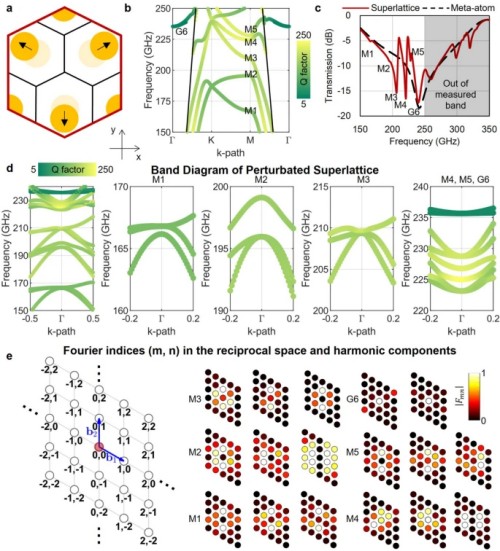
Figure 1: Band folding and mode coupling under free-space excitation
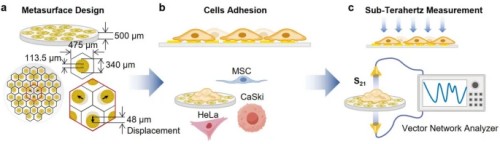
Figure 2: Design and Experiment of a Terahertz Multimode Metasurface Biosensor for the Asia-Pacific Region
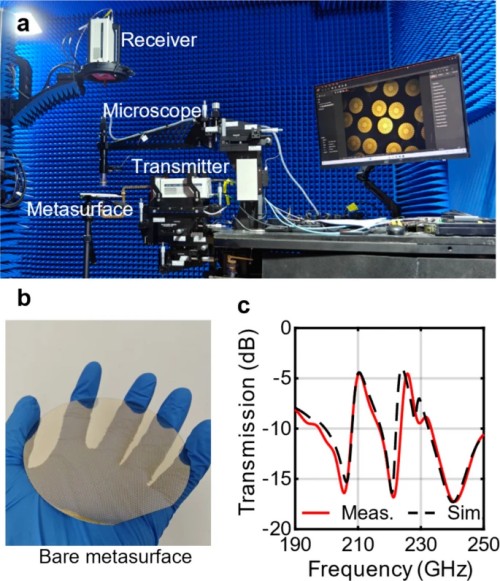
Figure 3: Fabricated metasensor and far-field experimental setup
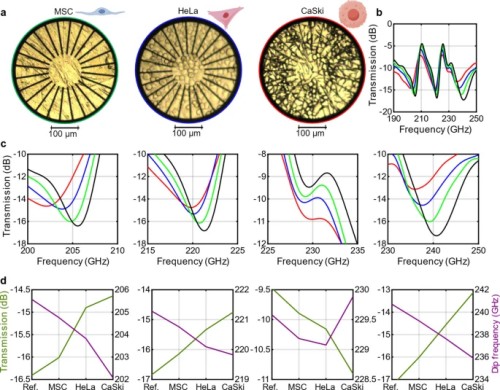
Figure 4: Transmission spectra of metasensors covering different cell types
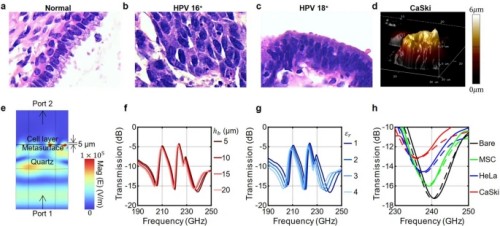
Figure 5: Fundamental Verification of the Unit-Cell Structure and Extraction of the Effective Permittivity
Source: Optics World
LATEST NEWS
Thank you for visiting the official website of Chongfan Technology. If you have cooperation intentions or suggestions, please contact us through the following methods, and we will reply as soon as possible, thank you!
Address: Room 403, Building 6, Phase III of R&D, No. 36 Xiyong Avenue, High tech Zone, Chongqing, China.
Telephone: +86-13658337211
E-mail: Sales@cfkeji.net
Website: www.cfkeji.net
Mobile Version