
Chongfan Technology
News
30
2026
-
03
Scientists Develop Miniature “Nanolasers” That Could Revolutionize Future Computers
Author:
Researchers have developed an ultra-compact nanolaser that holds the promise of revolutionizing data transmission within microchips by replacing electrical signals with optical ones.
Thanks to a groundbreaking nanolaser developed by the Technical University of Denmark (DTU), the vision of computers communicating using light rather than electricity is increasingly becoming a reality.
This research was published in the journal Science Advances. The device is so small that thousands of them can be integrated onto a single microchip. Unlike conventional lasers that rely on electric current—which generates heat and degrades performance—these nanolasers use photons to transmit information. This shift holds the promise of dramatically increasing processing speeds while reducing energy consumption across a wide range of devices, from smartphones to large data centers.
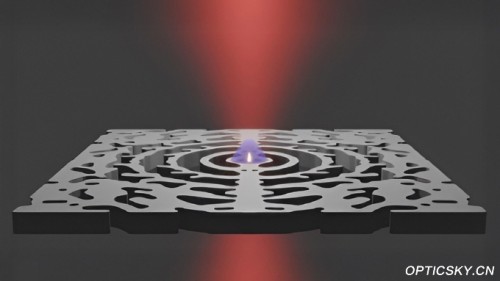
Professor Jesper Mork of the Technical University of Denmark stated: “Nanolasers have opened up the possibility of creating a new generation of components that combine high performance with extremely small dimensions. This has applications in the field of information technology—for example, ultra-small, highly energy-efficient lasers can be used to reduce the power consumption of computers—and in healthcare, where the nanolaser’s exceptional light-focusing capability can deliver high-resolution imaging and ultra-sensitive biosensors.”
Mok collaborated with Dr. Meng Xiong, Dr. Yi Yu, and other colleagues from the Department of Electro-Optics at the Technical University of Denmark to complete this research.
Halving Computer Energy Consumption
Although the internet already relies on light traveling through fiber-optic cables to transmit data, circuits inside computers still depend on electrical signals. This generates heat and limits performance. Integrating nanolasers directly onto chips can overcome these challenges by enabling faster data transmission with minimal energy loss. According to Mork, this technology could reduce computer power consumption by about half.
The nanolasers developed at the Technical University of Denmark were specifically designed to meet this need, as future chips are expected to require thousands of compact, energy-efficient light sources for on-chip signal transmission.
Technological Breakthrough
The device was fabricated in the cleanroom facilities at the Technical University of Denmark—the TUD NanoLab—challenging long-standing assumptions about the size limits of lasers. The laser employs a light-trapping structure known as a nanocavity, which confines light to an extremely small volume previously thought unattainable.
When activated by a light beam, both the light and the electrons are confined to this extremely small region. This enables the laser to operate at room temperature with very low power consumption. The design of this nanocavity was initially developed by Professor Ole Sigmund’s team at the Department of Building Technology at the Technical University of Denmark.
Faster technology, lower carbon dioxide emissions, and better sensors
The next critical step is to enable nanolasers to be electrically driven, which remains a major research challenge. If successful, this technology could reshape multiple industries. Consumer electronics could become more powerful while consuming less energy, and data centers could reduce their power requirements, thereby lowering their environmental impact. In the healthcare sector, the same technology could support highly sensitive sensors and higher-resolution imaging tools.
Source: scitechdaily
Previous
Previous
LATEST NEWS
Thank you for visiting the official website of Chongfan Technology. If you have cooperation intentions or suggestions, please contact us through the following methods, and we will reply as soon as possible, thank you!
Address: Room 403, Building 6, Phase III of R&D, No. 36 Xiyong Avenue, High tech Zone, Chongqing, China.
Telephone: +86-13658337211
E-mail: Sales@cfkeji.net
Website: www.cfkeji.net
Mobile Version