
Chongfan Technology
News
23
2026
-
03
Multimode Fiber Probe for In Situ Nanoscale Displacement Detection and Microimaging
Author:
A team led by Qiang Liu and Qirong Xiao at Tsinghua University has proposed an in-situ, non-contact nanometer-scale displacement measurement method. By leveraging deep-learning–enabled multimode fiber probes, the method can efficiently extract fine feature information from super-oscillatory speckle patterns, enabling single-ended detection with a resolution of 10 nm and an accuracy as high as 99.95%. The authors have developed a physical model that correlates displacement with the proportion of higher-order modes in the fiber. The sub-millimeter-sized probe is capable of detecting targets with diverse structures in confined spaces. Through federated learning, robust recognition can be achieved even under varying fiber bending conditions and with different metallic materials. The system exhibits an exceptionally low compression ratio of less than 0.1%, thereby realizing high precision, low training costs, and high-speed processing. In addition, the authors experimentally validated the probe’s imaging capabilities, demonstrating its strong potential for applications such as lithography, weak-force sensing, and super-resolution microendoscopy.
The research findings were published in Nature Communications on January 5, 2026, under the title “Deep learning and superoscillatory speckles empowered multimode fiber probe for in situ nano-displacement detection and micro-imaging.”
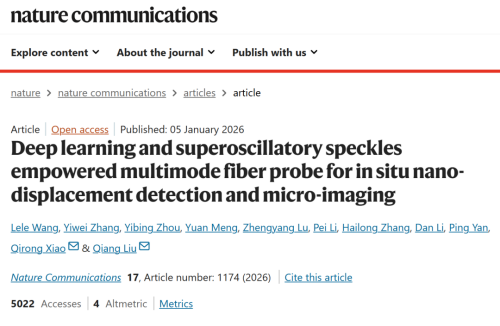
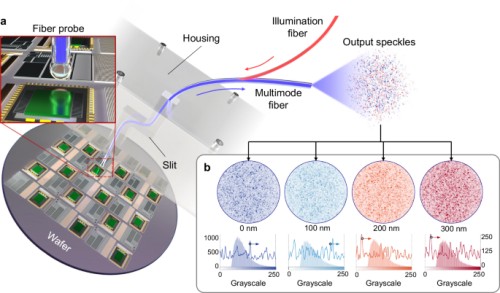
Figure 1: In-situ nanometer displacement measurement based on a multimode fiber probe
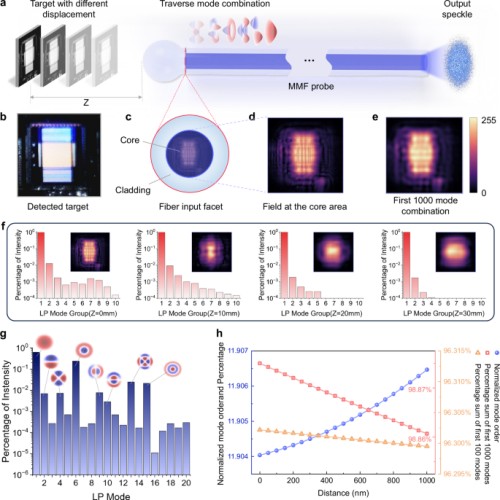
Figure 2: Physical model of the MMF and simulation results under different displacements
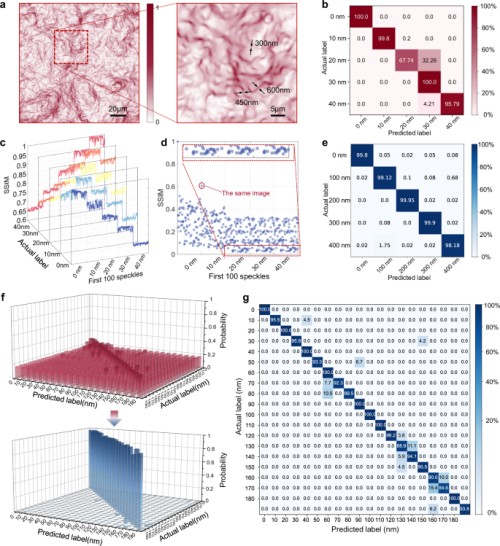
Figure 3: Comparison of Traditional Speckle Similarity Measurement Methods and Deep Learning Methods
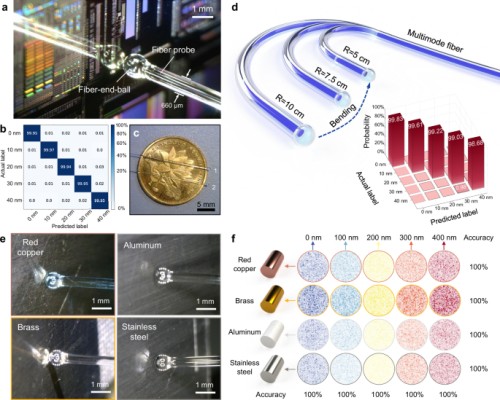
Figure 4: Experimental results for wafer and various metal plate inspections
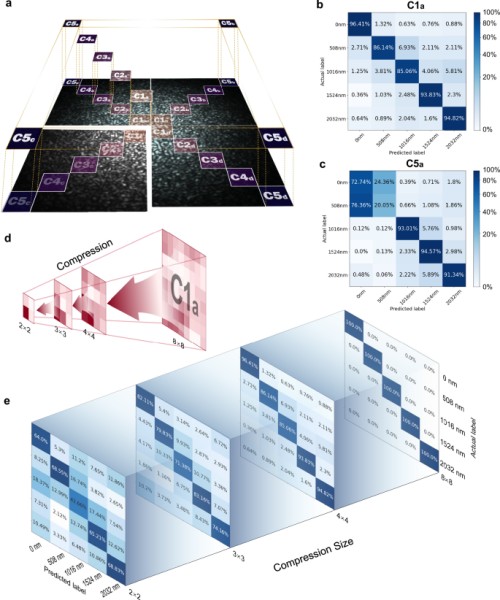
Figure 5: Results of displacement detection using compressed-sampling speckle.
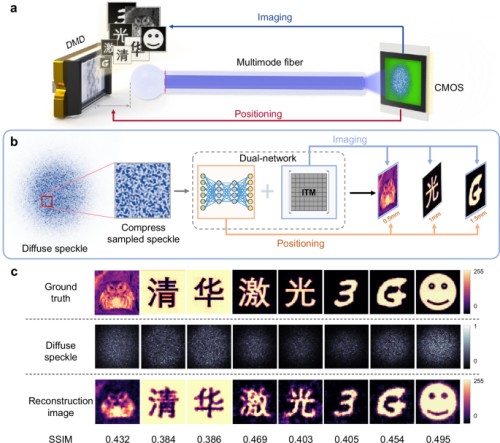
Figure 6: Image reconstruction using a multimode fiber probe
Source: Optics World
LATEST NEWS
Thank you for visiting the official website of Chongfan Technology. If you have cooperation intentions or suggestions, please contact us through the following methods, and we will reply as soon as possible, thank you!
Address: Room 403, Building 6, Phase III of R&D, No. 36 Xiyong Avenue, High tech Zone, Chongqing, China.
Telephone: +86-13658337211
E-mail: Sales@cfkeji.net
Website: www.cfkeji.net
Mobile Version