
Chongfan Technology
News
06
2026
-
03
Biphasic Metasurface for All-Optical Image Processing
Author:
The team led by Humeyra Caglayan at the University of Tampere in Finland has demonstrated a compact analog optical computing platform based on metasurfaces. By leveraging dual-phase encoding and polarization multiplexing techniques, the authors’ approach enables arbitrary image transformations within a single passive nanophotonic device, eliminating the need for complex optical setups or digital post-processing. The authors experimentally demonstrated several key computational operations, including first-order differentiation, cross-correlation, vertex detection, and Laplacian differentiation. Furthermore, they extended this framework to high-resolution holography, achieving subwavelength-scale control of the wavefront in three dimensions, thereby enabling high-fidelity reconstruction of depth-resolved images. The authors’ research establishes a scalable and versatile computational optics method with applications spanning real-time image processing, energy-efficient computing, biomedical imaging, high-fidelity holographic displays, and optical data storage, thus driving the advancement of intelligent optical processors.
The research findings were published on February 23, 2026, in Light: Science & Applications under the title “Double-phase metasurface operators for all-optical image processing.”
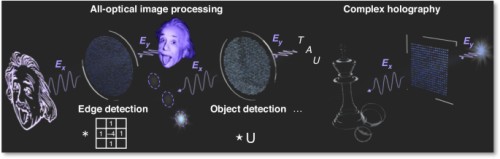
Figure 1: Schematic diagram of all-optical image processing and complex holography based on metasurfaces.
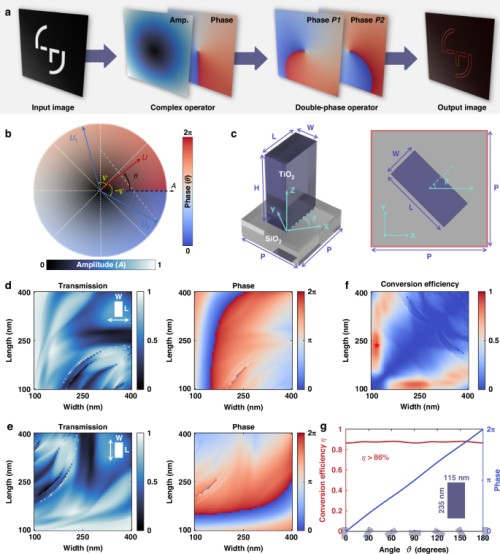
Figure 2: Working Principle and Design of Metatomic Units
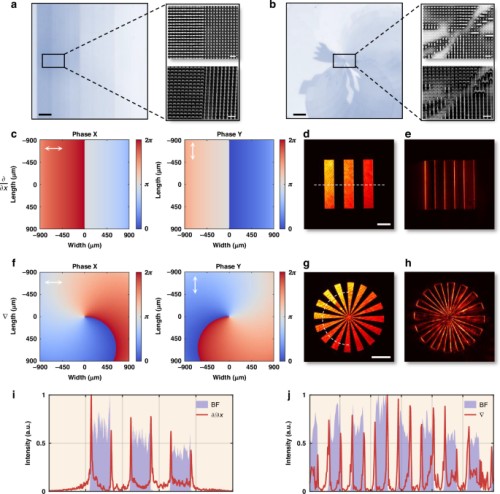
Figure 3: First-order differential metasurface operator based on linear polarization multiplexing
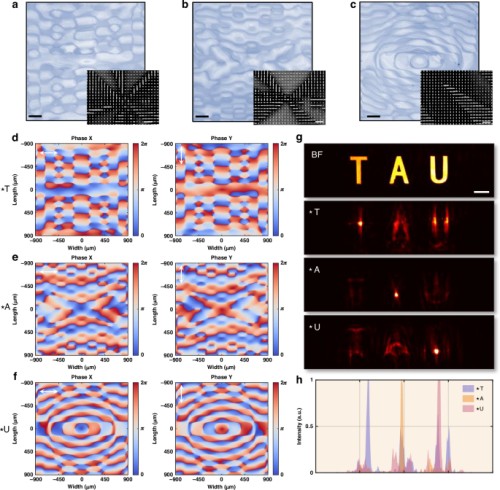
Figure 4: Cross-correlation metamorphic operator based on linear polarization multiplexing
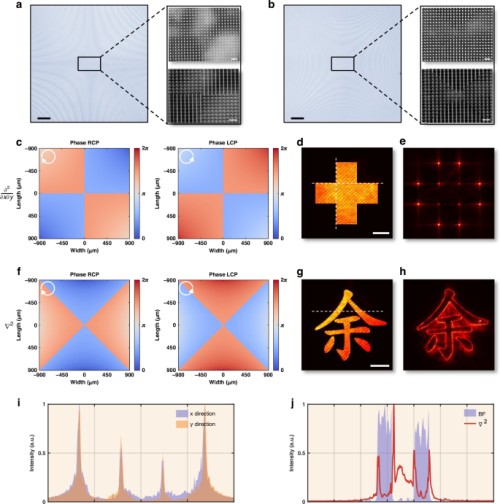
Figure 5: Second-order differential metasurface operator based on circular polarization multiplexing
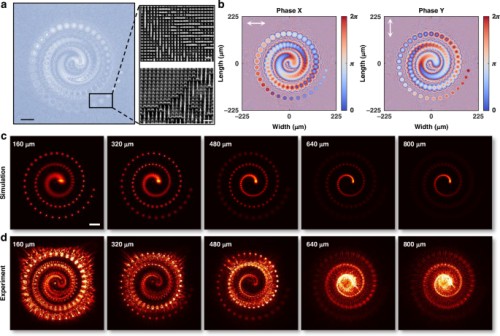
Figure 6: Complex Metasurface Holography Based on Linear Polarization Multiplexing
Source: Optical World
LATEST NEWS
Thank you for visiting the official website of Chongfan Technology. If you have cooperation intentions or suggestions, please contact us through the following methods, and we will reply as soon as possible, thank you!
Address: Room 403, Building 6, Phase III of R&D, No. 36 Xiyong Avenue, High tech Zone, Chongqing, China.
Telephone: +86-13658337211
E-mail: Sales@cfkeji.net
Website: www.cfkeji.net
Mobile Version