
Chongfan Technology
News
19
2026
-
10
Time-Varying Metasurface with Mosaic Structure
Author:
The teams of Jiafu Wang, Mengxiao Zhao, Zhuoluo Wang, and Huilin Mu at the Air Force Engineering University, along with the team led by Chang Ding at Northwestern Polytechnical University, have proposed a time‑varying mosaic metasurface (TVMM) to realize programmable multi‑tone pseudo‑Doppler effects. By partitioning the aperture into independent, continuously modulated spatial channels—each assigned a distinct linear phase‑slope frequency—the TVMM can simultaneously generate multiple controllable pseudo‑Doppler components. In this work, we design, fabricate, and experimentally characterize an X‑band prototype loaded with varactor diodes, which exhibits nearly 300° of continuous reflection‑phase tunability over the 9.1–10.9 GHz frequency range and demonstrates robust performance under oblique incidence. Multi‑tone spectral states are validated using direct spectrum analysis and an inverse synthetic aperture radar (ISAR)-based visualization protocol, wherein the pseudo‑Doppler frequencies are linearly mapped to spatial displacements. Comprehensive aircraft scattering simulations and anechoic chamber experiments consistently confirm single‑tone, uniform/non‑uniform multi‑tone, and densely clustered pseudo‑Doppler spectral signatures. This mosaic‑style time‑varying architecture establishes a versatile strategy for programmable electromagnetic spectrum engineering, with potential applications in adaptive sensing, dynamic scattering control, and radar signature management.
The research findings were published on September 9, 2026, in Advanced Functional Materials, under the title “Time-Varying Mosaic Metasurface Architecture Enabling Programmable Multi-Tone Pseudo‑Doppler Spectral Engineering.”
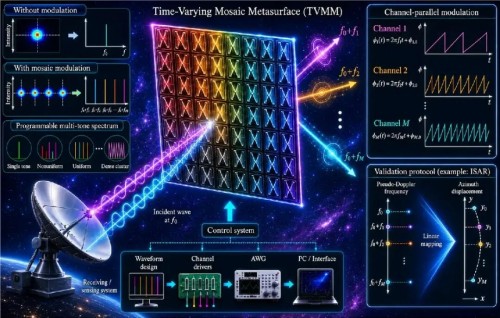
Figure 1: Conceptual diagram and validation of the TVMM for programmable multi-tone electromagnetic spectrum engineering.
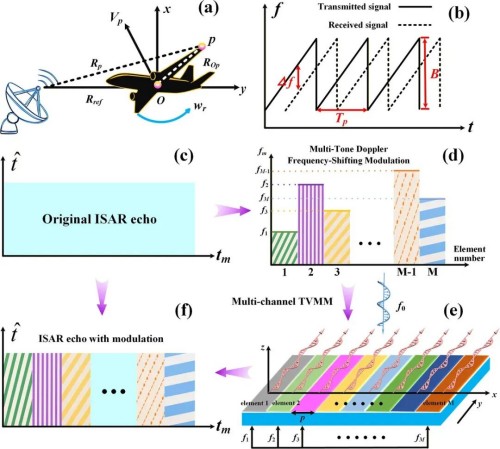
Figure 2: (a) Schematic diagram of the turntable model in ISAR imaging.
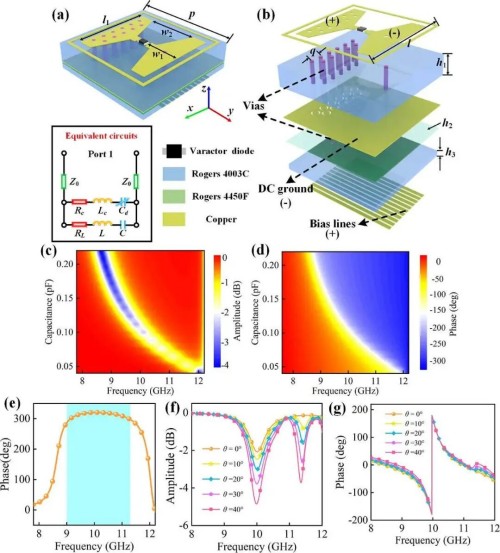
Figure 3: Design of an addressable metamaterial atom incorporating a voltage-biased varactor diode.
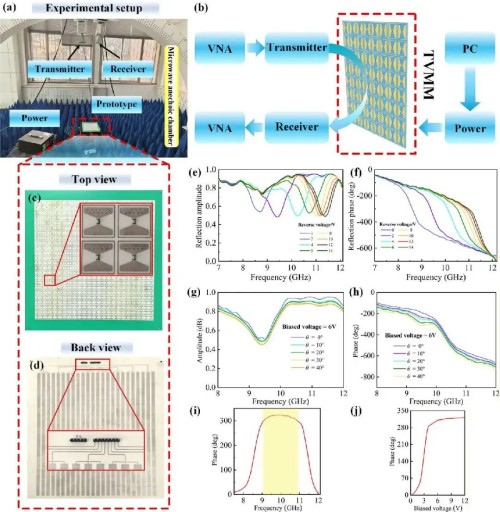
Figure 4: (a, b) Experimental setup for measuring the reflection coefficient.
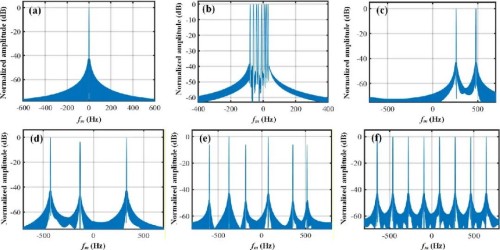
Figure 5: Doppler spectra for the unmodulated case and five modulation schemes.
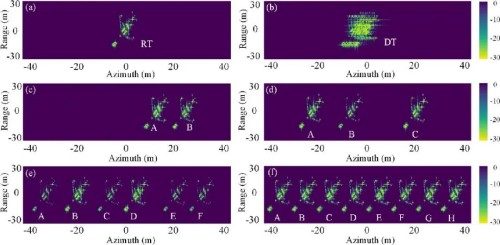
Figure 6: Imaging results of simulated Boeing 727 data
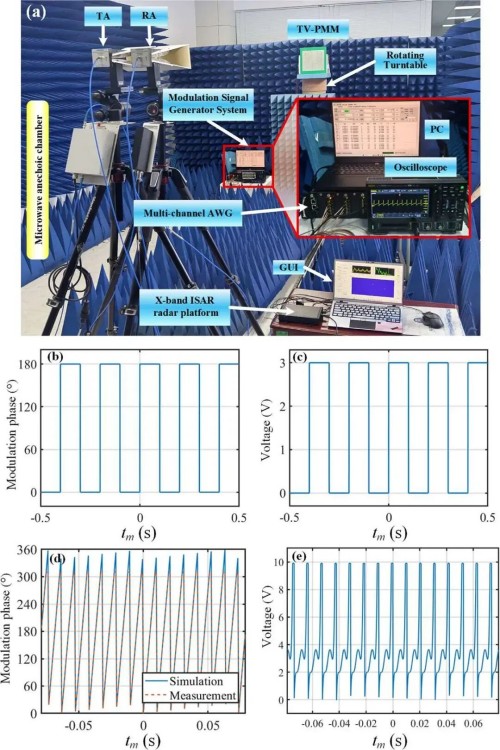
Figure 7: Experimental setup and modulation waveform
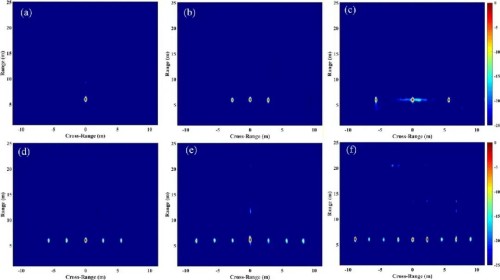
Figure 8: Measured TVMM ISAR imaging results
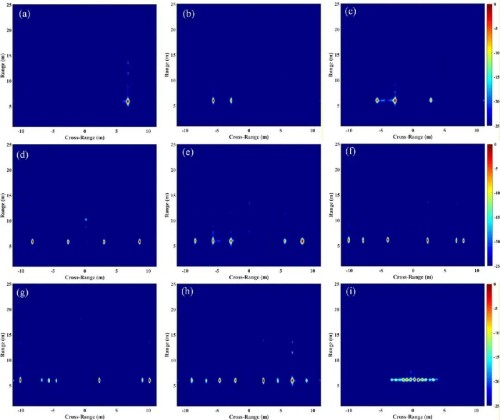
Figure 9: ISAR visualization results of localized multi-tone Doppler frequency-shift modulation
Source: Optics World
Previous
Previous
Thank you for visiting the official website of Chongfan Technology. If you have cooperation intentions or suggestions, please contact us through the following methods, and we will reply as soon as possible, thank you!
Address: Room 403, Building 6, Phase III of R&D, No. 36 Xiyong Avenue, High tech Zone, Chongqing, China.
Telephone: +86-13658337211
E-mail: Sales@cfkeji.net
Website: www.cfkeji.net
Mobile Version
