
Chongfan Technology
News
19
2026
-
10
Rhombic graphene, low-temperature impact exfoliation method—ultra-high mobility
Author:
Rhombohedral multilayer graphene serves as a tunable platform for studying correlated electron physics, enabling the manipulation of magnetic, superconducting, and topological phases via electrostatic gating. However, the fraction of rhombohedral stacking in natural graphite is extremely low, limiting both the yield and the effective area of available samples.
Recently, the research team led by Professor Andrea F. Young at the University of California, Santa Barbara, published a paper in Nature Nanotechnology proposing a low-temperature impact exfoliation method for preparing large‑area rhombohedral graphene flakes.
This exfoliation process, combined with a low‑pressure van der Waals assembly technique that preserves the stacking order, yields highly uniform devices with an active area exceeding 1300 square micrometers and a fabrication yield of approximately 90%. Using nanoSQUID‑on‑tip imaging, uniform spin magnetism is observed across the entire 10 × 10 µm² central region of the device. Transverse magnetic focusing measurements reveal that, in the low‑temperature graphene system, the disorder‑induced mean free path exceeds 200 µm. In the flat band of rhombohedral multilayer graphene, within the intermediate‑temperature regime where electron–electron hydrodynamics dominate, experiments detect a size‑effect‑driven transition from Poiseuille‑type electronic flow to porous‑like electronic transport, further confirming the exceptional quality of the devices.
This method has overcome the critical materials bottleneck in the fabrication of mesoscale rhombohedral graphene devices, facilitating the integration of strongly correlated phases into two-dimensional nanoelectronic devices.
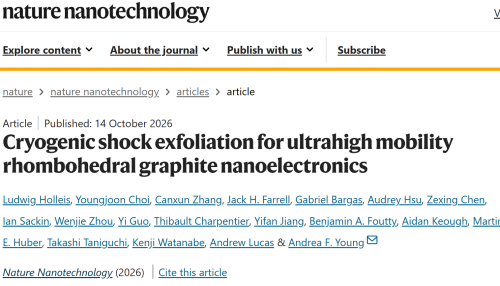
Cryogenic shock exfoliation for ultrahigh mobility rhombohedral graphite nanoelectronics. Cryogenic shock exfoliation method for fabricating ultra-high-mobility rhombohedral graphite nanoelectronic devices.
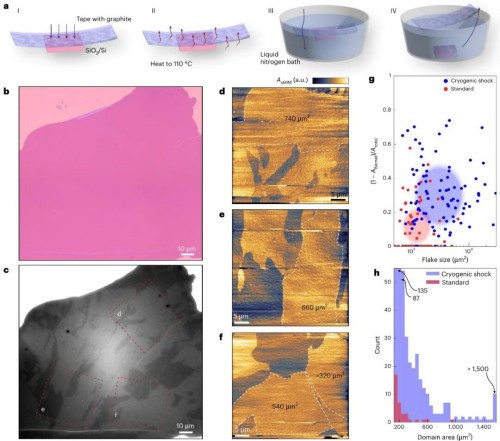
Figure 1. Low-temperature impact exfoliation of rhombohedral graphene.
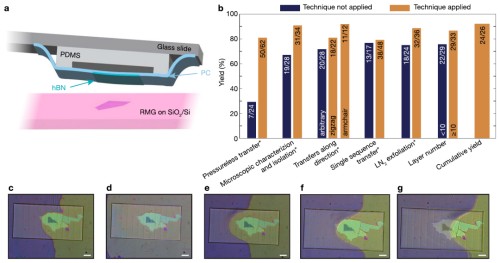
Figure 2 Low-Voltage Transfer Technology
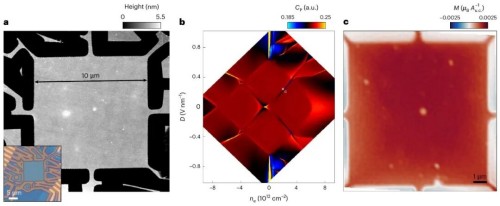
Figure 3. Real-space characterization of device uniformity.
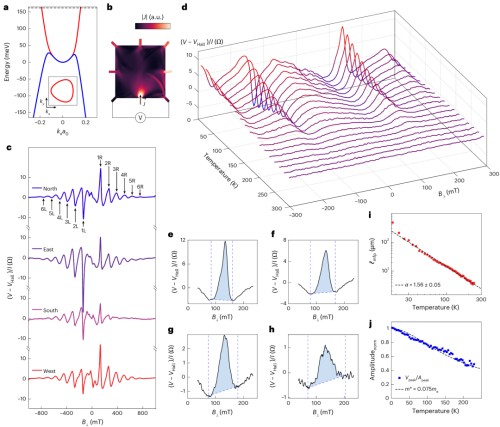
Figure 4: Lateral magnetic focusing.
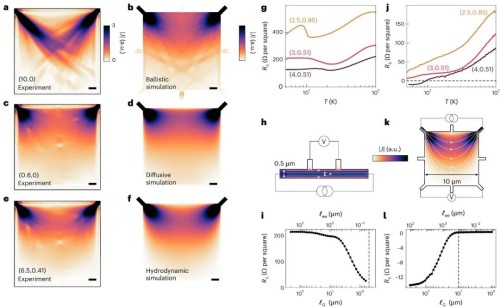
Figure 5. Ballistic, diffusive, and hydrodynamic regimes of electron transport in rhombohedral graphene.
Source: Optics World
Thank you for visiting the official website of Chongfan Technology. If you have cooperation intentions or suggestions, please contact us through the following methods, and we will reply as soon as possible, thank you!
Address: Room 403, Building 6, Phase III of R&D, No. 36 Xiyong Avenue, High tech Zone, Chongqing, China.
Telephone: +86-13658337211
E-mail: Sales@cfkeji.net
Website: www.cfkeji.net
Mobile Version
