
Chongfan Technology
News
19
2026
-
08
Geometric-Driven Spectral Encoding
Author:
The teams of Qiang Li and Huanzheng Zhu at Zhejiang University have demonstrated that maximizing the minimum Euclidean distance (EDE) in the encoding space constitutes a straightforward physical criterion for designing high-fidelity spectral encoders. To explore the complex, high-dimensional design space under manufacturing constraints, the authors developed a stochastic–deterministic optimization framework that integrates the global exploration capabilities of genetic algorithms with local optimization based on automatic differentiation via transfer matrices. The authors show that EDE‑optimized encoders significantly increase the minimum inter‑spectral distances within the encoding space, yielding peak signal‑to‑noise ratio improvements of 3.60 dB, 2.82 dB, and 4.52 dB, respectively, compared to baseline approaches such as random optimization, correlation‑based optimization, and coherence‑based optimization. Moreover, they achieve spectral reconstruction fidelity exceeding 98.63% across a range of targets. Their method enables high‑precision spectral reconstruction, establishing a novel geometric paradigm for the design of intelligent computational optical systems.
The research findings were published in PhotoniX on July 22, 2026, under the title “Geometry-driven spectral encoding by maximizing distinguishability in encoding space.”
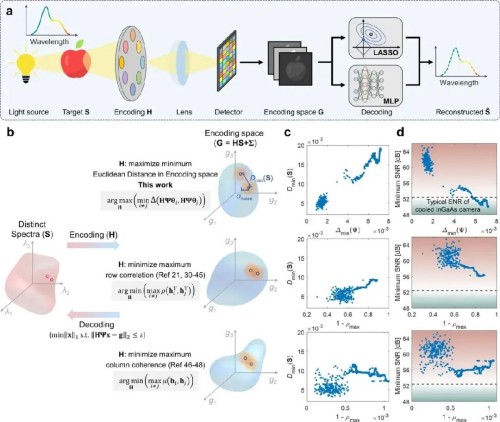
Figure 1: Spectral Encoding Model and Geometric Interpretation
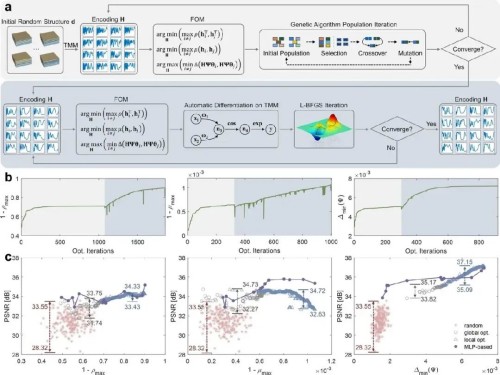
Figure 2: Framework for Spectral Coding Design and Optimization.
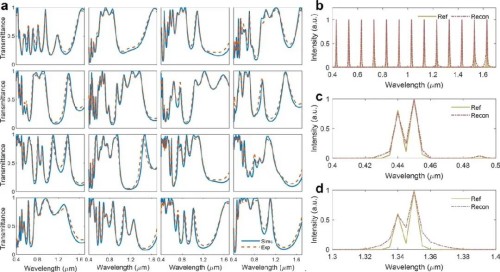
Figure 3: Experimental validation of the multilayer spectral encoder designed by EDE.
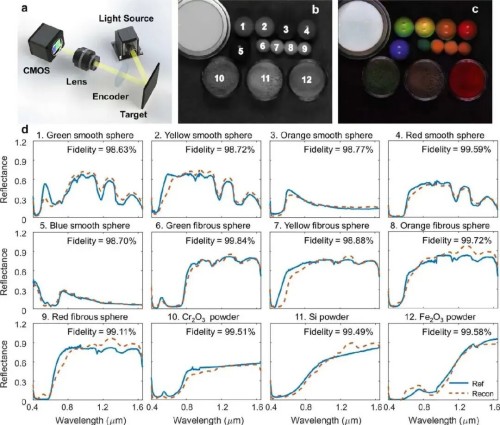
Figure 4: Computational spectral imaging performed using this system.
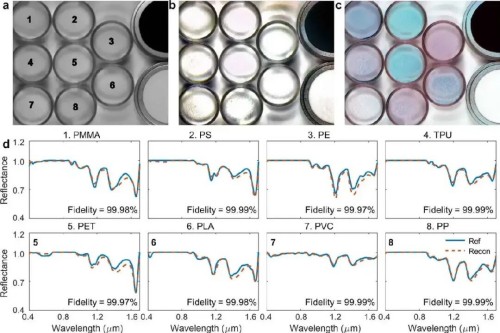
Figure 5: Spectral discrimination of visually similar polymer samples using a computational spectral imaging system.
Source: Optics World
LATEST NEWS
Thank you for visiting the official website of Chongfan Technology. If you have cooperation intentions or suggestions, please contact us through the following methods, and we will reply as soon as possible, thank you!
Address: Room 403, Building 6, Phase III of R&D, No. 36 Xiyong Avenue, High tech Zone, Chongqing, China.
Telephone: +86-13658337211
E-mail: Sales@cfkeji.net
Website: www.cfkeji.net
Mobile Version
