
Chongfan Technology
News
14
2026
-
08
High-Harmonic–Correlated Electrons Break the X-Ray Harmonic Limit, Nature Photonics
Author:
High-harmonic generation is a central process in strong-field nonlinear optics, enabling the upconversion of laser light into coherent EUV and X-ray sources and underpinning attosecond science, ultrafast spectroscopy, and nanoscale imaging. Over the past three decades, this laser‑upconversion process has been predominantly described by a single‑active‑electron model, with the photon‑energy cutoff governed by a well‑defined single‑electron recollision mechanism. However, electron–electron correlations in multi‑electron systems can profoundly alter the structure of high-harmonic spectra, though such signals are often obscured in experiments by the much stronger single‑electron channel. Helium, with only two electrons and no inner‑shell screening, constitutes an ideal system for probing the dynamics of strong electron correlations.
Recently, Siyang Wang and Tenio Popmintchev of the University of California, San Diego, published a paper in Nature Photonics in which they investigated the high-harmonic response of helium, argon, and neon in the soft X-ray regime, using a 400-nm ultraviolet laser and an air-filled hollow-core waveguide. Their work focused on identifying faint high-energy plateaus beyond the conventional single-electron cutoff, thereby advancing high-harmonic spectroscopy as a tool for probing electron correlations on timescales ranging from attoseconds to femtoseconds.
Experiments demonstrate that correlated electrons push high-order harmonic generation beyond the single-active-electron limit, significantly increasing the energy of the emitted photons. A faint secondary plateau was also observed, extending the conventional cutoff energy from above 120 eV into the water‑window spectral region at 280 eV. This phenomenon arises from double‑electron recombination involving strongly correlated electron pairs, giving rise to a novel cutoff scaling: it can reach 5.5 times the kinetic energy of the backscattered electrons, which deviates markedly from the traditional scaling factor of 3.2.
These findings have reshaped our fundamental understanding of high-harmonic upconversion and established high-harmonic generation as a powerful photon‑based probe for measuring electron correlations on the attosecond to femtosecond timescale, paving the way for advances in ultrafast spectroscopy, the development of novel attosecond light sources, and the exploration of strongly correlated quantum materials.
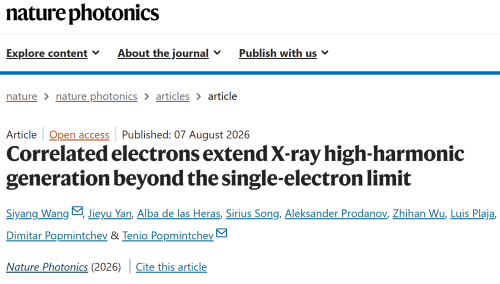
Correlated electrons extend X-ray high-harmonic generation beyond the single-electron limit. Correlated electrons enable X-ray high-harmonic generation to surpass the single-electron limit.
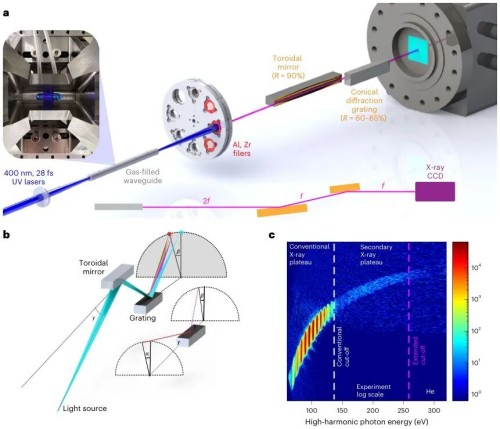
Figure 1 | Ultraviolet‑driven soft X‑ray high‑order harmonic generation reveals a second plateau in helium that exceeds the conventional cutoff.
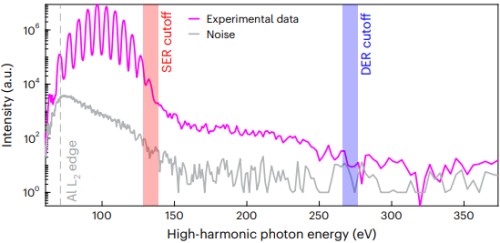
Figure 2 | The experimental high-order harmonic spectrum of helium reveals the coexistence of the conventional SER cutoff and the DER high-energy cutoff.
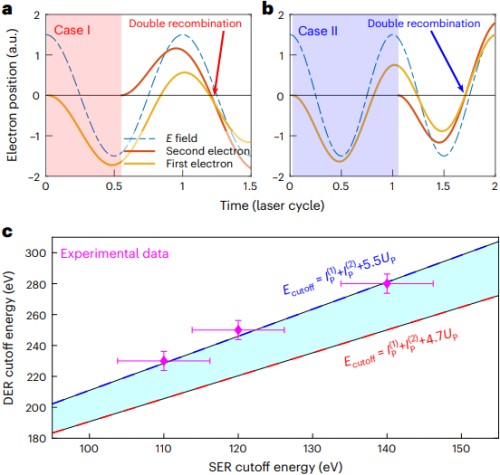
Figure 3 | Dual-electron recombination trajectories and cutoff scaling illustrate that DER can surpass the single-electron limit of 3.2 Up.
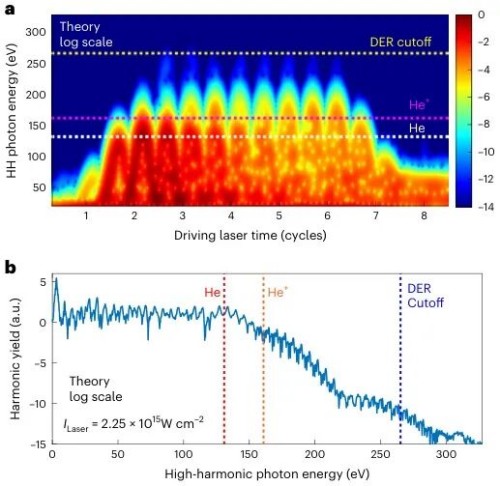
Figure 4 | Single-atom TDSE calculations reproduce the three high-order harmonic plateaus of He, He⁺, and DER.
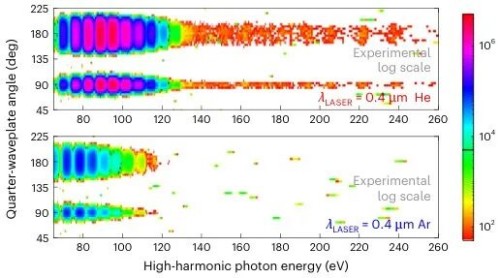
Figure 5 | Experimental verification of laser ellipticity control demonstrates that the second-order platform exhibits coherent backscattering characteristics.
Source: Today’s New Materials
LATEST NEWS
Thank you for visiting the official website of Chongfan Technology. If you have cooperation intentions or suggestions, please contact us through the following methods, and we will reply as soon as possible, thank you!
Address: Room 403, Building 6, Phase III of R&D, No. 36 Xiyong Avenue, High tech Zone, Chongqing, China.
Telephone: +86-13658337211
E-mail: Sales@cfkeji.net
Website: www.cfkeji.net
Mobile Version
