
Chongfan Technology
News
07
2026
-
07
Full-Color Polarization-Edge Imaging Based on Inverse-Design Photonic Crystals
Author:
The team of Chinhua Wang and Ti Sun at Soochow University has proposed a broadband, full-color polarization‑spatial differentiation method based on inverse design for one-dimensional photonic crystals. This approach can cover the entire visible spectrum under incoherent natural illumination. By leveraging the polarization‑dependent response of alternating SiO₂/TiO₂ layered photonic crystals, a specific polarization‑dependent response in k‑space can be achieved. Consequently, the difference between the optical transfer functions of any linearly polarized light and its orthogonal counterpart exhibits a linear dependence on the angle of incidence across the entire visible spectrum, even under incoherent illumination. Experimental results from both microscopic imaging systems and telescope‑based imaging systems demonstrate that, under natural light, this method yields superior color and spectral‑edge images, whereas conventional narrow‑band approaches produce only black‑and‑white images. Moreover, this technique not only enables spectral‑edge and polarization‑edge imaging but also effectively overcomes longstanding limitations in bandwidth, efficiency, and coherence that have long plagued edge‑imaging applications, paving the way for the development of broadband analog optical processors suitable for large apertures and practical use.
The research findings were published on June 15, 2026, in Laser & Photonics Reviews, under the title “Optically Programmable GST Metasurface for Coded Terahertz Wavefront Control.”
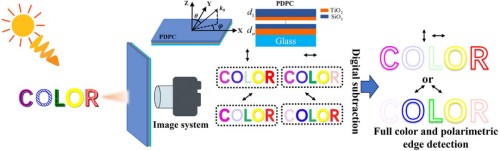
Figure 1: Schematic diagram of first-order full-color polarization optical spatial differentiation under incoherent natural light, based on PDPC.
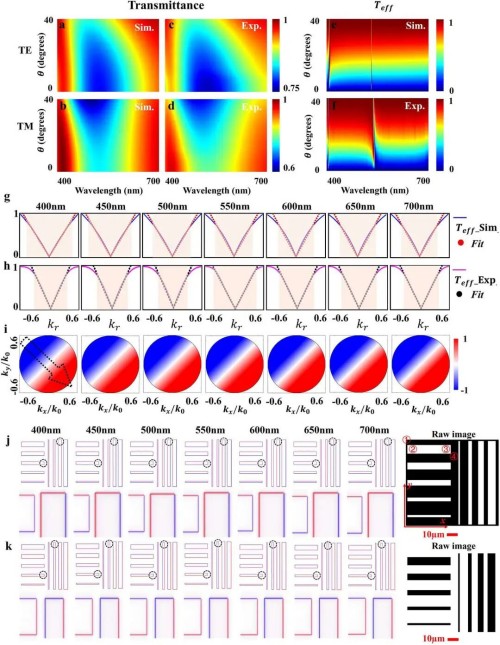
Figure 2: (a, b) Simulated transmission spectra as functions of wavelength and angle of incidence for TE- and TM-polarized light.
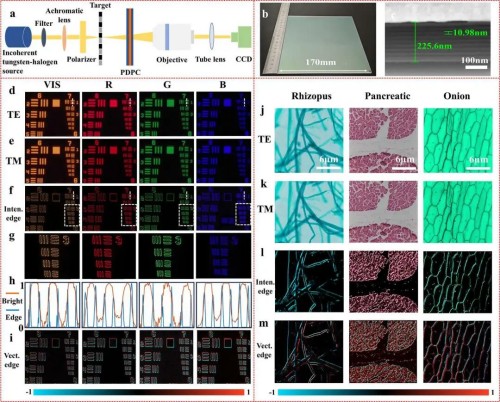
Figure 3: (a) Microscopic edge-imaging experimental setup
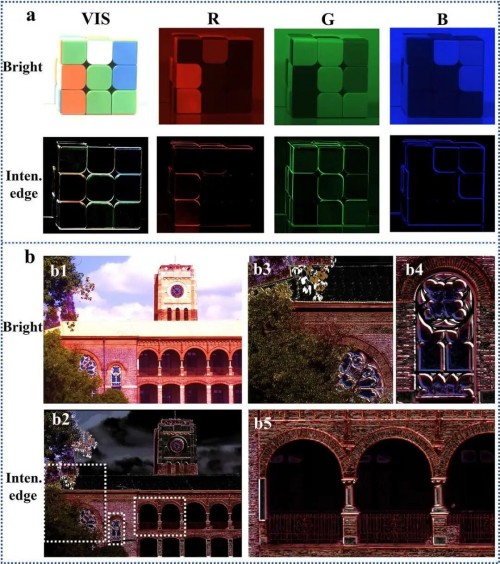
Figure 4: Full-color and spectral-edge imaging under ambient lighting
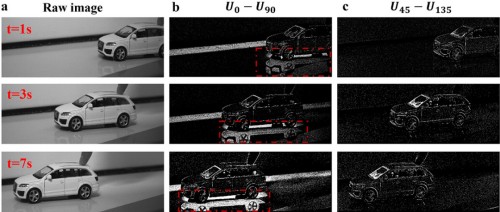
Figure 5: Polarization edge imaging of PDPC in dynamic scenes
Source: Optics World
LATEST NEWS
Thank you for visiting the official website of Chongfan Technology. If you have cooperation intentions or suggestions, please contact us through the following methods, and we will reply as soon as possible, thank you!
Address: Room 403, Building 6, Phase III of R&D, No. 36 Xiyong Avenue, High tech Zone, Chongqing, China.
Telephone: +86-13658337211
E-mail: Sales@cfkeji.net
Website: www.cfkeji.net
Mobile Version