
Chongfan Technology
News
29
2026
-
06
University of Science and Technology of China has realized a long-baseline optical interferometer based on quantum storage.
Author:
Recently, researchers at the University of Science and Technology of China—including Jian-Wei Pan, Xiao-Hui Bao, Qiang Zhang, and Cheng-Zhi Peng—applied cold-atom quantum storage and quantum‑relay techniques to large‑scale optical interferometry, realizing a nonlocal interferometer with a baseline length of 20 kilometers and demonstrating the ability of quantum storage to compensate for geometric delays. This breakthrough paves the way for long‑baseline optical interferometric imaging, and the related work was published on June 17, 2026, in Physical Review Letters as an Editors’ Suggestion.
In astronomical imaging, angular resolution is limited by the telescope’s aperture. By employing interferometry with multiple telescopes, the resolution can be improved to a level determined by the baseline length. However, in the visible and near-infrared bands, constrained by photon‑transmission losses and complex dynamic geometric delays, traditional optical interferometric baselines based on direct light transmission have long been confined to a few hundred meters—strikingly contrasting with the Earth‑scale radio interferometric arrays that have already been realized.
Quantum repeaters and quantum networking technologies offer a new approach to addressing this challenge. Quantum repeaters can generate long-distance entanglement between quantum memories; by interfering the starlight collected by telescopes with the output light fields of these quantum memories, optical losses associated with long‑distance transmission of starlight can be circumvented. Moreover, quantum memories can precisely compensate for geometric delays. This scheme makes ultra‑long baseline optical astronomical observations feasible.
The team led by Pan Jianwei at the University of Science and Technology of China has long been conducting research on cold-atom quantum relays, mastering several key technologies, including long-lived, high-efficiency quantum storage and deterministic entanglement based on Rydberg states. In recent years, they have continuously achieved breakthroughs in long-distance quantum relay systems. In 2024, the team built the world’s first metropolitan‑scale three-node quantum storage network, and in early 2026, they successfully demonstrated device‑independent quantum key distribution over a distance of 100 kilometers.
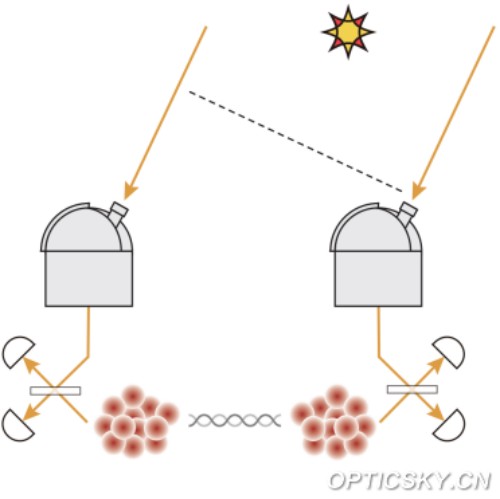
Figure 1. Schematic diagram of the experimental principle
In the aforementioned work, the research team has accumulated extensive experience in long-distance quantum storage–based entanglement generation and remote single-photon phase locking. To realize a storage‑assisted long‑baseline interferometer, the team first employed spontaneous Raman scattering within a cloud of hot atoms to generate a thermal light field that mimics starlight; they then established long‑range entanglement between two ensembles of cold‑atom quantum memories; finally, by interfering the readout light field from the quantum memory with the thermal light field, they observed coherent oscillations exhibiting coincidence counts.
The experiment achieved an equivalent baseline length of 20 kilometers and, leveraging the delayed readout capability of quantum memory, demonstrated delay compensation equivalent to that of a 1.5-kilometer free-space link. Operating in the optical regime, the interferometer constructed in this work attains a theoretical angular resolution comparable to that of the Event Horizon Telescope (EHT) array with a thousand-kilometer baseline. Compared with recent results from Harvard University, this experiment exhibits clear advantages in terms of baseline length and interference contrast. These findings highlight the potential of quantum‑relay technology to enhance the angular resolution of optical interferometric imaging and lay the groundwork for future applications of quantum memory in astronomical observations.
This work was supported by the National Key Science and Technology Project, the National Natural Science Foundation of China, the Chinese Academy of Sciences, and Anhui Province, among others.
Source: University of Science and Technology of China
LATEST NEWS
Thank you for visiting the official website of Chongfan Technology. If you have cooperation intentions or suggestions, please contact us through the following methods, and we will reply as soon as possible, thank you!
Address: Room 403, Building 6, Phase III of R&D, No. 36 Xiyong Avenue, High tech Zone, Chongqing, China.
Telephone: +86-13658337211
E-mail: Sales@cfkeji.net
Website: www.cfkeji.net
Mobile Version