
Chongfan Technology
News
27
2026
-
04
Algebraic Language Model for Inverse Design of Metamaterials Based on Diffusion Transformers
Author:
A generative framework called DiffuMeta has been proposed by the teams of Dennis M. Kochmann at ETH Zurich and Siddhant Kumar at Delft University of Technology. This framework integrates diffusion transformers with algebraic language representations to encode three-dimensional geometries as mathematical statements. The resulting compact and unified parametrization accommodates a wide range of topologies, enabling direct application of transformers to structural design. DiffuMeta leverages diffusion models to generate novel shell structures with precise stress–strain responses, accounting for buckling and contact under large deformations, and addresses the inherent one-to-many mapping problem by producing a diverse set of solutions. Notably, the authors’ approach allows simultaneous control over multiple mechanical objectives, including both linear and nonlinear responses that lie outside the training domain. Experimental validation on fabricated structures further confirms the effectiveness of this method in accelerating the design of custom-designed metamaterials and structures.
The research findings were published in Nature Machine Intelligence on April 21, 2026, under the title “Algebraic language models for inverse design of metamaterials via diffusion transformers.”
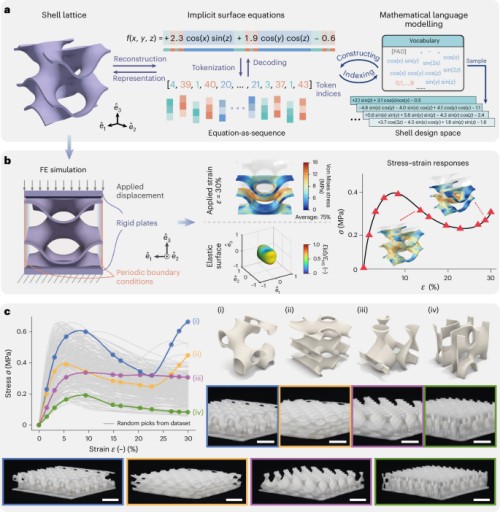
Figure 1: Overview of the Parameterization and Design-Space Generation Process for Shell-Based Metamaterials
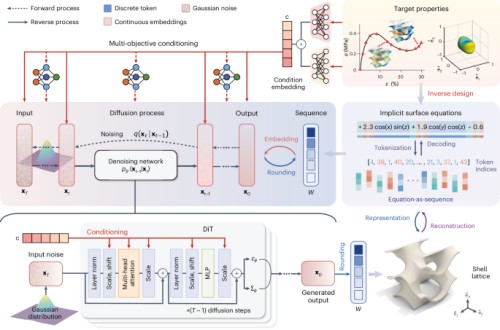
Figure 2: Schematic diagram of the DiffuMeta framework for inverse design of shell metamaterials with target mechanical properties.
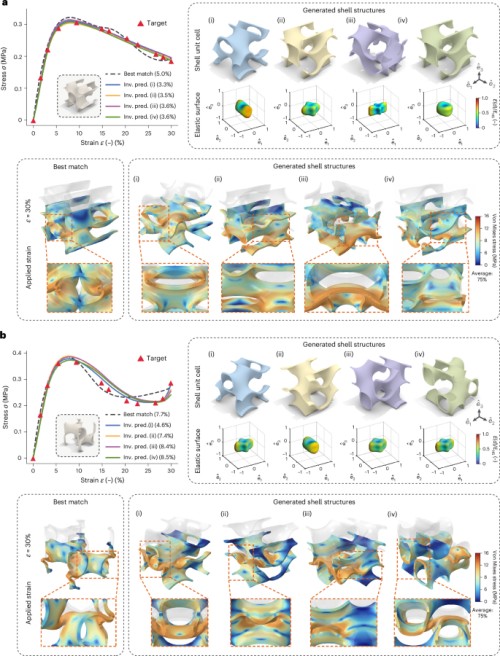
Figure 3: Inverse design of shell metamaterials with target compressive stress–strain response
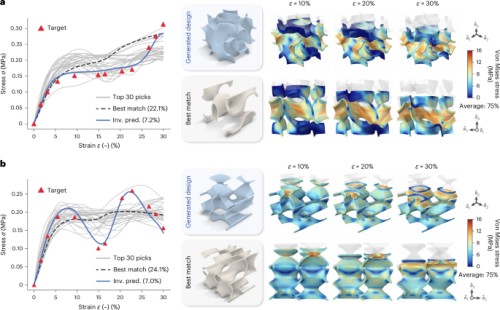
Figure 4: Inverse-Design Shell Metamaterial with Unseen Stress–Strain Response
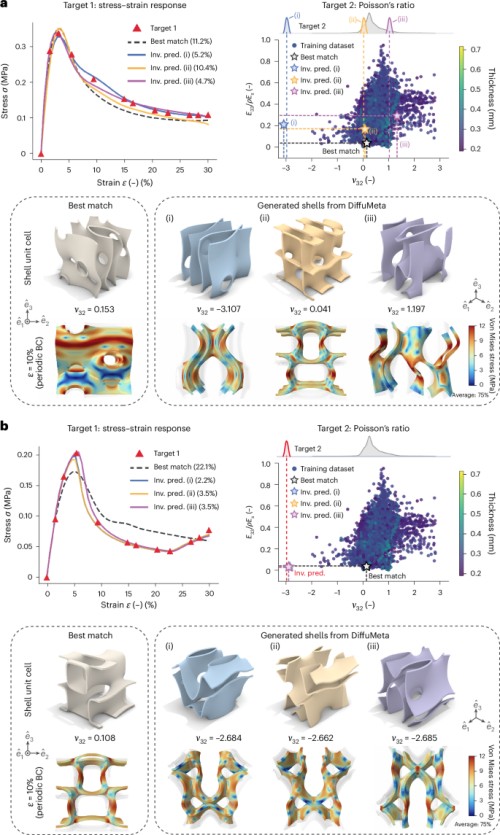
Figure 5: Multi-objective conditional generation of shell metamaterials
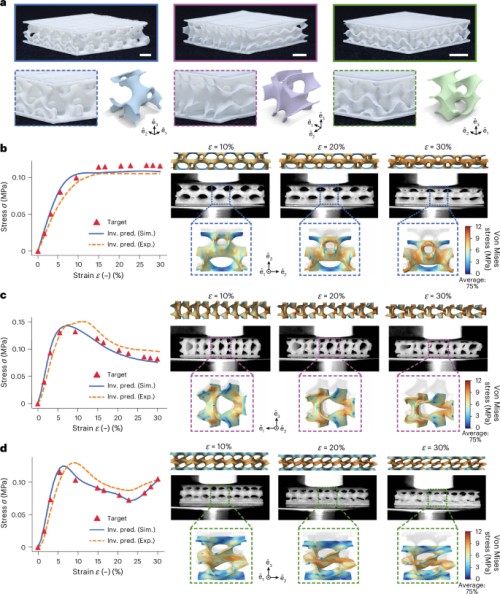
Figure 6: Experimental validation of the shell metamaterial generated by DiffuMeta
Source: Optics World
LATEST NEWS
Thank you for visiting the official website of Chongfan Technology. If you have cooperation intentions or suggestions, please contact us through the following methods, and we will reply as soon as possible, thank you!
Address: Room 403, Building 6, Phase III of R&D, No. 36 Xiyong Avenue, High tech Zone, Chongqing, China.
Telephone: +86-13658337211
E-mail: Sales@cfkeji.net
Website: www.cfkeji.net
Mobile Version